 To maintain the currency and security of ProQuest ebook platforms, Ebook Central will be unavailable for approximately 90 minutes between 1–2:30 p.m. on Saturday, October 27. ProQuest apologizes for
the inconvenience.
To maintain the currency and security of ProQuest ebook platforms, Ebook Central will be unavailable for approximately 90 minutes between 1–2:30 p.m. on Saturday, October 27. ProQuest apologizes for
the inconvenience.
Earlier this year, the Dal Libraries engaged faculty, instructors, and students in a consultation about journal subscriptions. Now, we’re reviewing and evaluating the data gathered from those consultations.
Your input allowed us to assemble a preliminary priority list of journal titles. Small teams of librarians and subject specialists are now refining the list by closely examining multiple factors:
Community recommendations: Which journals have Dalhousie faculty, students and staff identified as important to their research, teaching, and learning?
Usage: How often was the journal used over the course of five years? There are disciplinary differences in the way journal literature is used so we compare like journals — medical journals are compared to other medical journals while humanities journals are compared to other humanities journals.
Citations: How often do Dalhousie researchers cite a journal? Here too we are comparing each journal’s citation rates to other journals in comparable groups.
Duplication: Are we purchasing access to journal content twice? Back issues of many journals are available in several of the aggregator databases we subscribe to, such as EbscoHost and ProQuest. Generally, only the most recent content is unavailable through these databases.
Need for currency: Do we need access to the most recent content? We can identify the publication dates of articles downloaded by our users, and often, the most recent content is not what’s being used. In many cases, the aggregator databases we subscribe to provide our users with the content they need without subscribing to the journal package.
Document Delivery costs: If we decide not to retain a journal and we don’t have access to it through another database, can we provide the content by Document Delivery? We have a fast, reliable Document Delivery service that can provide access to most of the journal literature we need. The cost of providing access through Document Delivery for low-use journals can be less expensive than a subscription, if requestors are willing to wait for two days or less (on average) for delivery.
Balancing these factors is a painstaking process. As we continue to work through these details, we are monitoring the work of national consortia as they negotiate alternatives to the big deals.
When we have finalized the priority list, we will make it available to the Dalhousie community. If we decide to cancel subscriptions this year or in the future, we will monitor Document Delivery requests to identify any journals that may need to be reconsidered.
If there is a title missing from the priority list that you feel strongly about, please email Library.Collections@dal.ca. We can provide additional information about the decision-making process.
Thank you for participating in this consultation process. The data gathered through the Dal Libraries’ journal assessment database has been and will continue to be a crucial factor in the decision-making process.
 International Open Access Week this year runs from October 22–28. We celebrate it annually at the Dalhousie Libraries, but what is Open Access Week and why should it matter to Dalhousie students and faculty?
Open Access Week provides an opportunity for academics and researchers to continue to learn about the potential benefits of Open Access, to share what they’ve learned with colleagues, and to help inspire wider participation that will make Open Access a new norm in scholarship and research. (from the Open Access Week website) The principles of Open Access are founded on ideas of public access to publicly funded research, author rights, availability of educational resources, and affordable access to materials for educational institutions. The Dalhousie Libraries are pleased to be using these principles to bring the research activities of Dalhousie to the world.
This year’s theme is Designing Equitable Foundations for Open Knowledge. Nick Shockey, Director of Programs & Engagement for SPARC (the global Scholarly Publishing and Academic Resources Coalition) says, “This year’s theme reflects a scholarly system in transition. While governments, funders, universities, publishers, and scholars are increasingly adopting open policies and practices, how these are actually implemented is still in flux. As open becomes the default, all stakeholders must be intentional about designing these new, open systems to ensure that they are inclusive, equitable, and truly serve the needs of a diverse global community.”
The Dalhousie Libraries have a number of events and posts to mark this important week. Please join us at one or more of our Open Access-themed events this fall, either during Open Access Week or later.
Open Access: Tips for Planning (webinar)
 When people hear or see the words “open access,” they think of open access journals and wonder how much they’ll have to pay to publish in them. This session will address some of the misperceptions around open access and help you build a plan to make your research openly available using open access journals and/or Dalhousie’s institutional repository (DalSpace). Learn how to build open access into your research plan (fees, publisher policies, retaining preprints and post prints), learn about what Open Access is and isn’t and find out how our institutional repository DalSpace can fit into your workflow. Presenter Geoff Brown is the Digital Scholarship and Government Information Librarian at Dalhousie Libraries. He manages DalSpace, oversees the libraries journal hosting service and is working to support open textbook development both at Dalhousie University and in the Atlantic region.
Wednesday, October 24/12–1 p.m.
Session delivered via Zoom
Register to get a link at: https://dal.ca.libguides.com/ScholarshipSeries
 Screening of Paywall: The Business of Scholarship & Facilitated Discussion
Join us for popcorn as we screen Paywall, followed by a facilitated discussion with Scholarly Communications Librarian, Melissa Rothfus. Paywall: The Business of Scholarship is a documentary which focuses on the need for open access to research and science, questions the rationale behind the $25.2 billion a year that flows into for-profit academic publishers, examines the 35–40% profit margin associated with the top academic publisher Elsevier and looks at how that profit margin is often greater than some of the most profitable tech companies like Apple, Facebook and Google. (from https://paywallthemovie.com/)
This film screening is co-presented by the Dalhousie Libraries and the School of Information Management as part of the IM Public Lecture series. For more information, visit tinyurl.com/IMPublicLectures
Thursday, October 25/12–1:30 p.m.
Room 5053, Rowe Building
6100 University Avenue
 Wikipedia Edit-A-Thon: with a focus on women’s health
Your research skills can help make Wikipedia a better, evidence-based resource for people looking for information on women’s health. This is our third Wikipedia Edit-A-Thon and the first with a health focus. The US National Network of Libraries of Medicine are spearheading this initiative and you can join in or follow along on twitter with the hashtag #citeNLM2018
The session will begin with a brief presentation and discussion about Wikipedia followed by a learning session on Wikipedia editing. Participants will then embark in an edit-a-thon working with the aid of facilitators. Participants work independently or in groups to locate and update/edit pages and citations. You must bring a laptop to the session and create a Wikipedia user account prior to the event to be able to participate.
Wednesday, November 7/10–11:30 a.m.
Carleton Campus, Tupper Link, Room 2L3
DMNB 221
Please register: https://www.eventbrite.com/e/wikipedia-edit-a-thon-with-a-focus-on-womens-health-tickets-51511916529
 Dal Libraries is launching a new seminar series this month focused on research tools and services. This series will focus on a range of topics going forward but the fall 2018 sessions will focus on aspects of the publishing and research process including research reporting, rights and impact.
Open Access: Tips for Planning
Wednesday, October 24, 12–1 p.m.
Presented by: Geoff Brown
Taking Charge of your Professional Identity: Tools & Metrics
Friday, November 9, 12–1 p.m.
Presented by: Melissa Rothfus & Melissa Helwig
Copyright and Author Rights
Friday, November 23, 12–1 p.m.
Presented by: Roger Gillis
Intro to Research Data Management
Friday, November 30, 12–1 p.m.
Presented by: Erin MacPherson & Sarah Stevenson
All sessions will be online only. Register for links to individual sessions at: https://dal.ca.libguides.com/ScholarshipSeries

Reduce your fines by $3 for every non-perishable food item donated to the Dalhousie Libraries. Donations will be given to Feed Nova Scotia, the DSU Food Bank, and the Colchester Food Bank. Please note: Charges for lost or damaged items cannot be reduced through Food for Fines.
 This closure is necessary to allow Facilities Management staff to do needed repairs so the heat can be turned on. If you’re looking for a study space nearby after 8 p.m., the Wallace McCain Learning Commons is open on Friday till 10 p.m. We apologize for the inconvenience this early closure may cause.
 What brought you to the MLIS program at Dal?
After graduating from my undergrad, I wasn’t sure what I wanted to do next. My friend was completing the MPA program at Dal and thought of me when she learned about the MLIS program. After reading about the program and the different opportunities it has to offer, I almost immediately knew that the MLIS program was for me.
What drew you to the internship at the Dal Libraries?
Throughout my first year I have been drawn to both academic libraries and archives. Having already gained some experience doing archival work at the Sexton library during my practicum, I was interested in an internship with the Dal Libraries in order to explore the other area I am interested in. I was happy to get the internship at the Sir James Dunn Law Library; while I don’t have a background in law, I was up for the challenge. Everyday I’m learning and the people I work with are happy to explain anything I might be unsure of.
What’s your educational background?
I have a BA in English from University of King’s College here in Halifax.
What have you been doing during your internship?
During my internship so far I’ve been doing a little bit of everything. I’ve been learning how to answer legal reference questions as well as working at the circulation desk. One project that I have begun to work on involves our rare book room. We are looking to make the material more accessible and searchable to patrons online, with the goal of even digitizing some material. I am very excited about this project because it will also involve using some of the archiving skills I have already learned. I’ve even helped create logic puzzles and rewired a 1940s telephone for an escape room in which law students will be able to test their legal research knowledge in September!
 We are pleased to welcome Alex Wojcik to the Dalhousie Libraries. Alex is an experienced GIS Developer, having worked in municipal and corporate environments.
Alex is a Dalhousie alumnus, with a degree in psychology. He also holds a diploma in Geographic Sciences with a specialization in GIS from the Centre of Geographic Sciences (COGS) in Lawrencetown. He comes to us with program development skills and is currently pursuing a computer science degree to compliment his GIS background.
In addition to working for MapDev Technology Solutions, the Department of National Defense and SEG Consulting with clients that included Nova Scotia Power and Halifax Water, Alex has volunteered his skills to plan a habitat suitability analysis for wood turtles. Wood turtles are considered a vulnerable species in Nova Scotia.
Alex is part of the Academic Technology Services (ATS) team and also works with the GIS team, both within the Dal Libraries. He will be creating programs for GIS that will perform common GIS processing tasks, as well as developing apps that will support the collection and use of geospatial data. Alex will also be working on our website, libraries.dal.ca; our data repository, DataVerse; and our digital preservation system, Archivematica.
Welcome, Alex!
 What is a “Lunchless Learn”? It’s a hands-on tutorial, held around lunchtime, open to all on campus — without the food.
A GIS, or Geographic Information System, is “a computer system for capturing, storing, checking, integrating, manipulating, analyzing and displaying data relating to positions on earth’s surface.” In other words, it’s a way at looking at the world differently.
This is a series to help give people a taste of what GIS is and how it can be used. To try and accommodate more people we are offering the same session at different times and locations. These sessions are meant to be self contained. After the intro session, take only the topics that are important or of interest you.
Due to the high level of interest in this series, we ask you to sign up for session(s). To sign up, contact gis@dal.ca
Intro – First Encounters of the GIS Kind
Mon., Sept. 24/11:30 a.m.–1 p.m. in the Killam Library – Room 2902
Fri., Sept. 28/11:30 a.m.–1 p.m. in the Killam Library – Room 2902
Tues., Oct. 2/11:30 a.m.–1 p.m. in the Killam Library – Room 2902
Data: so you want to make a map – where and how to find data
Mon., Oct. 1/11:30 a.m.–1:30 p.m. in the Killam Library – Room 2902
Tues., Oct. 9/11:30 a.m.–1:30 p.m. in the Killam Library – Room 2902
Raster: how to become a raster master
Mon., Oct. 15/11:30 a.m.–1 p.m. in the Killam Library – Room 2902
Tues., Oct. 16/11:30 a.m.–1 p.m. in the Killam Library – Room 2902
Carto: maps — the good, the bad, and the ugly
Mon., Oct. 22/11:30 a.m.–1 p.m. in the Killam Library – Room 2902
Tues., Oct. 30/11:30 a.m.–1 p.m. in the Killam Library – Room G70
ArcGIS Online – GIS that’s in the cloud(s)
Mon., Oct. 29/11:30 a.m.–1 p.m. in the Killam Library – Room 2902
Tues., Nov. 6/11:30 a.m.–1 p.m. in the Killam Library – Room 2902
The Dalhousie Libraries is partnering with the School of Information Management on their second Information Management (IM) Public Lecture of the year.
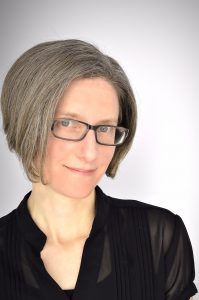
Janet Burns-Gerrans
1994 Called – It Wants its FOI Law Back: Things Nova Scotians Should Know About Their Right to Know
by Janet Burt-Gerrans, Office of the Information & Privacy Commissioner for Nova Scotia
Tuesday, September 25/12 p.m.
Weldon Law Building, Room 104 (6061 University Ave)
Abstract: Almost 25 years have passed since Nova Scotia’s access to information law was proclaimed. Our law is badly outdated and no longer up to the task. September 28 is Right to Know Day around the world. What better time to discuss the shortcomings of our law, recommendations for improvement and things citizens need to know to ensure that they continue to have a robust and meaningful right to access government information. Join Janet Burt-Gerrans from the Office of the Information and Privacy Commissioner for a lively discussion of big data, access martyrs, duty to document and other access problems and solutions.
Biography: Janet Burt-Gerrans, BA, JD is a legal professional with multi-sector public administration experience spanning roles in government consulting, labour relations, and public service delivery. She is a Senior Investigator with the Information and Privacy Commissioner’s Office responsible for leading
The Information Management Public Lectures give attention to exciting advances in research and professional practice. The topics are diverse reflecting the importance and global extent of Information Management in today’s society. The lectures are open to all members of the Dalhousie campus and surrounding community. Click here for the full schedule. We encourage you to attend in person, but if that is not possible you can access a recording on the SIM website following the lecture. Live streaming is not currently available.