 All locations of the Dalhousie Libraries will be closed Monday, August 1 for the Natal Day holiday. Enjoy the long weekend, everyone!
Intern Profiles 2022: Anne Summerhays

Anne Summerhays (she/her)
What is your favorite summer activity? Or your favourite Halifax activity?
Of summer activities, I would say I love hiking above all, but I also enjoy gardening, picnicking with friends, listening to live music, biking, reading in the park, canoeing, and swimming.
What internship are you affiliated with?
I am one of the multidisciplinary interns, so I work at the Killam, the Sexton, and the MacRae libraries.
What brought you to the MI program at Dal?
I primarily applied to the MI program at Dal with the idea of becoming a public librarian. That being said, it’s a wide world out there, even within Information Management, so I’m open to many different paths my career might take me, and am especially intrigued by academic and governmental librarianship. The most important thing to me is to have a chance to work with sweet people, help others, and have a career that lets me learn continuously for the rest of my life. In that way, I already feel like I’m living the dream!
What drew you to the internship opportunity at the Dal Libraries?
I really like the vibe at Dalhousie, especially my experiences with the libraries, and have long had the impression that it would be a great place to work. When the internship opportunity opened up, I jumped at the chance, knowing this was the perfect opportunity to learn whether academic librarianship is for me.
What’s your educational background?
I did a double major in Psychology and Sociology at McGill.
What projects have you worked on so far during your internship?
I’ve already done a lot of cool stuff in this internship and we’re not even halfway through! Some highlights are: researching and making improvements to Dal’s A-Z Database list to make it both easier to use and it more consistent in terms of the information provided about each database; following-up on Sam Schwanak’s ebook accessibility project from last year, in which I’m assessing Dal’s ebook platforms using their handy accessibility checklist (Mansi’s working on this, too!); researching trauma-informed approaches to reference in order to improve our services; and choosing books to include in next year’s Blind Date With A Book event, for which I also write “dating profiles,” which is just so much fun!
Intern Profiles 2022: Annette Amenta

Annette Amenta (she/her)
What is your favorite summer activity? Or your favourite Halifax activity?
Since moving to Halifax, I love seeing what’s in bloom at the Public Gardens, visiting local bookstores, and walking along the Waterfront.
What internship are you affiliated with?
I’m the Archives Intern at Dalhousie University Archives, located in the Killam Memorial Library.
What brought you to the Master of Information (MI) program at Dal?
I have always loved helping others research and find relevant information using a critical lens. I thought that the MI program at Dal would complement my history and teaching background perfectly.
What drew you to the internship opportunity at the Dal Libraries?
I thought the internship opportunity would be a great way to gain practical experience in a field that was still relatively new to me. I would get to know the day-to-day roles of archivists and other information professionals and see if it was the right fit for me — which it definitely is!
What’s your educational background?
B.A. Combined Honours French and History (McMaster University)
M.A. History (Western University)
B.Ed. Intermediate/Senior French as a Second Language and History (Western University)
What projects have you worked on so far during your internship?
I have been working primarily on the Joy O’Brien fonds, which consists of material related to the Nova Scotia Mass Choir, a local choir that has performed throughout North America and was, and is, highly involved in anti-racism initiatives. This is a bigger collection that involves processing, rehousing, and describing thousands of photographs, in addition to textual records, video cassettes, and audio cassettes.
I have also started work on processing, describing, and rehousing Paul Cram’s musical scores and recordings. Paul Cram was a local, Juno-nominated jazz musician and composer.
Some upcoming projects include processing and describing exhibition catalogues and files from the Dalhousie Art Gallery fonds and creating a video tutorial for a file transfer tool using Camtasia.
In Search of His Roots: Residential school survivor Jim Prosper’s extraordinary book collection finds new home at Dal
story originally published in Dal News on June 21, by Marlo MacKay

Selections from the collection are on display now in the Indigenous Community Room, which opened Tuesday on National Indigenous Peoples Day. (Collection photos by Matt Reeder, others contributed)
When Jim Prosper was born in 1925, his mother was eighteen and not married. As was common for a young woman in that situation at the time, she gave up her son for adoption. Jim lived the first five years of his life in a Halifax orphanage, and in 1930 became a resident of the Indian Residential School in Shubenacadie, which was the same year it opened. He lived there until he was 18.
Upon leaving the residential school, Jim, a proud Mi’kmaw, served in the Second World War. When he returned to Mi’kma’ki, Jim attended St. Francis Xavier for two years to study engineering, followed by two more years at the Nova Scotia Institute of Technology (which later became the Technical University of Nova Scotia and then Dalhousie’s Faculty of Engineering) to complete his engineering degree. Jim is believed to be the first Indigenous engineering graduate from both institutions.

Jim Prosper’s 1952 graduation photo from the Nova Scotia Institute of Technology.
After a distinguished career that included being a lead engineer on Cold War intelligence projects, Jim retired in 1984. It was during this period of retirement that Jim decided to spend his time researching his genealogy in the hope of learning more about his mother and finding anything he could about his father. He made many visits back to the East Coast from his home in Ottawa, travelling to First Nations communities in the region and talking with the people who lived there.
Through his visits, Jim eventually learned who his mother’s family was, meeting people who knew his mother and who could also tell him about his father — believed to be an American sailor. When he visited these communities and got to know the people, Jim kept hearing the same thing everywhere he went: “This reserve is shrinking, the land is being taken away.”
This topic ignited a passion in Jim, and he soon became an ardent researcher of colonialism, aboriginal treaties, rights, and sovereignty. That’s when he began curating an impressive book collection — one that has now found a new home at Dalhousie.
“My father was the hardcopy Google before Google,” says Ron Prosper, one of Jim’s three grown children. “For my dad, it was important to have hard copies of everything. He never got into digital, and he never wanted to leave information behind. He had to own the book; it wasn’t enough that he could borrow it from a library.”
Book dealers on ‘speed dial’
Jim amassed his extraordinary book collection over twenty years, dealing with some of the most well-known antiquarian book sellers in Canada. “He had antiquarian book dealers on speed dial,” says Ron. The most unique books in Jim’s collection are bibles, hymnbooks, and catechisms in Mi’kmaq, some dating to the late 1800s.
Eventually, Jim’s book collecting slowed down, and once he reached his nineties, it became challenging for him to continue living alone. His family helped him move to a senior’s residence — where, at 97, he still lives — and then came the difficult job of packing up the homestead.

The bookplate that appears in all donated books. Artwork by Chelsea Brooks, Indian Brook Reserve.
Ron knew his father’s book collection was special, having seen how much love and effort he had put into curating it. “I knew that if the collection was ever going to survive intact, there were very few institutions that would have the capacity to take it on. I felt that a university, being an institution devoted to learning, would be the best place for the collection. I also wanted to take it somewhere close to my father’s birthplace, and that was how I decided upon donating the collection to Dalhousie,” says Ron.
Exceedingly rare and old
Phil Laugher, a digital asset technician in the Dalhousie Libraries with a twenty-two-year background in the antique book trade, assessed Jim’s collection and says it is one of the most thorough he’s ever encountered. “This collection was developed through a meticulous effort. It was a true labour of love in both the quality and quantity of the materials. There are 100-year-old items in pristine condition, and in some cases, only two other libraries in the world have some of these titles,” says Laugher.
The exceedingly rare and old books will be securely housed in Dalhousie Libraries Special Collections, while the more contemporary books will be found on the shelves in the newly launched Indigenous Community Room, found on the first floor of the Killam Memorial Library in the Gord Downie and Chanie Wenjack Legacy Space. The room, collaboratively designed with members of the Indigenous community at Dalhousie, creates a welcoming gathering place for Indigenous students, staff, and faculty to host and attend Indigenous ceremonies and events.

Jim’s personal stamp, which appears in many of the books he donated.
“Things just could not have gone better,” Ron says, of the process of donating more than 700 books from his father’s collection to the Dalhousie Libraries. “There were so many people with the right expertise working on this donation at Dalhousie, and the timing of the donation coinciding with the opening of the Indigenous Community Room in the Killam Library, it’s all part of the wonderment of how this unfolded.”
Jim was not able to travel to the official opening Indigenous Community Room on Tuesday morning where his collection was being introduced to the Dalhousie community, but Ron and some members of his family were honoured guests at the event, with Ron giving remarks about his father.
“There is a unique story behind each of the collections that our donors give to the Dalhousie Libraries,” says Donna Bourne-Tyson, dean of Libraries. “The genesis of this particular collection and how it supported Jim Prosper’s understanding of his family and his Mi’kmaq heritage makes it a very special and moving story. We are honoured to be entrusted with the preservation and sharing of this collection.”


Launch of the Ko’jua Okuom
Last month, on Indigenous People’s Day (June 21), we launched an Indigenous community room with a special event. The following is an account of the launch event from June 27’s Today @ Dal:

Catherine Martin, Dal’s Director of Indigenous Community Engagement, followed by Dalhousie President Deep Saini, and others into Ko’jua Okuom in Dal’s Killam Library. (Danny Abriel photos)
Ko’jua Okuom: Dal’s new Indigenous community room offers a space for reflection and celebration
Samantha Adema, Dal’s Indigenous Services Librarian and master of ceremonies for last Tuesday’s celebration, recalled how excited she felt when she first heard about the initiative to develop an Indigenous community room in 2020.
“I’m Mi’kmaw, I grew up here in the city, but I’m a member of Sipekne’katik, where my dad is from. I remember when I first came to university how out of place I felt,” she said. “When I started here as a librarian, I saw my own experiences reflected back in the feedback we received from Indigenous students. Students reported that they wanted to see more representation of their culture in the library, more visibility of Indigenous resources, and more culturally relevant programming. With that in mind, I think that this room is an excellent step in breaking down some of those barriers.”
“I really want this to be a space for L’nu [Mi’kmaq] students, and the community, to feel represented and at home at Dalhousie,” she added.

Samantha Adema, Dal’s Indigenous services librarian and Catherine Martin, Dal’s director of Indigenous community engagement.
Dancing place
The room’s name, Ko’jua Okuom, refers to an Indigenous dance of friendship.

Elder Thomas Christmas.
“The Mohawk gave us that dance in friendship and peace, dancing together as partners,” explained Elder Thomas Christmas, who performed a smudging ceremony and blessed the new name.
“Some people call the Ko’jua the two-step or the friendship dance. It’s a dance of getting together and acknowledging somebody and it’s an important aspect of our people when they celebrate. It’s fun, it gets your heart pumping, it gets people talking, and it’s beautiful,” he added.
Catherine Martin, Dal’s director of Indigenous community engagement, opened the event by singing a traditional Mi’kmaq welcome song while playing her drum. “The drumbeat represents the heartbeat of Mother Earth, or the heartbeat of our mother,” Martin explained. “That’s something we’ve all heard; we know that language very well because our mother taught us. We’re always told in Mi’kma’ki to speak from the heart.”
Decolonizing spaces, rebuilding trust
While in the past libraries, museums, and other memory institutions have often exploited and profited from Indigenous culture and knowledge and denied Indigenous people access to their spaces, efforts are now underway to decolonize these spaces and repair broken trust in the name of reconciliation.
“We want the Ko’jua Okuom to be a place for advancing Indigenization, decolonization, and reconciliation at Dalhousie,” says Elaine MacInnis, associate dean of library services and head of the MacRae Library. “To that end, the Ko’jua Okuom has been designed with Indigenous colleagues to celebrate and honour Indigenous culture in an environment where all can learn more about Indigenous customs and traditions through events and collections of Indigenous books, art, and artefacts.”
Dal President Deep Saini reflected in his remarks at the event on how the strength of relationships with Indigenous communities is fundamental to the university’s success.
“Dalhousie has an obligation to redress historical and ongoing systemic inequalities, further reconciliation, and build integrity in all our relationships with Canada’s First Nations,” he said. “The opening of the Ko’jua Okuom is one way we are demonstrating this commitment.”
A special collection

Ron Prosper
Another highlight of last week’s opening was the introduction of an extraordinary new collection of books and other materials received by Dal Libraries from the Prosper family of Ottawa.
Jim Prosper, a survivor of the Indian Residential School in Shubenacadie, became an ardent researcher of colonialism, aboriginal treaties, rights, and sovereignty in his retirement years, meticulously curating an impressive collection of materials over twenty years. Upon Jim’s move to a senior’s residence and the subsequent downsizing of the family homestead, Jim’s son, Ron, wanted to see his father’s treasured book collection go to a university near his father’s birthplace, choosing to donate the collection to Dalhousie. (Learn more about the Prosper collection.)
Ron Prosper, who attended the event with his wife, Lorna, and his brother, Rob, spoke at the launch as well.
“My father very much wanted to be here today, but his health prevented him from coming. It has been a two-year project for us to get my father’s books to Dal — a monumental task with nearly three quarters of a ton of books making their way here from Ottawa,” explained Prosper. “My father is an extraordinarily generous man, and a kind, amazing father, which belies his early days. He is resilient and he chose education, and turned that into a productive, wonderful life. This book collection is very much a testament to who he is.”
Books from the Prosper collection, as well as other books relating to Indigenous culture and history, are available on the shelves in the Ko’jua Okuom. A few of the rare books in the Prosper collection are also featured in secure display cases donated by the Halifax Foundation that currently exhibit part of Catherine Martin’s basket collection (on loan). Framed lithographs of the Dummer and Mascarene treaties (also from the Prosper collection) are hung on the walls and plans for a large meeting table to be commissioned by an Indigenous artisan are in the works.
From gathering place to study space

Mi’kmaq artefacts in secure display cases on loan from Catherine Martin.
The university is currently seeking a donor to fund an extensive HVAC renovation so that smudging can take place in the room, a key component of having a decolonized, welcoming space.
The Libraries’ Indigenous Program Planning Team has beading and dance workshops, lectures, and film screenings planned for this coming academic year. Room booking information will be available soon, which will allow others at Dalhousie and community members to hold events with Indigenous themes in the room. When the room is not being used for events, it is a study space open to everyone.
“We hope that the Ko’jua Okuom introduces new opportunities for Indigenous communities in Mi’kma’ki to engage with Dalhousie in a space that supports and advances Indigenous ways of knowing,” says Donna Bourne-Tyson, dean of Dalhousie Libraries. “We are grateful to Elder Thomas Christmas for naming the room, to Catherine Martin for her guidance every step of the way, and to the Prosper family for donating such a valuable collection that perfectly supports the aspirations for the space.”
Happy Retirement, Gail Fraser!
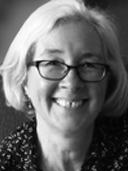 As another academic year reaches completion, we extend our best wishes to Gail Fraser, the Dal Libraries’ Manager of Acquisitions, Metadata and eResources, who will retire after a career of more than forty years on campus.
Gail started working at Dalhousie University as a Library Assistant in August 1980, doing serials check-in at the Kellogg Health Sciences Library. Over the next dozen or so years, she moved to the Cataloguing department and then to Acquisitions, advancing into new roles and responsibilities.
While working full-time, she also completed Nova Scotia Community College courses in cataloguing, serials and government documents management, and information services and retrieval. This training expanded her perspective and provided her with the skills to engage in reference service and subject selector tasks. Given her initiative and leadership abilities, in 2001 Gail was offered the opportunity to become Head of Serials & Acquisitions at the Kellogg Library.
As Gail reflects, “It was an exciting time to come back to serials. In 1980, serials were published in print, and the tools of the trade were a pencil, eraser and Kardex cards. In 2001 Canadian libraries had just joined CRKN (Canadian Research Knowledge Network), then known as CNSLP, or Canadian National Site Licensing Project, and suddenly massive numbers of eJournals, and how to make them available, were the latest thing.”
From 2012–13, Gail served as a member of the Connex Team, which discussed the findings of the Dalhousie University Libraries operational review. Connex made recommendations to the Senior Management Team on how to implement the report’s recommendations, including the establishment of a system-wide Technical Services department. Within the new structure, Gail held the system-wide role of Manager, eResources Access & Subscriptions (2013–19). Following the retirement of two Resources manager colleagues, Gail transitioned to the system-wide role of Manager of Acquisitions, Metadata & eResources (2019–present) while continuing in a local role as Head of Acquisitions at the Kellogg Health Sciences Library.
In 2020, when the pandemic resulted in the university making a rapid transition to online teaching, Gail was instrumental in communicating with eResource vendors and overseeing staff efforts to quickly set up and activate multiple new streaming video collections and eBook packages. During the early days of the pandemic, Gail also played a key role in successfully transitioning Resources staff to their first work-from-home experiences and supporting them as they adjusted to this new reality. Colleagues will miss Gail’s conscientious, thoughtful approach, her sense of humour, and her patience and tenacity in problem-solving.
Gail has shared her skills and knowledge with library colleagues at Dalhousie and across the region. From 2013–16, she served as Treasurer of the Atlantic Provinces Library Association (APLA). She was actively involved with the Novanet Acquisitions/Serials Service Group, serving as Co-Chair from 1996–97 and then as Chair from 2008–09. As a member of this group, Gail was involved in several library management system migrations and provided numerous training sessions for both Novanet and Dal Libraries’ staff. Her most recent experiences in this area were as an Acquisitions/Serials/Electronic Resource Management (ERM) trainer for the Service Group and for Dal Libraries’ staff. She also served on the Novanet Primo SFX Implementation Committee and was a regular member of the Kellogg Library Management group.
Gail has also represented the Dal Libraries and the university by giving presentations at Login Canada Library Day and at the Springer Summit on eContent Assessment. In addition, she participated in the Dal Libraries’ Staff Conference and Pecha Kucha events.
Gail has been the long-time, beloved Quizmistress of the Kellogg Health Sciences Library, where she is known as Amanda Bertwhistle, or “Bertie”. Team members have fond memories of Gail’s food and plant initiatives. She introduced the delightful “Cinnamon Bun Day” and encouraged her colleagues to transplant office and home cuttings as part of an annual plant give-away at the library.
We thank Gail for her dedication and contributions to the Dal Libraries and the university over an incredible 42 years! Her colleagues throughout the Libraries wish her health and happiness as she moves into this new phase in life.
Congratulations, Gail!
ArcGIS Servers Are Temporarily Down
As of late Friday, June 25, our ArcGIS servers are down. We apologize for the inconvenience and are working to resolve the issue as quickly as possible.
In the meantime, please contact us at gis@dal.ca and we will assist you to the best of our ability.
eResources: Linking Issues & (Improvements!)
Recently, you may have noticed some changes when accessing online library resources. That’s because the Dal Libraries (and other Novanet libraries) underwent a major upgrade to our library system on May 17.
If you’ve only searched for print books since then, you may not have noticed many changes (other than how you log into your library account). If you’ve searched for online journals or databases (e.g. MLA, JSTOR, PubMed, Research Library, etc.), you may have noticed some changes to how you access full-text articles.
Prior to May 17, if you used the Libraries’ eJournal search tab, you would have seen an intermediate screen indicating full-text access options in your search results. With the recent system upgrade, you should no longer see this intermediate screen, but instead you should immediately see the results in Novanet. The results indicate journal access options (e.g. Wiley, ScienceDirect, Project Muse, etc.), including print and online content.
When using subscription databases, you may experience temporary issues with the “Get it @ Dal” full-text link. Libraries staff at Dalhousie and throughout the Novanet libraries system are working to correct these issues.
We apologize for any inconvenience you may experience during this ongoing transition. If you experience an issue, please report it to us.
If you need assistance, please contact your liaison librarian or ask for assistance at one of our Dal Libraries’ Service Points. We will continue to post updates on this blog.
Issue Accessing Some eBooks
We are unable to access DDA (demand driven acquisition) eBook titles at this time. The issue has been reported to Novanet and they are working on fixing this issue. We hope to have a resolution soon.
Meanwhile, alternate access to these titles can be gained by going to Proquest Ebook Central and searching by title: https://dal.ca.libguides.com/ebookcentral
We apologize for the inconvenience.
Dalhousie Libraries Welcomes New Dean of Libraries Michael Vandenburg
 On August 15, Michael Vandenburg will begin his five-year appointment as Dean of Libraries at Dalhousie University. Current Dean of Libraries Donna Bourne-Tyson will be retiring after eleven years of extraordinary leadership.
Since May of 2021, Michael has been the Interim Executive Director of the Ontario Council of University Libraries (OCUL). OCUL is the consortium of Ontario’s 21 university libraries, committed to maximizing collective expertise and resources through collaborative efforts. While at OCUL, Michael provided leadership for current initiatives and services, and actively engaged with member library directors to review the consortium’s governance and develop new strategic directions.
Before that, Michael spent twelve years at Queen’s University Library, most recently serving in Acting and Interim Vice-Provost & University Librarian (VPUL) roles. Michael provided leadership for the library and the university through a period of significant change, including navigating the countless operational shifts required due to the pandemic. He also led the allocation and management of library resources in support of university goals and played a key role in developing and supporting the library’s Information Resources Strategy, Digital Asset Management Strategy, and Action Plan to Support Anti-Racism, Diversity, Inclusion and Indigenous Cultures. Representing Queen’s, he worked with OCUL to implement a shared library services platform for 13 Ontario libraries, improving access to library resources for the Queen’s community.
Prior to arriving at Queen’s, Michael worked in public and government libraries in Nova Scotia, Pennsylvania, and Ontario in roles focusing on the digital transformation of library systems and services. As a proud Dal alum (BA’88, MLIS’94), Michael is thrilled to be returning to Nova Scotia and Dalhousie as the Dean of Libraries.
Welcome, Michael!