Late last month, the Killam Library was thrilled to host acclaimed author David Adams Richards. Mr. Richards read from his latest book, Incidents in the Life of Markus Paul, and then answered questions from the audience with wisdom and wit. Missed the reading? Watch it here. 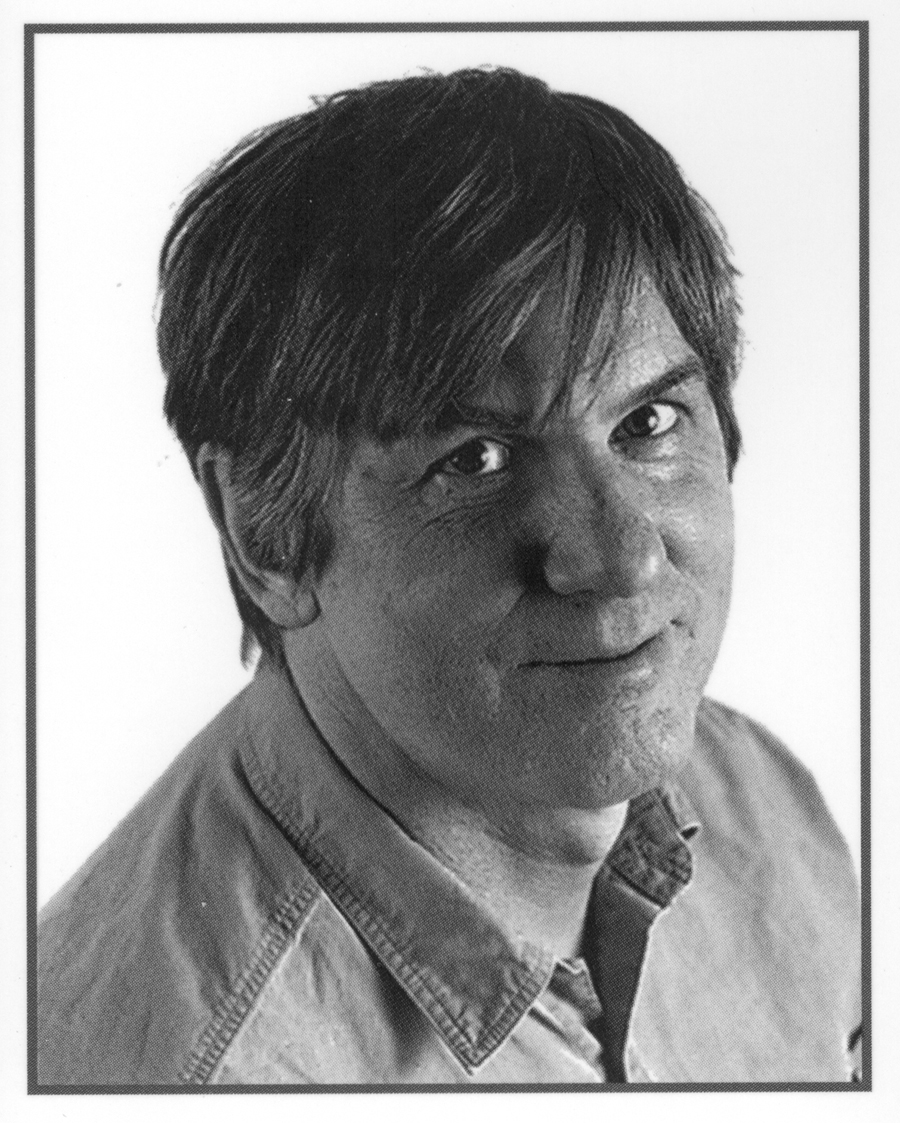
Food and drink policy in Archives and Special Collections reading room
Just a friendly reminder for students studying at the Killam Library that the Archives and Special Collections reading room has a no food and drink policy.
Denying your coffee and snacks is our least favourite thing to do, but we need to maintain a clean environment for the archives, rare books, historical maps, and other unique materials that are accessed in the room. Sealed water bottles and thermoses are permitted, but we suggest students finish their beverages in the atrium and come up when they’re caffeinated.
Accessing SpringerLink
The migration to the new SpringerLink platform took place last week. Since then, we’ve been unable to access some archival journal content and some eBook content on the new platform.
Springer is aware of the problem and is taking steps to resolve it. In the meantime, you should be able to access archival and eBook content on the old platform, which can be reached by clicking on “access old SpringerLink” in the upper right hand corner of the new platform.
Killam Library Artist Residency

THIS OPPORTUNITY IS NOW CLOSED.
CALL FOR LOCAL ARTIST: KILLAM LIBRARY ARTIST RESIDENCY
6 week residency, January 21 – March 1, 2013
Application deadline: Wednesday, December 5, 2012 at midnight
Call for an artist in residency at the Killam Library, Dalhousie University, with support from the Dalhousie Art Gallery, and funded by HRM residency initiative.
The Killam Library is architecturally distinct internally and externally. Completed in 1971 in the Brutalist style, the lack of exterior windows is in sharp contrast to the interior glass courtyard filled with greenery. The slate floors and concrete or glass walls bounce sound through a space intended for research and quiet contemplation. These contradictory architectural qualities are intriguing potentials for an artist to consider, as are the notions of libraries as repositories of knowledge, the physicality of books themselves, student interactions, and the notion of multidisciplinarity. This library is active visually, aurally, socially, and academically.
The following resources are available:
- Archives and special collections – rare books, Canadian small press, comics, music
- Public learning commons, computers, microfiche stations, historic newspapers, a government documents repository, digital resources such as eBooks and eJournals, data databases, and reference librarians to assist with research
- 3D printer, large format printer, lecture halls, viewing rooms
The selected artist will be compensated $500/week for six weeks, to utilize the residency environment at least 15 hours a week. A dedicated work space will be made available in addition to library resources. Applicants must be professional artists with at least three years of public exposition or publication, an HRM resident (living and working in HRM for 6 months), and not currently a student. We welcome applications that are based in any medium of production, performance, and digital media. The artist will be expected to respect the staff and faculty, library users, and the infrastructure.
The Dalhousie Art Gallery is a public art gallery and academic support unit within Dalhousie University. Programming includes an extensive array of contemporary and historical art exhibitions, and critical discourse through presentations and lectures. Killam Memorial Library is the largest of the Dalhousie Libraries and specifically serves the Arts and Humanities, Computer Science, Social Sciences, Science and Management departments. It contains over one million books and is the largest library in the Maritimes.
Your digital only application should include:
- A 250 word description of your proposed project
- 5 images (each file no larger than 400 kb) / short video or sound files (links to online files) / documents of previous and/or proposed work
- CV (no longer than 3 pages)
Send to: residencykillamdag@gmail.com
We thank all applicants for their interest, only finalists will be contacted.
For more information or questions regarding this call, contact: art.gallery@dal.ca or 902.494.2195.
More Chairs on the Way
This time of year, the demand for seating at the Dal Libraries increases beyond capacity. That’s why, when we can, we develop new seating areas: like the four tables and twelve chairs we repurposed after the Killam atrium renovation that are now set up in the lobby of the Killam.
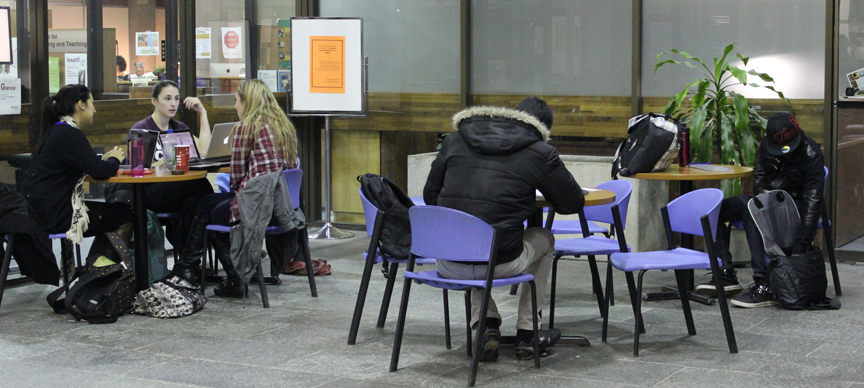
The newest seating area in the Killam is proving to be very popular.
And more good chair-related news: we are currently waiting on a number of chairs to arrive at the Sexton, Kellogg and Killam Libraries. We don’t know exactly when the chairs will arrive, but we’re expecting them soon.
Extended Weekend Hours at the Killam
In addition to Night Owls (the Killam Library stays open til 3 a.m. Sundays-Thursdays from late October until December 17), the Killam will also be offering extended hours on the weekends leading up to exams.

Source: FreeDigitalPhotos.net
Beginning on Saturday, November 24, the Killam Library will open at 8 a.m. on Saturday and Sunday mornings (instead of opening at 10 a.m.). The last day the Killam will open at 8 a.m. on the weekend for this exam season will be Sunday, December 16.
To review, these are the hours of the Killam leading up to exams (effective Nov. 24 and ending Dec. 17)
Sundays 8 a.m.-3 a.m. Mondays 8 a.m.-3 a.m. Tuesdays 8 a.m.-3 a.m. Wednesdays 8 a.m.-3 a.m. Thursdays 8 a.m.-3 a.m. Fridays 8 a.m.-midnight Saturdays 8 a.m.-midnightHappy studying!
Trial Database: Oxford Handbooks Online

The Dalhousie Libraries have trial access to the newly relaunched Oxford Handbooks Online. This access will end on December 15.
The Oxford Handbook Series brings together leading scholars to compose review essays that evaluate the current thinking on a field or topic and make an original argument about the future direction of the debate. Articles review the key issues, reveal original arguments and concepts, and set the agenda for new research. The Oxford Handbooks always been one of the most frequently cited series within scholarly publishing, and for the first time the entire collection of work across 14 subject areas is available online. The new platform provides improved navigation, expanded search, integrated social media, and site tutorials and videos accessible from any page.
For the duration of this trial, access to Oxford Handbooks Online will be available on campus only.
What is Document Delivery?
Ever noticed the

or the

or the

or the

and wondered what Document Delivery is?
No? Well that’s a shame because the Dal Libraries’ Document Delivery service can often get material for you that you can’t find at Dalhousie but that you need for your research. Document Delivery is affiliated with libraries worldwide and has especially close ties to the other Canadian Atlantic University Libraries (CAUL). We even share the same document delivery management system which we also use to connect to other international document delivery systems like OCLC based in Ohio and RapidILL based in Colorado.
Document Delivery requests material from other libraries on your behalf – that means books get delivered to us for you to pick up at the Dalhousie library of your choice. Articles from journals get delivered directly to your Dalhousie email as a PDF link. Articles are normally delivered within 1-3 days as are books from the other CAUL libraries. Books from libraries outside of the Atlantic region are normally delivered by mail so can take a week to several weeks to arrive depending on the location of the lending library.
Last year Document Delivery processed a total of 39,000 requests – 22,000 from Dalhousie patrons, of which 14,000 were for articles, and 17,000 from other libraries for their patrons. And the best part – the service is free for Dalhousie students, faculty and staff. So please keep us in mind when you need an article or a book for your research and you can’t find it at Dal.
For more information about this service, visit the Document Delivery web page.
Spatial Intelligence for Health
On November 13, forty-five health researchers attended the Dalhousie-Esri Canada Spatial Intelligence for Health Forum at the Lord Nelson Hotel. This was the second time Dalhousie co-hosted the event, and this year saw a series of presentations about policy, research, application development, and issues related to care, illness and the future of health care and wellness in Nova Scotia.
The talks included:
- From Information to Outcomes: An overview of information processes and tools
- supporting public health practice in the UK
- Dr. Frank Atherton, Nova Scotia Department of Health and Wellness
- Health Mapping in Primary Care: Using GIS to Achieve the Triple Aim
- Dr. Ajantha Jayabarathan, District Department of Family Practice
- Geomatics from a Social Perspective (Nova Scotia Department of Community Services)
- Using ArcReader to Visualize a Population?Based Framework for Primary Health Care Planning (Nova Scotia Department of Health and Wellness)
- Nova Scotia Community Counts
- Estimating Arsenic Exposure in Nova Scotia Using Geospatial Analysis (Atlantic Path Project)
- Location Tracking and Applications in Health Research (Daniel Rainham, Dalhousie Health Geomatics Lab)
- The Use of GIS by Public Health, CDHA, to Better Understand our Communities (Holly D’Angelo?Scott, Capital District Health Authority)
- Nova Scotia Single Address Initiative (Joe McEvoy, Property Valuation Services Corporation)
The day ended with a panel discussion about data, privacy, the provincial geomatics strategy, and academic research which included James Boxall talking about the larger questions and developments in academic efforts shaping the future of health research. James is the director of the Geographical Information Sciences Centre (GIS), which is located on the second floor of the Killam Library.

James Boxall, director of the GIS Centre, located on the second floor of the Killam Library.
Participants came away with both a greater appreciation of the spatial projects and research taking place as well as having a great many opportunities for networking and talking about collaborations and innovative solutions to the more complex problems of doing more research and application development within a policy framework where privacy is of the utmost concern.
LibQUAL+ Survey 2013
Beginning January 28, the Dalhousie Libraries are asking students, faculty and staff to participate in the LibQUAL+ survey.
The LibQUAL+ survey provides the Dal Libraries with valuable information about your library experience. It is essential for the libraries to receive this information so that we can strive to match your expectations with your experience in the Dalhousie Libraries.
The LibQUAL+ survey is used in over 17 different countries in a wide variety of library environments.
Below are two examples of data that we have gathered from the last time we did the LibQUAL+ survey, in 2010.


Survey Questions
Affect of Service
AS-1 Employees who instill confidence in users
AS-2 Giving users individual attention
AS-3 Employees who are consistently courteous
AS-4 Readiness to respond to users’ questions
AS-5 Employees who have the knowledge to answer user questions
AS-6 Employees who deal with users in a caring fashion
AS-7 Employees who understand the needs of their users
AS-8 Willingness to help users
AS-9 Dependability in handling users’ service problems
Information Control
IC-1 Making electronic resources accessible from my home or office
IC-2 A library Web site enabling me to locate information on my own
IC-3 The printed library materials I need for my work
IC-4 The electronic information resources I need
IC-5 Modern equipment that lets me easily access needed information
IC-6 Easy-to-use access tools that allow me to find things on my own
IC-7 Making information easily accessible for independent use
IC-8 Print and/or electronic journal collections I require for my work
Library as Place
LP-1 Library space that inspires study and learning
LP-2 Quiet space for individual activities
LP-3 A comfortable and inviting location
LP-4 A getaway for study, learning, or research
LP-5 Community space for group learning and group study
Local Questions
LC-1 Access to Archives, special collections
LC-2 Browsing library materials in the stacks
LC-3 Making me aware of library resources and services
LC-4 Providing health information when and where I need it
LC-5 Timely document delivery/interlibrary loan
General Satisfaction
GS 1 In general, I am satisfied with the way in which I am treated at the library.
GS 2 In general, I am satisfied with library support for my learning, research and/or teaching needs.
GS 3 How would you rate the overall quality of the service provided by the library?
Information Literacy Outcomes
IL 1 The library helps me stay abreast of developments in my field(s) of work.
IL 2 The library aids my advancement in my academic discipline or work.
IL 3 The library enables me to be more efficient in my academic pursuits or work.
IL 4 The library helps me distinguish between trustworthy and untrustworthy information.
IL 5 The library provides me with the information skills I need in my work or study.