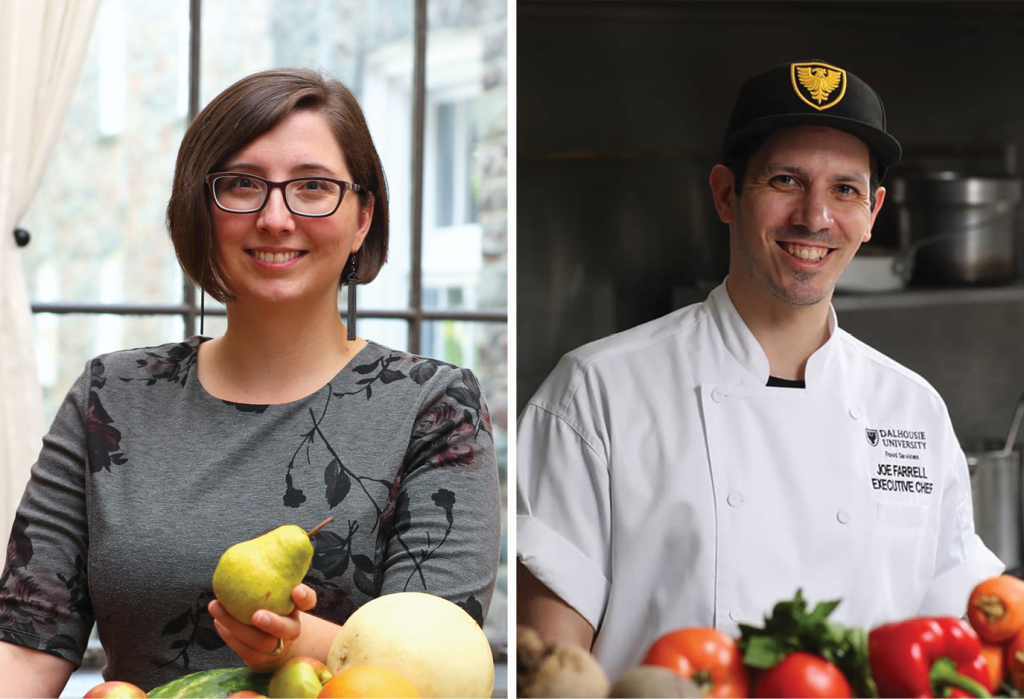
You may have noticed some big changes in the menu this year at the dining halls. The Dalhousie Food Services team has been working hard to make your dining experience the best possible. Now, Dalhousie Food Services Executive Chef Joe Farrell and Dietitian Rai-Lee Gardiner are giving you the scoop on how the menu is designed and what you can look forward to in the dining halls!
The menu has changed a lot this year, why? What are you trying to achieve?
Joe: We have been gathering as much feedback as possible from student surveys, napkin talk boards, daily staff interactions, student ambassadors, and RAs to learn what students want from their dining hall experience. We’ve also collaborated with peers across the country to see what menus and innovations are making an impact in other places.
From all that feedback and consultation, a couple of key concepts surfaced over and over again that really drove our menu concept this year. The first is that we have a diverse population and opportunities for personalization are hugely important to meet those needs.
Rai: Yes! Personalization is key to meeting so many dietary needs. We have a variety of food allergies and intolerances that we are striving to accommodate, as well as restrictive dietary patterns for a variety of personal reasons. We also have students here from all over the world with diverse food traditions and preferences. Having one dish that meets all those needs is impossible – so having stations with built-in customization options really creates the most opportunity for everyone to eat well and be satisfied. It’s also why we try to have a mix of flavourful dishes from around the world, as well as more simple flavoured dishes to which you can add your choice of seasonings and sauces. It gives a lot of possibilities for those who like anything and everything – and for those who don’t!
Joe: The second key driving concept in our menu is Start with Vegetables. Vegetables are front and centre at most of the stations in the halls and when we were planning the menu, we wanted to make sure they were as fresh as possible. We have worked hard to locally source as much as we can, and to prepare small batches and recipes from scratch as much as possible to make sure we are doing justice to these beautiful ingredients. We have moved toward small batch, just-in-time cooking to help produce better quality meals. Sometimes it means you need to wait a few minutes for it, but fresh food is worth the wait! This fresh and plant-forward concept seems to really resonate with student populations across Canada.
There are a lot of static stations and offerings. How can I get creative using them to keep things interesting?
Joe: With so many different stations to choose from, think of it as a “choose-your-own-adventure” dining experience! Before grabbing a plate, take a quick walk around the hall and see what is being offered that day. Don’t be afraid to grab a little bit from several different stations to layer flavours and create some unique culinary combinations. Our simply prepared sautéed and roasted vegetables work as a nice base to build on with flavours from other areas, and don’t forget to check out the spices, herbs, and condiments. A dash of hot sauce or a sprinkle of parmesan can really round out the flavours. Keep an eye out for “dining hacks” to help kickstart your creative process.
How can I make sure I’m eating a healthy balanced diet in the dining hall throughout the term?
Rai: Most Canadians really struggle to get enough produce into their diets. By making vegetables the focus point in most of our offerings, we make it easier to build a balanced meal. We have a lot of students that are interested in eating a healthy, balanced diet. Many are vegetarian, vegan, flexitarian, or looking at ways to eat more sustainably. You can walk around the dining hall here and easily build a plate that is at least half fresh colourful produce very easily with this new menu concept, and then choose protein and carbohydrate-rich foods to compliment that without overwhelming the plate and throwing off the nutritional balance.
Also, I like to remind students that they don’t need to stress about nailing a perfect healthy plate 100% of the time. We do have some “less healthy” options available, and it’s okay to have a treat sometimes! Try to aim for healthy, whole grain, produce-rich, and balanced plates 80% of the time, then give yourself a little leeway for an ice-cream cone or poutine on occasion!
If students are concerned that they might need a little advice or help on how to eat well, I am always available for a consultation! If they book a meeting, we can discuss all the unique challenges that they have, such as a crazy class schedule, dietary restrictions, and preferred foods, and come up with custom recommendations for sustainable dietary tweaks that can help make a difference in their health.
How can I find out about special events in the dining hall?
Rai: Well, you can keep an eye on the monthly Eat Smart newsletter for some news about upcoming events, like local food days and dietitian pop-up events in the dining halls. You can also check out our Instagram account @DalFood or Dal Food website. We’ll also post signage around the dining halls leading up to events.
If you have ideas for special events, you can also let Joe or I know so we can consider them in the coming event calendar! You can email me a dietitian@dal.ca or stop either of us next time you see us in the dining halls to chat!
Leave a Reply