 Due to circumstances beyond the control of the publisher (fibre-optic problems in Scotland) Rock’s Backpages is currently down. Their hosting company is working on the problem and they hope to return to normal service as soon as possible. Rock’s Backpages apologize for the inconvenience.
Covidence — improve your systematic reviews
Dalhousie Libraries is pleased to offer an institutional subscription to Covidence systematic review management software.
Covidence is a productivity tool developed with the aim of making the conduct of systematic reviews faster, easier, and more enjoyable! Covidence is a not-for-profit service that started in Australia and is now partnering with the Cochrane Collaboration to assist reviewers around the world.
This review productivity tool is now available for all Dalhousie affiliates and can be used for knowledge synthesis projects in any discipline, such as systematic or scoping reviews, or less formal reviews such as those for assignments or other projects. Citation lists can be easily imported from citation databases, such as PubMed, Scopus, etc., or from citation management software, such as RefWorks or EndNote. More information about using this tool can be found on the Covidence Knowledge Base. 
Dalhousie’s subscription permits unlimited reviews for any Dalhousie-affiliated user. Any reviews created or migrated to the Dalhousie University Library account will have access to the full functionality of the software, including unlimited reviewers, and online support from Covidence’s technical support. If you have existing reviews under a personal Dalhousie or non-Dalhousie account and you would like information on migration to the Dalhousie site license, go to our Covidence page or contact systrev.help@dal.ca.
The software is secure and fully online, so there is no need to download anything and it is accessible from mobile devices through the browser function.
A good place to start with instructions on joining the Dalhousie University Libraries account, in addition to the Dalhousie’s Knowledge Base page, is the Covidence page of the Systematic Review: A How-To Guide.
For more information or support in using Covidence, contact systrev.help@dal.ca to be put in touch with the librarians at the Kellogg Health Sciences Library.
Welcome Courtney Bayne, Records Manager
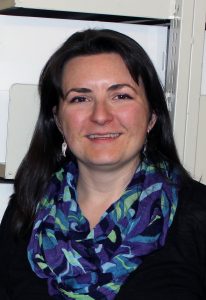 We are very pleased to welcome alumna Courtney Bayne to the Dalhousie Libraries in the new role of Records Manager.
Reporting to the University Archivist and working closely with the University’s Records Committee, the Records Manager will work with all administrative and academic units across the university advising them on the development of policies and procedures that supports the implementation of the University’s Records Management Policy. The Records Manager ensures the effective, efficient, and economical management of the University’s information resources are handled in an ethical and sustainable manner.
Courtney holds a Master in Information Management from Dalhousie and has over ten years of experience in the records and information management field. She has held numerous positions with the Province of Nova Scotia and volunteers with the Canadian regional team of the International Records Management Association (ARMA).
“It is great to be a part of the warm and welcoming community here at Dalhousie,” said Courtney. “I started my journey in records management with a Libraries and Technology Diploma from NSCC and while in school I worked at the Nova Scotia Archives. After being introduced to the records management field I felt connected working with individuals in improvement of processes and providing guidance in the application of standards, procedures, and policies. Identifying the operational value of the information that is created in an organization and persevering it accordingly is very important to me. As an ARMA member I keep engaged with the ever-evolving information and records management world. I love the challenges that arise, working though puzzles, and making the end result functional and easy to apply for end users. I look forward to working with the community at Dalhousie to make a robust and proactive records management program,” said Courtney.
“We are pleased to have an individual with Courtney’s extensive knowledge and experience in records management joining us at Dalhousie as the Dal Libraries continue to provide leadership in supporting the implementation of records and information management best practices across the university,” said Michael Moosberger, Associate University Librarian Archives, Special Collections and Records Management & University Archivist.
Courtney is the proud owner of a German Short Haired Pointer puppy named Digby that she enjoys taking on hikes and runs.
Esri Canada App Challenge & GIS Scholarship
 1. ESRI CANADA APP CHALLENGE
The ECCE App Challenge is a coding competition that promotes innovation and creativity within Dalhousie’s GIS Centre, a member of ESRI Canada’s Centres of Excellence. Each year, teams of students at ECCE schools across Canada are tasked to create new and unique apps powered by Esri technology and open data to help address a problem related to a specific theme.
The App Challenge at Dalhousie University will take place between March 18 (noon) and March 25 (noon). Teams will be given one week to complete their apps, and to submit the source code accompanied by supporting documentation, team profiles, and a video sales pitch for their app. These will be assembled and hosted in a GitHub repository used by the ECCE to showcase the apps created by each team.
Challenge rules:
– Maximum three students per team (undergrad or graduate)
– Your app must use open data
– You app should focus on the theme of smart cities
– You may use any platform for development (e.g. Web, iOS, Android)
– Your app must include at least one Esri component (e.g., ArcGIS API for Javascript, ArcGIS SDK for iOS), although other additional technologies are encouraged
– Your team must produce a sales pitch video explaining what your app does, and why it is valuable
– Any source code that you produce for your app must be shared under the GPL 3.0 open source license
– Your team must submit a completed app to the ECCE program at the end of the week
How to register:
Get your team together and then contact either James Boxall (james.boxall@dal.ca) or Gwen MacNairn (g.macnairn@Dal.Ca) with the GIS Centre at Dalhousie University. Send the names and email addresses of your team members, and choose/submit a team name.
What can be won?
A cash prize of $1500 (yes, that’s $500/team member) will be awarded to the top ranked Dalhousie team. Dalhousie judges will forward submissions from four of the top Dalhousie teams to ESRI Canada for the national competition. Winners of the national competition will be awarded an all expenses paid trip for all team members to the Esri User Conference in San Diego, California (July 9-13, 2018).
Schedule: runs for one week, from 12 noon on Sunday, March 18 to 12 noon on Sunday, March 25, 2018.
Eventbrite: http://bit.ly/2tko5cZ
***************************************************************************************************************************
2. ESRI CANADA GIS SCHOLARSHIP GUIDELINES
This scholarship is for a high achieving Dalhousie student who has integrated GIS technology into their studies at Dal. The scholarship package will help support a currently enrolled student to continue their studies in GIS and consider GIS as a future career option.
Scholarship package includes:
1) A one-time payment of $500
2) A perpetual license of Esri’s ArcGIS software, for education and research use:
• ArcGIS for Desktop Advanced
• ArcGIS for Desktop Extensions, including: ArcGIS Spatial Analyst, ArcGIS 3D Analyst, ArcGIS Geostatistical Analyst, ArcGIS Network Analyst, and ArcGIS Publisher
• ArcGIS for Desktop Advanced
• One-year ArcGIS Online Organization Plan (includes 100 service credits and 1 named user)
• One year of complimentary maintenance (which provides software updates, technical support and unlimited access to e-learning courses through the Esri Training site)
3) A one-year Professional-level subscription to the ArcGIS Developer Program (ADP), which includes ArcGIS Enterprise for development purposes as well as CityEngine
4) Select Esri Press Publications including:
• Python Scripting for ArcGIS
• Getting to Know Web GIS, 2nd Edition
• The Esri Guide to GIS Analysis, Volume 3
5) Two Esri Canada instructor-led training courses
6) Registration to one of Esri Canada’s User Conferences in 2018
7) A personal and editable profile in the Esri Canada GIS Scholarship Web Portal
Application Package must include:
– A cover letter (highlighting GIS & RS activities)
– A current CV/Resume
– An academic transcript (can be unofficial)
– GIS Poster* (attach as a PDF)
– GIS Summary Report** (attach as a PDF)
Suggested guidelines for the Poster* and Report** are listed below.
Email your application package to the Dal GIS Centre: james.boxall@dal.ca
Specify subject as: GIS Scholarship
Deadline to apply: Sunday, March 25, 2018 (on or before 11:59 p.m.)
**************************************************************************************************************************
3. 2018 INTERNATIONAL ESRI YOUNG SCHOLARS AWARD
This is a national competition which will be awarded to one Canadian student. If you follow the international guidelines, the same poster and summary report can be submitted to both the Dal GIS Centre (by March 25) and to the Esri Canada Young Scholars Award (by March 29, 2018).
Submission package must include:
– Contact information
– Institution name and program of study
– Personal statement describing your experience with GIS
– Academic transcript (can be unofficial)
– GIS Poster* (attach as a PDF)
– GIS Summary Report** (attach as a PDF)
International guidelines:
*GIS Poster
• Must use ArcGIS software
• Must be created only by the applicant
• Graphics be of sufficient quality for printing (300 dpi)
• Portrait orientation (24 inches wide by 36 inches high)
• File size should not exceed 10 MB
**GIS Summary Report (explains your project or research):
800–1,000 words maximum
• Can include maps and other illustrations
Submit via: https://scholars.esri.ca/eys-application/
Deadline to apply: Thursday, March 29, 2018 (before 5:00 p.m.)
***************************************************************************************************************************
Trial of AHFS Clinical Drug Information
 We would like to draw your attention to a free 30-day on-campus trial of AHFS Clinical Drug Information™ (AHFS CDI), with real-time updates to AHFS Drug Information® and drug shortages, which you can access from any device.
Each user must create their own account in order to log in, and save preferences, favourites, and personal notes.
To login, create an account while on the Dalhousie network with your email address at www.ahfscdi.com. The website is mobile-optimized and can be used from any device. There is also a native iOS app for iPhone/iPad available in the App Store. The Android version is coming soon. Please note that you will only have full access if you are signed on to your institution’s network. If you are outside of the network, you will only have limited access to the Drug Shortages content.
If you are having technical problems or questions about the drug or drug shortage content, please contact ASHP Software Support.
An evening with Donna Morrissey
Join us for an evening with Donna Morrissey as she reads from her Thomas H. Raddall Award-winning novel, The Fortunate Brother. All are welcome.

Monday, March 19, 7 p.m.
Halifax Central Library, Room 301
“One of the very best literary novels I have read in years.” — Ron Rash, NYT best-selling author.
Presented by Dalhousie Libraries and Halifax Public Libraries.
Link to (free) tickets: https://www.eventbrite.com/e/a-evening-with-donna-morrissey-tickets-43884616068
Lecture By Dr. Daniel Paul
Dr. Daniel Paul, Mi’kmaw historian and elder, will discuss his landmark book, We Were Not the Savages, this year’s official Dal Reads selection. We Were Not the Savages is a history of the near demise, from a Mi’kmaq perspective, of ancient democratic North American First Nations, caused by the European invasion of the Americans, with special focus on the Mi’kmaq.
Free copies of We Were Not the Savages will be available at the lecture. All are welcome.
Link to Eventbrite (free tickets): https://www.eventbrite.com/e/dal-reads-lecture-with-dr-daniel-paul-tickets-43898702200
Friday, March 16, 10:15 a.m.
Haley Institute of Animal Science and Aquaculture, Room 200
58 Sipu Awti, Dalhousie’s Agricultural Campus, Truro

Dalhousie hosts meetings as part of national discussion on research data management
By Michele Charlton & Marlo MacKay
The three federal research granting agencies, the Canadian Institutes of Health Research (CIHR), the Natural Sciences and Engineering Research Council of Canada (NSERC), and the Social Sciences and Humanities Research Council of Canada (SSHRC), are consulting with stakeholders across Canada on the development of a Tri-Agency research data management policy.
 On February 15, more than fifty stakeholders from across the Atlantic region gathered at Dalhousie University and online to take part in a discussion with Matthew Lucas, who represented the granting agencies and is the Executive Director of Corporate Strategy and Performance for SSHRC; and Jeff Moon, who is the Director of Portage, a national network launched and supported by the Canadian Association of Research Libraries (CARL) that develops resources and platforms to support researchers and institutions in good data management practices.
Participants included vice-presidents of research, university librarians, CIOs and other IT professionals, deans, and additional professionals from libraries and research offices. Similar meetings have already taken place with stakeholders in Ontario, Quebec, British Columbia, and Alberta.
The importance of research data management
The agencies’ consultations build on the 2016 Tri-Agency Statement of Principles on Digital Data Management, which outline the agencies’ overarching expectations regarding research data management and the responsibility of researchers, research communities, research institutions, and research funders in meeting these expectations.
As noted in the Statement, “when properly managed and responsibly shared, digital research data enable researchers to ask new questions, pursue novel research programs, test alternative hypotheses, deploy innovative methodologies and collaborate across geographic and disciplinary boundaries. The ability to store, access, reuse and build upon digital research data has become critical to the advancement of science and scholarship, supports innovative solutions to economic and social challenges, and holds tremendous potential for Canada’s productivity, competitiveness and quality of life.”
The agencies believe that research data collected with the use of public funds should be responsibly and effectively managed and be made available for reuse by others whenever possible. Libraries and others in academic institutions are leading the charge to support researchers in adopting good data management practices.
Researchers collect and rely on increasing amounts of digital data, but they don’t all have the tools or training to effectively manage this data. This creates a risk that sensitive data may be inappropriately released or that valuable data may be lost altogether. Insecurely stored research data may fail to meet ethical and legal requirements, or may become inaccessible due to hardware obsolescence.
“Effective data management also helps researchers share their data more broadly, which in turn creates new opportunities to advance research. The benefits of this kind of data sharing are evident in disciplines like astronomy,” said Matthew Lucas. While the agencies recognize a number of factors that preclude data sharing, the agencies encourage researchers to provide access to their data whenever possible.
In situations where sensitive research data cannot be shared, good data management practices are even more crucial to ensure that data is securely deposited and protected.
Providing the tools and training to help successfully manage data
Dalhousie has tools and services made available by the Dalhousie Libraries to help researchers share and preserve their data, including:
· DalSpace, an institutional repository which collects, preserves, and distributes digital material produced by the Dalhousie community.
· A recently launched data repository called Dataverse. Dataverse is an open source software application, developed at Harvard, that allows researchers to deposit, cite, preserve, and appropriately share their research data.
· Data Management Services including access to the DMP Assistant, to develop data management plans.
“A data management plan is a living document that you edit over time as your project evolves,” said Jeff Moon. “Portage is building a community of practice across Canada that involves over 100 volunteer experts providing support for RDM platforms and services such as the DMP Assistant, data repository options, help with data curation, developing metadata standards, preservation and training.”
“Libraries are first and foremost concerned with providing equitable service. We serve all researchers, whether they have funding or not, so we are particularly interested in ensuring the research data management policies and the services we develop are inclusive for all researchers,” said Donna Bourne-Tyson, University Librarian of Dalhousie. “We were pleased to host this important discussion for the Atlantic region and to hear colleagues’ comments and questions,” said Bourne-Tyson.
The agencies hope to launch a public online consultation on a draft Tri-Agency Research Data Management Policy later this year.
Fair Dealing Week: Fair Dealing & Students
This is the fourth and final entry in our series of blog posts recognizing Fair Dealing Week 2018 (February 26–March 2, 2018).
The copyright landscape in Canada has undergone significant changes recently. To ensure a fair and reasonable approach to the use of copyright protected materials on campus, Dalhousie has sought to balance the rights of users with those of creators. To help accomplish this, the university has established a Copyright Office and has most recently adopted updated Fair Dealing Guidelines.
As students of Dalhousie University, you may copy materials for which the university (e.g. the Library) has negotiated licenses, according to the terms of the individual license agreements. In addition to license agreements, fair dealing allows you to make use of a work for yourself for the purposes of private study, research, criticism or review, news reporting, education, parody or satire.
For example, this means you can copy one article from a journal, or one chapter from a book for the purpose of your studies and research. Without fair dealing, any time you wished to make use of a copyrighted work in your course, you would need permission from the copyright holder, perhaps even paying a licensing fee. This short presentation illustrates how many basic use of works that we might take for granted would not be legal without fair dealing:

For more information on how fair dealing affects Students, you can read Fair Dealing for Students, and consult our Fair Dealing Guidelines. Contact the Copyright Office with any questions or comments at copyright.office@dal.ca
Fair Dealing Week: Faculty & Fair Dealing
This is part three in a four-part series of blog posts recogning Fair Dealing Week 2018 (February 26–March 2, 2018).
Fair dealing is a powerful tool for using copyrighted works in the classroom. It allows instructors to use photos and videos in class lectures, reduce the cost of materials for students, and facilitate access and accommodation for students. Faculty can also benefit from fair dealing in the context of research, allowing academics to build upon existing research, and facilitating access to scholarly works.
Fair dealing is available in the contexts of education and research, but it is important to remember that copyright in Canada is a balance between users’ rights and the creator’s rights. So, while instructors can engage in copying for their classes, it must be done in a fair and ethical manner.
One of the best resources to make sure your class readings fall under fair dealing is to make use of the Dalhousie Libraries Course Reserves Service. By using course reserves, you can help take the guesswork out of applying fair dealing guidelines for every work that is used as part of class readings, and reduce the cost of material for your students. Course reserves can upload material to Brightspace, or create Stable Links to course readings.
Dr. Mike Smit discuss the importance of fair dealing in this video.
For more information on how fair dealing affects Faculty, you can read about Fair Dealing for Faculty, and consult our Fair Dealing Guidelines. Contact the Copyright Office with any questions or comments at copyright.office@dal.ca