SIM is hiring part-time academics to teach the following courses in the summer 2022 term:
Please apply through PeopleAdmin, via the links above.
Questions? Email sim@dal.ca
SIM is hiring part-time academics to teach the following courses in the summer 2022 term:
Please apply through PeopleAdmin, via the links above.
Questions? Email sim@dal.ca

Photo from obituary linked above
SIM is sad to share that MLIS alum Bonnie Waddell has passed away. Bonnie graduated from the Master of Library & Information Studies (MLIS) program in 1973 and was the former University Librarian at Nova Scotia Agricultural College. Our thoughts are with Bonnie’s loved ones at this time.
From the obituary, which can be read in full here:
Waddell, Bonnie Ruth – April 6, 1945 – October 21, 2021, Upper Onslow, NS
Bonnie has strummed the last song on her ukulele and read the last page in her book. Born in Rhode Island, Bonnie was a daughter of the late Dr. William and Barbara (Christie) Waddell. She grew up in Boston and Denver. She graduated from Colorado State University and then took a job in a library because she wouldn’t have to pay late fees as a staff member. Moving to Nova Scotia where she had family roots, she obtained her Masters in Library Science from Dalhousie University. Upon graduation, she worked at South Shore Regional Library, Colchester East Hants Public Library and finally, as chief librarian at the Nova Scotia Agricultural College. While there, she was involved in library projects in Africa and South America. She was the Canadian representative on an international library board in Washington, DC.

[Source: Linkedin]
Tanja graduated from SIM in 1996 and is a member of Beta Phi Mu International Honours Society. Since her graduation, Tanja has held a variety of roles including Adjunct Professor at DalSIM, Liaison Librarian at Acadia University, University Librarian at NSCAD, and, most recently, as University Librarian at Mount Saint Vincent University, a role she’s held for almost 10 years. Tanja is also an active member of various professional associations and groups. During her career, she has held positions with Novanet, the Council of Atlantic University Libraries (CAUL), the Atlantic Provinces Library Association (APLA), and the Halifax Library Association. In June, she received the APLA Merit Award.
Tanja’s research interests include the history of libraries and library association in the Maritime Provinces with a particular focus on the women represented in the founding of APLA and the HLA. Her ongoing participation in Ex Libris has “provided a voice and raised awareness of library activities in the maritime region.”
Re-posted from Dal News. Click here to read the full profile:
 As an information management professional, one of Emily Speight’s favourite professional topics is privacy — from its relevance to our democracy to its importance for every individual. As a student in the Master of Information Management (MIM) program, she gravitated towards courses that dealt with the topic, and even found other ways to bring it in.
“If there was flexibility on an assignment, I turned it into a privacy assignment. I put a privacy spin on everything. And I think that made me realize just how passionate I am about that topic,” says Speight.
Now, that passion combined with her new MIM designation has taken her all the way to a new role focused squarely on privacy for professional services firm Deloitte.
Beyond her favourite topic, Speight says she enjoyed all the courses in the MIM.
“I remember looking at the course list as I was enrolling and there wasn’t a course that I didn’t want to take; they were all things that were really applicable to my work,” says Speight.
Once she started, she also came to appreciate their practical approach. “Within two weeks of starting courses, I had concepts I could take back to my work and make a difference. So, I was able to apply what I was learning immediately,” she says.
Speight started her MIM in September 2018, after her husband had finished his MBA online. “The day we drove home from his convocation, as we unpacked the car, I said, ‘it’s my turn now, I’m going back to school,’” recalls Speight.
She says she chose the MIM for its singular focus on information management (compared with other library programs where information management is just one component), and for Dalhousie’s reputation. She also liked the fact that the program was online so she could keep working. “That means I don’t have to quit my job. I can do it as part of my life,” she says.
The School of Information Management is pleased to announce that Master of Information (MI) students Vinson Li and McKenzie Young have been selected as the ninth and tenth recipients (respectively) of the Dalhousie-Horrocks National Leadership Fund.
This Fund was established in 2007 to honour Dr. Norman Horrocks, OC, PhD, FCLIP (1927-2010) for his outstanding leadership in the field of librarianship in North America, Australia, and Europe. Over several decades Dr. Horrocks, former Director of the School of Information Management and Dean of the Faculty of Management at Dalhousie University, pursued a distinguished career of very active involvement in professional associations in the United Kingdom, Cyprus, Australia, the United States, and Canada. His many contributions, for which he received local, national and international recognition, have advanced the field and the careers of countless individuals. The fund supports a scholarship and an associated lecture series through an endowment donated by the many former students, colleagues, friends and admirers of Norman Horrocks.
 Vinson Li is originally from Toronto, ON and moved to Halifax in fall of 2020. Vinson began a Bachelor of Science degree with a specialty in pharmaceutical chemistry at the University of Toronto. They then transitioned into and graduated with a Doctor of Pharmacy, also at the University of Toronto. Their career working in libraries began working with Hart House Library at the University of Toronto. In 2020, they started their MI degree at Dalhousie University. Currently, Vinson is a reference intern at the W.K. Kellogg Health Sciences Library. They are involved with a scoping review that looks into how undergraduate medical education programs around the world handled the shift to online learning during the COVID-19 pandemic. They also work with Dr. Philippe Mongeon on several projects involving bibliometrics and scholarly communications. One project led to the publication of a conference proceeding about mapping the Canadian library and information science research landscape. Vinson considers helping others to be their top priority. During the summer working at the Kellogg, they remember helping a student refine a search for a review paper over the course of a few weeks. When they are not working or studying, Vinson likes to try out new recipes, garden, or take on a new sewing project despite having three others ongoing. They hope to graduate in summer of 2022 and while they aspire to be an academic librarian, Vinson is willing to keep his mind open to opportunities of all sorts.
 McKenzie Young is a full time MI student currently in her last year of study. Originally from Vancouver, BC, McKenzie graduated from University of British Columbia (UBC) with a Bachelor of Arts in Anthropology and History. In her undergrad, McKenzie worked for a variety of GLAM (Galleries, Libraries, Archives, Museums) institutions including the PoCo Museum and Archives and as a researcher for UBC with many of the local archival repositories. After graduating from UBC, McKenzie worked at the Gathering Place Community Library as well as in federal government records management. In 2020, she moved to Halifax and started at Dalhousie University. Since moving to Halifax, McKenzie has prioritized opportunities to serve the Dalhousie community, both in and out of the MI program. In the MI program, McKenzie joined the School of Information Management Student Association, working to improve the experience of SIM students. In the past year, she has worked at Dalhousie’s Sexton Design & Technology Library as the Reference Intern, helping students with research inquiries. Outside of work and school, McKenzie predictably enjoys reading, but also camping, cooking, and trying to keep her six plants alive. Following graduation, she aspires to continue her work supporting communities at either academic or public libraries.
This award will be presented at the Dalhousie-Horrocks National Leadership Lecture in January 2022. Stay tuned for more details!
The Information Management Public Lectures give attention to exciting advances in research and professional practice. The topics are diverse reflecting the importance and global extent of Information Management in today’s society. The lectures are free of charge and open to all, unless otherwise stated.
All 2021-2022 lectures will be held virtually on Microsoft Teams. Click here for the full schedule. Lecture will be recorded and posted on our YouTube channel.
 Raymond Frogner
Head of Archives, National Centre for Truth & Reconciliation
University of Manitoba
Lecture details
Monday, November 1st, 2021
5:30 to 6:30pm (ADT)
Microsoft Teams (click link at above date/time to join)
Abstract: After six years of work, the Truth and Reconciliation Commission of Canada (TRC) had acquired approximately four million documents and over seven thousand Survivor statements documenting the history and legacy of the residential school system in Canada. The next step was to order and sort these records to create an archives that could respectfully and effectively preserve and make accessible these records in a manners that addresses the colonial nature of their content and their profound meaning for both Indigenous peoples and settler society. To make a decolonizing archives. This talk will discuss the acquisition work to bring in such a disparate set of records, and the projects designed to promote their decolonizing reference and use.
Bio: Raymond Frogner graduated with an M.A. in history from the University of Victoria and an M.A.S. from the University of British Columbia. He was the archivist for private records at the University of Alberta where he taught a class in archives and Indigenous records. He was formerly an archivist for private records at the Royal BC Museum where his portfolio included Indigenous records. He is currently the Head of Archives at the National Centre for Truth and Reconciliation. He is also the co-chair of the International Council for Archives Committee on Indigenous matters. In 2019 he was the principal author of the ICAs Tandanya/Adelaide Declaration concerning Indigenous self-determination and archives. He has published two articles in Archivaria on the topics of archives and Indigenous rights. Both articles have won the W. Kaye Lamb Prize. He continues to publish and present on issues of Indigenous identity and social memory. In 2020 he was nominated a Fellow of the Association of Canadian Archivists.
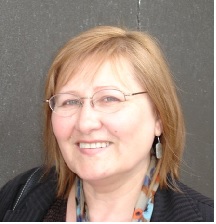 It is with great sadness that the School of Information Management (SIM) notes the passing of our friend and colleague Dr. Marina Pluzhenskaya.
Marina joined the SIM family in the Fall of 2009, launching a course in Knowledge Management. From 2009 on, Marina was a frequent professor in our Master of Information (MI) and Master of Information Management (MIM) programs, teaching Organization of Information, Knowledge Management and related courses. Marina also served as the Coordinator of the Interdisciplinary PhD (IDPhD) program from 2009 to 2011, then as Acting IDPhD Director from 2011 to 2012.
Marina was an outstanding teacher, and students frequently commented on her approachability, dedication, knowledge, and ability to stimulate thoughtful debate. She was extremely engaged with our students and programs, and worked tirelessly to ensure all students could connect with the materials and assignments. Marina will be remembered for her passion for the field, her incredible support and enthusiasm, and for her compassion.
Click here to read the full article.
More than a dozen researchers from Dalhousie have received funding for novel social sciences and humanities projects that will explore such things as accessible design standards for an aging population to the challenges of being a frontline retail worker during the COVID-19 pandemic.
Dr. Colin Conrad (SIM Assistant Professor) received a SSHRC Insight Development Grant.
Dr. Joyline Makani (SIM Assistant Professor and Killam Librarian) was awarded a SSHRC Partnership Engage Grant.
Thirteen selected projects received almost $791,000 from the Social Sciences and Humanities Research Council (SSHRC) Insight Development Grants program, which distributed $39.5 million in total to 662 recipients. Two additional Dal projects were awarded a SSHRC Partnership Engage Grant and a SSHRC Connection grant.
SSHRC is one of the three federal granting councils responsible for supporting the researchers and scholars who are strengthening science and evidence-based decision-making, while nurturing a culture of curiosity in Canada. Insight Development Grants are available to both emerging and established scholars for research initiatives of up to two years. These grants support research in its early stages, enabling the development of new research questions, methods, and ideas. Partnership Engage Grants provide support for research that will inform decision-making at a partner organization while Connection Grants support activities that facilitate the exchange of research knowledge.
“Congratulations to our latest SSHRC grant awardees,” says Alice Aiken, vice president research and innovation at Dal. “This essential funding allows our researchers to do important, early stage inquiry that will ultimately lead to a deeper understanding of how we interact with each other and with the world around us.”
For more information, visit the Social Sciences and Humanities Research Council’s website.
Congrats Colin and Joyline!
Elphege Bernard-Wesson (MLIS ’20) was featured in a Saltwire article about the online video series, ASL Story Time. Watch on the Digitally Lit YouTube channel here.
Excerpt shared below. Click here to read the full article.
Storytelling has to be the oldest art form we have, dating back to the birth of language when oral histories took shape and tales of ancestral deeds and mythic explanations for the world as humans knew it were passed on from one generation to the next.
Centuries later, the practice persists, from an author reading their work off the printed page for an appreciative audience to parents sending children off to dreamland with a tale out of a favourite, dog-eared volume. The experience can be heightened with gestures, characters and whatever acting skills the storyteller has at their command.
In the digital age, two Nova Scotian practitioners of American Sign Language present the online video series ASL Story Time, bringing East Coast authors’ work to life for a young audience that might not get to enjoy them through traditional means.
Ellershouse high school student Kaylee Harding is a youth ambassador with Digitally Lit, which promotes literary practices with digital tools among Atlantic Canadian youth. An ASL user who learned the language to communicate with her uncle who is deaf, Harding proposed ASL Storytime as a way to provide children who are deaf or hard of hearing with enjoyable tales at a time when they may not have been able to access school or public libraries.
“Especially if their parents don’t know sign language, then there’s no way that they can get those stories read to them. So that kind of halts their progression,” says Harding, who was partnered for the project with deaf mentor Elphege Bernard-Wesson, joining her onscreen to help relate the stories Pirate Year Round by Marla Lesage and, in a brand-new video, The Snow Knows, by Jennifer McGrath.
Bernard-Wesson is a 2020 graduate from Dalhousie University’s Master of Library & Information Studies program, currently working as a reference and instructional librarian with Washington, D.C.’s Gallaudet University. She immediately saw the value in the ASL Story Time concept as both educational and entertaining, and with Harding she provides expressive sign language narration that brings the stories to life for viewers of all ages.
“To have this as a resource is wonderful and I hope this will be of help regarding learning sign language for everyone,” writes Bernard-Wesson in an email.

Re-posted from Dal News:
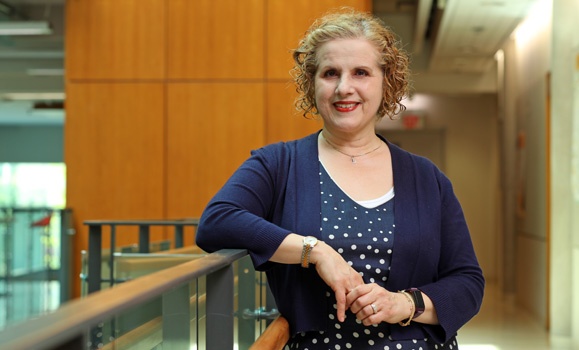
(Credit: Nick Pearce)
As Dalhousie’s top academic governing body swings into action again after a short summer break, it does so with a new interim chair — the first woman to occupy the top Senate role in nearly 30 years. Louise Spiteri, a professor in the School of Information Management, steps into the position after several years of active service in Senate that included a year as interim vice-chair of academic programs (2020-2021). As interim chair, Dr. Spiteri will provide general oversight of the business of Senate (including regular meetings), serve as chair of the Governance and Planning committee and sit on Dal’s Board of Governors — the university’s other governing body.
Dr. Spiteri sat down with Dal News recently to discuss a bit about her path to Senate, what motivates her and her priorities for Senate in the months ahead.
You’ve been a member of Senate since 2015. What motivated you to join initially?
I’ve always had a real interest in governance. I’ve been in academia for half my life. I started my work life as a high school teacher, and so I’ve always been heavily invested in education and curriculum design. I’ve also served in a number of scholarly associations on the governance committees and have a keen interest in academic governance.
I’m not a person who likes to sit by the sidelines. I do believe that we have an obligation as members of the academy to contribute to the governance of the university. I felt this was a really good opportunity when the call came out. It’s very much an interest in governance and having a voice in the way that programs are designed. With a bicameral system of governance, I think it’s very important for Senate to have a strong voice and it’s a good partnership with the Board of Governors as well.
How has Senate changed during the years in which you’ve been active and are there areas for further growth that you’d like to champion?
The most obvious change to Senate has been in size. It has grown significantly. We are over 90 senators now. I think that was a very important move because it expanded the scope of Senate to make it more diverse and inclusive. We have a greater representation from the different constituents on campus, including part-time faculty. I think it also means that the decisions that Senate makes represent better the academy. It’s a bigger voice and the more perspectives you have, the richer the end product. I think that’s been a very positive move.
I’ve seen a lot of growth. We have a long way to go, but we have become more diverse. I think Senate better represents the diversity of the members of Dalhousie now than it did when I first started. That’s partly to do with the size of Senate, but it’s also because [former chair] Kevin Hewitt did such an amazing job of emphasizing the EDIA (equity, diversity, inclusion and accessibility) lens in Senate. I give full credit to him for all the work he’s done there. As a result, we’ve become a richer and more diverse voice.
With a larger Senate, there are other things you have to deal with. Because you have a diversity of voices, it does mean that sometimes discussions take a little longer. That’s actually a good thing. You are getting these points of view. And increasingly there is a growing awareness of the important role that Senate has to play in the governance of the university. We’ve seen so many changes to academic programs and new degree programs coming in. Part of what we are focusing on in Senate is to ensure that the governance model is robust, but also flexible: It can adapt to change quickly. As the world moves forward, academic programs need to be able to adjust rapidly and I think universities have not always been quick to change because there are a lot of levels of approval. I think part of what we want to do is make the governance model of Senate be very robust and increase other points of view, but also to make it as streamlined as possible to enable programs to develop, modify and grow.
As interim chair, you’ll be providing general oversight of the business of Senate including meetings and serve as chair of the Governance and Planning committee. How would your Senate colleagues describe your management style?
I’m often known as the governance person in Senate because I do have a fondness for parliamentary rules and I have worked very closely with a parliamentarian. I see my role as facilitating the discussion. My job is to ensure that the business at hand is conducted in as efficient a way as possible as we do need to get through the business of the day, but to also ensure that people’s viewpoints are heard and that people have an opportunity to speak and give their opinion on the matter at hand. And to make sure that people feel comfortable and welcome in providing their feedback and discussion. My job really as chair is moderator.
With regard to my leadership style, I’m a very results-oriented person and goal driven. I like to get things done. Having a perspective of opinions is useful because I think it allows you to see different aspects of a problem that you may not even have thought about. For me, it’s very important to get that diversity of opinions, which eventually leads us to whatever decision is important.
I’m a very organized person and very good at managing projects. I think that’s important when you are trying to juggle various aspects of Senate. I think having that ability to manage a lot of information and data coming at you is a real strong point that I bring to the position. I also use IT a great deal. I love technology, and I’m always finding more efficient ways to do our job better.
Disagreements arise in Senate. What are some of the ways you see to work through those difficult moments to ensure effective outcomes?
There’s a whole spectrum of things you can do. I think what’s really important, particularly when it’s a large assembly, is striking an atmosphere of civility in discussion. We all need to be civil and respectful and as much as possible to not take things personally. The whole point is you can agree or disagree with somebody, it’s not personal. It adds to the robustness of the conversation. One of the things we have done is hold an orientation session for Senators. And it’s important to do that when you have a new chair as people have different styles and you have to adjust to different styles. We’ll go over the basics of good governance in a meeting and what the proper procedures are for bringing forward a motion, for example. The idea really is to keep things focused on the discussion.
Sometimes the discussion can get a little bit off topic. That’s a normal thing to happen, so part of the chair’s job is to explain to people that in the spirit of fairness we need to make sure that we stick to the business at hand. It’s important to moderate a discussion to make sure that it is going smoothly and that people have an opportunity to speak and to ensure that no one person dominates that discussion, as this would go against the principles of collegial discussion.
What are you most looking forward to about taking on the role?
I have wonderful colleagues in the Secretariat, and I’ve had the opportunity to work with them now for a few years. There are a lot of people behind the scenes. I am just one person among a whole team of people doing incredible work. This is very much a team effort.
I am a problem solver, and chair of Senate gives me a really good opportunity to have a much broader view of all the various aspects of Senate. Sometimes when you are a Senator and you are on a standing committee, you see it through that particular lens. That’s normal. What’s good about being chair is it allows me to see the situation from a much broader lens. It’s a more holistic view of what Senate is doing. Also, I’m looking forward to working more closely with Provost Frank Harvey and Dal President Deep Saini, both of whom have been extremely gracious and welcoming. I look forward also to serving on the Board of Governors. This gives me a really good opportunity to look at governance from the Board’s perspective.
If you were to leave academia and go into another career, what would you choose?
Law. When I was a child at a very early age, that was my goal — to be a lawyer. If I were to go into another career , it would be environmental law because I consider myself an environmentalist and I’ve been living a sustainable lifestyle for decades.
The other thing, if we want to get whimsical, is a professional chef. Cooking is my creative outlet. Or thirdly, an opera singer.