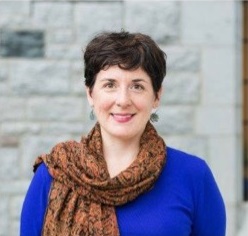
By Monique Woroniak: Recently, I had the privilege – in every sense of that word – to deliver the Dalhousie-Horrocks National Leadership Lecture for the School of Information Management. Titled “Beyond Colonialism? Libraries for a Canada We Don’t Yet Know”. I tried to address what I have been taught are some necessary steps and approaches for beginning to re-set relationships with Indigenous individuals, communities and governments.
I want to share that I feel I am still somewhere at the beginning of my own journey with respect to this work. I want to continue to become a more informed and useful person when it comes to supporting Indigenous peoples in achieving the goals and the change they seek. This truly is long haul work and I am mindful of the need to always be learning. When I said “to never stop” in my lecture, I meant it. I hope that if I am called on to give a similar talk in the future it will contain some new knowledge and practices. I will be concerned if it doesn’t.
Along that vein, it was correctly asserted during the question period that I and others like me need to do more to “walk our talk”. Specifically, it was suggested that a lecture like this one should have shared space with an Indigenous voice from the library community – an Indigenous voice beyond the valued words shared by the Elder present. I feel that audience member was entirely correct and I am grateful to them for raising the point and for the conversation we had afterward. It was another lesson for me about intention versus outcome – more on that below.
But everyone has to start somewhere. Whether it is as a (non-Indigenous) individual community member, library worker, library system or other organization, I encourage people to begin. Engage with Indigenous peoples’ accounts of the history and current-day realities of this country and, in particular, of the community where you live. Read or listen to what they have to say about what they want and need from non-Indigenous individuals and communities. Remember this work is far less about intention than it is about outcome. Pay attention to the oppressive cycles and ways of relating that your actions may replicate. Become knowledgeable about power and privilege – who has it, who doesn’t – and how they are reproduced with almost no effort.
Look for ways to break those cycles. If you can’t always see them, be open to them being pointed out.
Librarians are concerned with providing access to the widest range of information possible and to helping people navigate that range and evaluate what it is they find. When we are at our best, we help dissolve ignorance and we model continuous learning.
Non-Indigenous people in Canada need access to the best – read: the most authentic – information about Indigenous peoples available. It is our responsibility as librarians to centre Indigenous voices (knowing that this often means simply getting out of the way or removing barriers) through collections, programming and hiring practices. We also have an obligation to provide support to Indigenous libraries/community knowledge centres and workers on their own terms. The Indigenous library and cultural memory workers I have interacted with have been among the most inspiring and instructive voices I’ve learned from.
The knowledge that is acquired through centring Indigenous voices and working in relationship with Indigenous individuals and communities should then be something we also share with the public. Communities across this country are in great need of examples of how to responsibly take direction from Indigenous peoples and grow relationships based in solidarity and justice. If we choose, we can be that example.
With respect and much love,
Monique Woroniak
Winnipeg Public Library
Treaty 1 Territory and the homeland of the Red River Métis
****
Students and other members of the library and information management community sometimes ask me what I’m reading or listening to. A short list of books and writers was circulated at the lecture and can be found here. This page from groundworkforchange.org contains a list of websites, including those that host podcasts, I and many others return to again and again. Additional print sources can be found on the site here. Read SIM’s recap of the Horrocks lecture here.