SIM is hiring part-time academics to teach the following courses in the summer 2022 term:
Please apply through PeopleAdmin, via the links above.
Questions? Email sim@dal.ca
SIM is hiring part-time academics to teach the following courses in the summer 2022 term:
Please apply through PeopleAdmin, via the links above.
Questions? Email sim@dal.ca
 It is with great sadness that the School of Information Management (SIM) notes the passing of our friend and colleague Dr. Marina Pluzhenskaya.
Marina joined the SIM family in the Fall of 2009, launching a course in Knowledge Management. From 2009 on, Marina was a frequent professor in our Master of Information (MI) and Master of Information Management (MIM) programs, teaching Organization of Information, Knowledge Management and related courses. Marina also served as the Coordinator of the Interdisciplinary PhD (IDPhD) program from 2009 to 2011, then as Acting IDPhD Director from 2011 to 2012.
Marina was an outstanding teacher, and students frequently commented on her approachability, dedication, knowledge, and ability to stimulate thoughtful debate. She was extremely engaged with our students and programs, and worked tirelessly to ensure all students could connect with the materials and assignments. Marina will be remembered for her passion for the field, her incredible support and enthusiasm, and for her compassion.
Click here to read the full article.
More than a dozen researchers from Dalhousie have received funding for novel social sciences and humanities projects that will explore such things as accessible design standards for an aging population to the challenges of being a frontline retail worker during the COVID-19 pandemic.
Dr. Colin Conrad (SIM Assistant Professor) received a SSHRC Insight Development Grant.
Dr. Joyline Makani (SIM Assistant Professor and Killam Librarian) was awarded a SSHRC Partnership Engage Grant.
Thirteen selected projects received almost $791,000 from the Social Sciences and Humanities Research Council (SSHRC) Insight Development Grants program, which distributed $39.5 million in total to 662 recipients. Two additional Dal projects were awarded a SSHRC Partnership Engage Grant and a SSHRC Connection grant.
SSHRC is one of the three federal granting councils responsible for supporting the researchers and scholars who are strengthening science and evidence-based decision-making, while nurturing a culture of curiosity in Canada. Insight Development Grants are available to both emerging and established scholars for research initiatives of up to two years. These grants support research in its early stages, enabling the development of new research questions, methods, and ideas. Partnership Engage Grants provide support for research that will inform decision-making at a partner organization while Connection Grants support activities that facilitate the exchange of research knowledge.
“Congratulations to our latest SSHRC grant awardees,” says Alice Aiken, vice president research and innovation at Dal. “This essential funding allows our researchers to do important, early stage inquiry that will ultimately lead to a deeper understanding of how we interact with each other and with the world around us.”
For more information, visit the Social Sciences and Humanities Research Council’s website.
Congrats Colin and Joyline!
Re-posted from Dal News:
(Credit: Nick Pearce)
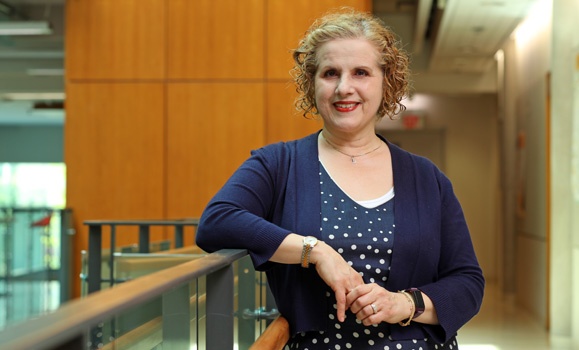
As Dalhousie’s top academic governing body swings into action again after a short summer break, it does so with a new interim chair — the first woman to occupy the top Senate role in nearly 30 years. Louise Spiteri, a professor in the School of Information Management, steps into the position after several years of active service in Senate that included a year as interim vice-chair of academic programs (2020-2021). As interim chair, Dr. Spiteri will provide general oversight of the business of Senate (including regular meetings), serve as chair of the Governance and Planning committee and sit on Dal’s Board of Governors — the university’s other governing body.
Dr. Spiteri sat down with Dal News recently to discuss a bit about her path to Senate, what motivates her and her priorities for Senate in the months ahead.
You’ve been a member of Senate since 2015. What motivated you to join initially?
I’ve always had a real interest in governance. I’ve been in academia for half my life. I started my work life as a high school teacher, and so I’ve always been heavily invested in education and curriculum design. I’ve also served in a number of scholarly associations on the governance committees and have a keen interest in academic governance.
I’m not a person who likes to sit by the sidelines. I do believe that we have an obligation as members of the academy to contribute to the governance of the university. I felt this was a really good opportunity when the call came out. It’s very much an interest in governance and having a voice in the way that programs are designed. With a bicameral system of governance, I think it’s very important for Senate to have a strong voice and it’s a good partnership with the Board of Governors as well.
How has Senate changed during the years in which you’ve been active and are there areas for further growth that you’d like to champion?
The most obvious change to Senate has been in size. It has grown significantly. We are over 90 senators now. I think that was a very important move because it expanded the scope of Senate to make it more diverse and inclusive. We have a greater representation from the different constituents on campus, including part-time faculty. I think it also means that the decisions that Senate makes represent better the academy. It’s a bigger voice and the more perspectives you have, the richer the end product. I think that’s been a very positive move.
I’ve seen a lot of growth. We have a long way to go, but we have become more diverse. I think Senate better represents the diversity of the members of Dalhousie now than it did when I first started. That’s partly to do with the size of Senate, but it’s also because [former chair] Kevin Hewitt did such an amazing job of emphasizing the EDIA (equity, diversity, inclusion and accessibility) lens in Senate. I give full credit to him for all the work he’s done there. As a result, we’ve become a richer and more diverse voice.
With a larger Senate, there are other things you have to deal with. Because you have a diversity of voices, it does mean that sometimes discussions take a little longer. That’s actually a good thing. You are getting these points of view. And increasingly there is a growing awareness of the important role that Senate has to play in the governance of the university. We’ve seen so many changes to academic programs and new degree programs coming in. Part of what we are focusing on in Senate is to ensure that the governance model is robust, but also flexible: It can adapt to change quickly. As the world moves forward, academic programs need to be able to adjust rapidly and I think universities have not always been quick to change because there are a lot of levels of approval. I think part of what we want to do is make the governance model of Senate be very robust and increase other points of view, but also to make it as streamlined as possible to enable programs to develop, modify and grow.
As interim chair, you’ll be providing general oversight of the business of Senate including meetings and serve as chair of the Governance and Planning committee. How would your Senate colleagues describe your management style?
I’m often known as the governance person in Senate because I do have a fondness for parliamentary rules and I have worked very closely with a parliamentarian. I see my role as facilitating the discussion. My job is to ensure that the business at hand is conducted in as efficient a way as possible as we do need to get through the business of the day, but to also ensure that people’s viewpoints are heard and that people have an opportunity to speak and give their opinion on the matter at hand. And to make sure that people feel comfortable and welcome in providing their feedback and discussion. My job really as chair is moderator.
With regard to my leadership style, I’m a very results-oriented person and goal driven. I like to get things done. Having a perspective of opinions is useful because I think it allows you to see different aspects of a problem that you may not even have thought about. For me, it’s very important to get that diversity of opinions, which eventually leads us to whatever decision is important.
I’m a very organized person and very good at managing projects. I think that’s important when you are trying to juggle various aspects of Senate. I think having that ability to manage a lot of information and data coming at you is a real strong point that I bring to the position. I also use IT a great deal. I love technology, and I’m always finding more efficient ways to do our job better.
Disagreements arise in Senate. What are some of the ways you see to work through those difficult moments to ensure effective outcomes?
There’s a whole spectrum of things you can do. I think what’s really important, particularly when it’s a large assembly, is striking an atmosphere of civility in discussion. We all need to be civil and respectful and as much as possible to not take things personally. The whole point is you can agree or disagree with somebody, it’s not personal. It adds to the robustness of the conversation. One of the things we have done is hold an orientation session for Senators. And it’s important to do that when you have a new chair as people have different styles and you have to adjust to different styles. We’ll go over the basics of good governance in a meeting and what the proper procedures are for bringing forward a motion, for example. The idea really is to keep things focused on the discussion.
Sometimes the discussion can get a little bit off topic. That’s a normal thing to happen, so part of the chair’s job is to explain to people that in the spirit of fairness we need to make sure that we stick to the business at hand. It’s important to moderate a discussion to make sure that it is going smoothly and that people have an opportunity to speak and to ensure that no one person dominates that discussion, as this would go against the principles of collegial discussion.
What are you most looking forward to about taking on the role?
I have wonderful colleagues in the Secretariat, and I’ve had the opportunity to work with them now for a few years. There are a lot of people behind the scenes. I am just one person among a whole team of people doing incredible work. This is very much a team effort.
I am a problem solver, and chair of Senate gives me a really good opportunity to have a much broader view of all the various aspects of Senate. Sometimes when you are a Senator and you are on a standing committee, you see it through that particular lens. That’s normal. What’s good about being chair is it allows me to see the situation from a much broader lens. It’s a more holistic view of what Senate is doing. Also, I’m looking forward to working more closely with Provost Frank Harvey and Dal President Deep Saini, both of whom have been extremely gracious and welcoming. I look forward also to serving on the Board of Governors. This gives me a really good opportunity to look at governance from the Board’s perspective.
If you were to leave academia and go into another career, what would you choose?
Law. When I was a child at a very early age, that was my goal — to be a lawyer. If I were to go into another career , it would be environmental law because I consider myself an environmentalist and I’ve been living a sustainable lifestyle for decades.
The other thing, if we want to get whimsical, is a professional chef. Cooking is my creative outlet. Or thirdly, an opera singer.
SIM is pleased to welcome our two newest faculty members!
Jamila Ghaddar: Dr. Jamila Ghaddar is a long time archivist and librarian. She was recently awarded a PhD from the Faculty of Information at the University of Toronto, where she completed a Master of Information in 2014. Jamila successfully defended her doctoral dissertation on July 16th, entitled “Provenance in Place: Archives, Settler Colonialism & the Making of a Global Order.”
Her research interrogates the complex dynamics between information and heritage domains, on the one hand, and issues of race, colonialism, gender, history, and memory, on the other. She is eager to contribute to the interdisciplinary environment at SIM at Dalhousie University through her teaching, research and service.
Alison Brown: Alison graduated from the Dalhousie Master of Information (MI) program in 2017 and has been a sessional lecturer since 2020.
Where are you from? What did you do before coming to Dalhousie? I come from the small village of Petitcodiac, New Brunswick. I have lived, worked, and played in many places – with street-involved youth in Tanzania and Thailand, feminist lawyers in Kenya, community journalists in Vancouver, social justice educators in Toronto. Before coming to Dalhousie in 2015, my partner, two kids, and I drove to Costa Rica where we lived for a year eating pineapple (that grew in our yard!) and helping to protect sea turtles.
What drew you to the School of Information Management and Dalhousie? A continued strong focus on librarianship (unlike some other ISchools I considered). The small size of the school with engaged and dedicated faculty. A return closer to home
What are your research and teaching interests? Research interests: picture books and critical empathy; community-led librarianship; social justice, action research, collaboration
Teaching interests: community-led services, children’s and youth services, research methods, collaboration, human information interaction, information society
Tell me about something you’re proud of accomplishing. Raising ridiculously lovely children
What’s something your new colleagues might be surprised to learn about you? In 1998, I hitchhiked from Tanzania to South Africa. There are many stories 😊
Dr. Mike Smit (SIM Professor) has been awarded an NSERC research grant for his project “Assessing the quality of research data infrastructure software”. More details below. Click here to read the full announcement.
Congrats Mike!

A total of 44 Dal researchers are the recipients of over $7.3 million in funding from NSERC’s Discovery Grants and Research Tools and Instruments Grants Programs.
The Discovery Grants (DG) program is NSERC’s largest and longest standing program. By supporting ongoing research programs with long-term goals, Discovery Grants give researchers the flexibility to explore promising avenues of research as they emerge. Recipients are not only making an impact on their field of study, but are specializing in research with the potential to impact the world.
The Research Tools and Instruments (RTI) grants program fosters and enhances the discovery, innovation and training capability of university researchers in the natural sciences and engineering by supporting the purchase of research equipment.
Some of the successful projects include:
Researcher: John Frampton
Faculty: Engineering
Project: A bioprinter system for fabricating advanced biomaterials
Researcher: Kimberly Brewer
Faculty: Medicine
Project: Development of quantitative multi-contrast molecular imaging
Researcher: Julie LaRoche
Faculty: Science
Project: Renewal of essential flow cytometry instrumentation for the study of marine microbes
Researcher: Mark Obrovac
Faculty: Science
Project: New chemistries for metal matrix composites
Researcher: Mike Smit
Faculty: Management
Project: Assessing the quality of research data infrastructure software
More on NSERC’s Discovery Grant program can be found here.
SIM is hiring part-time academics to teach the following courses:
Please apply through PeopleAdmin, via the links above. Questions? Email sim@dal.ca
We are happy to share the following recent research accomplishments by SIM faculty/students:
*SIM students names in bold
Congratulations to all!
This week’s Faculty of Management researcher of the week is Sandra Toze (SIM Director/Assistant Professor):
 Dr. Sandra Toze is exploring how key changes including social, mobile, analytics, cloud and automation are affecting how we find, interact and use information to solve problems and to learn. Her research centres on three related themes: 1) collaborative information and data processes of groups; 2) digital governance; and 3) user-specific, social and mobile information interactions.
Her thesis work focused on better understanding how groups work with information. Outcomes included a better conceptualization of group information processes, which identified how and when information needs emerge, the tools and sources used to facilitate the finding of information and the tasks and activities required by groups to use information collectively. This work identified points where interventions can be made to enhance group effectiveness and provided specific evidence of the features and tools needed to better support group information process.
Dr. Toze was a collaborator in a SSHRC Partnership Development Grant – Transforming Government Work for the Digital Era, which facilitated discussion across Canada. More recently Dr. Toze was the primary investigator for a training needs analysis that examined digital competencies across the Government of Canada. Recommendations included the need to broaden and deepen digital literacy and to foster a more proactive training culture.
Based on her prior work experience, Dr. Toze also serves as an expert in examining and offering insights into the effect of interruptions on search, in designing task-sensitive retrieval systems, and in researching further aspects of social and mobile information interactions.
(re-posted from here)
Wednesday, April 21, 2021
12—1 p.m. Atlantic
Online via Teams Meetings
Register
 Rachel Moylan School of Information Management Faculty of Management |
 Colin Conrad School of Information Management Faculty of Management |
Group assignments can help students develop the soft skills valued by employers, such as creativity, collaboration, and communication skills. However, many students and instructors find group assignments to be frustrating and difficult to manage.
It doesn’t have to be this way! Join us for an interactive discussion about designing and facilitating meaningful (and maybe even enjoyable) group work that fosters creativity and learning.
After a brief presentation outlining research-based recommendations, we will work in groups to discuss a sample assignment. We will then invite attendees to share their own experiences with group assignments that were successful, failed, or were somewhere in between. Please bring examples of group assignments you’ve used or are considering using to help stimulate our discussion.
Registration closes Wednesday, April 21, 2021 at 10:40 a.m. Atlantic. A link to the Collaborate Ultra site will be sent at least 1-hour prior to the event. If you did you not receive the link, or wish to register once it’s closed, please email clt@dal.ca.