Please note that ScienceDirect is currently experiencing a service outage due to unforeseen technical issues. They are working to resolve them as soon as possible. We don’t know when it will be available. We apologize for the inconvenience.
Please note that ScienceDirect is currently experiencing a service outage due to unforeseen technical issues. They are working to resolve them as soon as possible. We don’t know when it will be available. We apologize for the inconvenience.
Open Access Week, a global event now entering its eighth year, is an opportunity for the academics and researchers to continue to learn about the potential benefits of open access, to share what they’ve learned with colleagues, and to help inspire wider participation in helping to make open access a new norm in scholarship and research. (from the Open Access Week website)
This week, the Dalhousie Libraries will be doing a blog post a day on different topics related to open access, as well as hosting two events.
Why is Open Access important on university campuses?
Scholarly publishing is broken in a simple but fundamental way and that’s what’s at the heart of the push towards open access publishing. The reason scholars publish is to communicate with each other and with students. That’s the primary goal. There are certainly other short term objectives such as tenure and promotion but in the larger context, scholars publish in order to communicate.
Since the late 1960s, commercial academic publishers have diluted the goals of scholarly communication. Commercial publishers don’t just want people to read the content, they want people to purchase it so the publisher can turn a profit. By limiting access, these publishers protect their financial interests in the works of scholars and are able to charge a fee for people to read.
One of the things that makes this all possible is that publishers require authors to transfer their copyrights to the publisher. Possession of the copyright allows publishers to control distribution of scholarly work and is thereby directly connected to the ability to turn a profit.
The open access publishing movement removes the toll on readers and this has resulted in a renewed interest in author rights management. When content is made freely available for all to read, there is little or no need for publishers to require that authors transfer their copyright to the publisher. In fact, in the context of scholarly communications, it makes a lot more sense for scholars to retain copyright of open access published works and to make more nuanced declarations around acceptable use and re-use of their works. This is the reason behind the Creative Commons rights management framework.
Creative Commons (CC) is perfect for scholars in that it assumes, as a starting point, that content creators wish to have their ideas as widely distributed as possible and re-used with attribution. This is fundamental to all areas of scholarship—new knowledge is created when scholars build on the ideas of those that preceded them and use copies of other scholars’ research outputs in their own teaching and research.
For academic authors that wish to use (CC) licensing there are a suite of 6 licenses http://creativecommons.org/licenses/ designed to meet individual needs and circumstances.
The Dalhousie Libraries will be hosting two events for Open Access Week:
Differing Perspectives on Open Access: a panel discussion
Thursday, October 23/4–5:30 p.m.
Room 224, Student Union Building
Open Access at MIT Press: OA in a large university press
Friday, October 24/1 p.m.
Room 2616, Killam Memorial Library
Today is Canadian Library Support Staff Day and we just want to say thank you to all of the support staff at the five Dalhousie Libraries. Thank you for your hard work and commitment to excellent library service!
Proclamation about Canadian Library Support Staff Day by Canadian Library Association President, Marie DeYoung.

The Dalhousie Libraries recently added a number of new eBooks to our collection, in a wide variety of subject areas, from the scientific, technical, and medical publisher, Springer. New titles include:
Dao Companion to Japanese Confucian Philosophy
Blue Urbanism : Exploring Connections between Cities and Oceans
Ester Boserup’s Legacy on Sustainability
Trends in Nanoscale Mechanics
Cardiac Energy Metabolism in Health and Disease
Atlas of Plant Cell Structure
Reconceptualizing the Nature of Science for Science Education
Patient Safety in Surgery
Wealth, Income Inequalities, and Demography : the Long-Term Policy View
And many more.
New Springer ebooks can be found using the “Books and More” search from the Libraries’ homepage, or you can browse Springer ebooks and ejournals here: http://ezproxy.library.dal.ca/login?url=http://link.springer.com/
(Please note that we do not have access to all Springer books and journals; titles or articles displaying a yellow “locked” icon are not available).
We have recently been notified that Adobe Digital Editions 4 Reader, software used to read eBooks downloaded from the Dal Libraries’ collections, has been logging data on the books used with this application (and possibly other eBooks already downloaded on the devices of users) and sending the information in an unencrypted form to Adobe servers. This poses a security risk since unencrypted data may be open to interception.
Adobe Digital Editions is the most commonly used desktop application for accessing eBooks that contain Adobe’s digital rights management (DRM) software. The Adobe DRM is used by many booksellers and online library lending services such as EBL, ebrary, and EBSCO.
You do not need to download eBooks using Adobe Digital Editions to use them effectively; you can continue to read them online. You may receive a message that the time period for viewing an eBook has elapsed, prompting you to create a loan. You can do so, as this does not invoke Adobe Digital Editions. One advantage to reading eBooks online is that any notes you make while reading will persist, and will be available to you at any time. Ask us how.
If you have an iOS or Android device, use a tablet-based reader app such as BluefireReader. These apps can unlock eBooks protected with the Adobe DRM but do not communicate reading data to Adobe.
If you have concerns about the operation of the new Adobe Digital Editions, you may wish to:
If you have concerns please contact Patrick Ellis, Associate University Librarian, Resources.

Canadian Library Month is the time to celebrate the inspiration created in and by libraries. Canada’s libraries help to inspire us to celebrate our culture while playing a role in preserving our heritage. Libraries give Canadians equitable access to information and they support lifelong learning.
Did you know over 21 million Canadians hold a public library card, making public libraries the most popular cultural institution in Canada? Over 97 per cent of Canadians live in communities served by a public library. Academic libraries, school libraries, and special libraries add to the creativity and personal, professional, and academic growth of Canadians, serving students and faculty and those in the corporate, government, and non‐profit sectors. (Source: http://librarymonth.ca/what-is-library-month/)
Fittingly, this year’s theme for Canadian Library Month is “Libraries Inspire.” So, how do libraries inspire you? The Canadian Library Association wants to know, have libraries inspired in you a sense community belonging? a new friendship? an idea for a great creative work? Share your story here: http://librarymonth.ca/stories/share-my-story/
And if you want to share how the Dal Libraries inspire you, please comment here too!
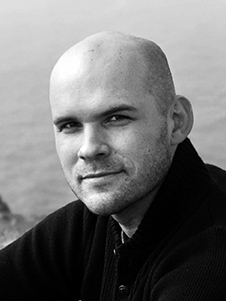
Robin Sloan, author of Dal Reads’ 2014 selection Mr. Penumbra’s 24-Hour Bookstore will join us live via Skype in Room G70 of the Killam Library on Thursday, October 16 at 5 p.m.
First, Robin will talk about the book, then take questions from the audience. This is your chance to ask him anything you’ve ever wanted to know about his NY Times best-selling book, which started as a short story on his website.
If you haven’t yet had a chance to read the book, now is the time to do so. The New York Times Book Review said it was, “Part love letter to books, part technological meditation, part thrilling adventure, part requiem… Eminently enjoyable, full of warmth and intelligence.”
Don’t miss this Dal Reads event. There will be delicious snacks and great book talk.
As patrons of the Killam Library likely know, two of the three elevators in the Killam are out of service. To better serve the needs of our community, we will be replacing all elevators in the Killam Library over the coming academic year. Currently, the Thyssen elevator crew is on-site, completing demolition and removal of the old equipment in elevator cars 2 and 3.
The elevator renewal will begin on October 24, when the required materials are scheduled to arrive. The project is extensive, as all mechanical parts are being completely replaced and the interiors of the elevator cabs are being refurbished. The newly modernized elevators will be reliable and more energy efficient than the existing equipment, and will include new lighting and accessibility features, such as audible signals announcing the floors and the up/down direction of elevator cars.
Elevators 2 and 3 (those currently out of service) will be worked on simultaneously and are scheduled to be back in service by mid-February. The third car, elevator 1, is scheduled for completion at the end of April. Work will begin on elevator 1 once elevators 2 and 3 are complete.
We understand this situation has been and is frustrating for those who require elevator access to the upper floors of the Killam, and we apologize for the inconvenience. Thyssen is currently on call to ensure elevator 1 remains fully operational during these upgrades. If an issue should occur with elevator 1, we ask that you report it to the Administration Office in the Killam Library immediately (office to your right in the lobby). In the evenings and on weekends, please report elevator issues to the Killam Library Service Point (main desk in the lobby).

This is a rendering of what the new cabs are going to look like. Please note, there is no flooring depicted in this image.

Monday, October 13 is Thanksgiving Day. Because it’s a holiday, some of our libraries will have reduced hours that day.
W.K. Kellogg Health Sciences Library
10 a.m.-6 p.m.
Killam Memorial Library
1 p.m.–9 p.m.
Sir James Dunn Law Library
9 a.m.–10:45 p.m.
MacRae Library
10 a.m.–10:30 p.m.
Sexton Design & Technology Library
10 a.m.-6 p.m.

Open Access Week, a global event now entering its eighth year, is an opportunity for the academics and researchers to continue to learn about the potential benefits of Open Access, to share what they’ve learned with colleagues, and to help inspire wider participation in helping to make Open Access a new norm in scholarship and research. (from the Open Access Week website)
This year’s Open Access Week will take place October 20-26. The Dalhousie University Libraries are presenting two events on the theme of open access this year. Everyone is welcome to attend.
Differing Perspectives on Open Access: a panel discussion
Open Access refers to publication of scholarly research that is free and online. Proponents of open access believe its widespread adoption will benefit society, but there is concern about quality control. Join us for a panel discussion with Julia M. Wright, Professor of English and Associate Dean Research of the Faculty of Arts and Social Sciences, speaking from the perspective of a Social Sciences and Humanities Research Council researcher; Geoff Brown, Digital Scholarship Librarian with the Dalhousie Libraries, speaking from the Libraries’ perspective; and Jonathan Crago, Editor-in-Chief at McGill Queen’s University Press, speaking from the perspective of a Canadian university publisher. University Librarian Donna Bourne-Tyson will facilitate the panel. This event will be followed by a reception.
Thursday, October 23/4–5:30 p.m.
Room 224, Student Union Building
Open Access at MIT Press: OA in a large university press
Nick Lindsay, Journals Director at the Massachusetts Institute of Technology Press and Dalhousie University alumnus, will talk about the MIT Press journals division’s experience with open access. Nick describes himself as neither an open access advocate nor a cynic, and from this perspective he will discuss several real-world examples of publishing journals using an open access model, challenges facing the publishing industry in a hotbed of pro-OA sentiment at MIT, and where he thinks the future of OA at MIT Press is going. This presentation will be live via Skype, and Nick will take questions afterward.
Friday, October 24/1 p.m.
Room 2616, Killam Memorial Library


