
This Friday, March 28 EBSCOhost databases and services may be intermittently unavailable while network upgrades take place. We appreciate your patience and apologize for any inconvenience.
This Friday, March 28 EBSCOhost databases and services may be intermittently unavailable while network upgrades take place. We appreciate your patience and apologize for any inconvenience.

The Ebsco eBook Academic package is a very large collection of titles (121,417 titles) that the Dalhousie Libraries subscribe to. The content is multidisciplinary, covering topics from Agriculture to World History.
A few broad subject areas and numbers of titles:
The package is well-used by Dalhousie. Here are the top 20 titles by use:
|
||||||||||||||||||||||||||||||||||||||||||||||
| Aggregated packages such as this will have a built in redundancy, with some titles already purchased and held by the library. But there are many more unique titles in the collection than duplicates. Cost per title and the wide use of the titles across our spectrum of users makes this database very cost effective.To access the database:http://ezproxy.library.dal.ca/login?url=http://search.ebscohost.com/login.aspx?authtype=ip,uid&profile=ehost&defaultdb=e000xnaFor help downloading an ebook to your mobile device from the Ebsco database, please refer to the details at the bottom of this page: http://dal.ca.libguides.com/content.php?pid=276703&sid=2280227 |
||||||||||||||||||||||||||||||||||||||||||||||

The Dalhousie Libraries have been hard at work developing an acquisitions allocation formula that will guide how we will allocate our budget in the future. Three different formulas with various strengths and weaknesses have been developed for consideration by the Dal community, and one of these formulas will become the model that the Dal Libraries will use.
The Dal Libraries are addressing historical allocations of the budget so that resources can be divided equitably across the five libraries. The three allocation formulas are based on elements such as:
• university priorities (operating budgets and research dollars)
• the number of faculty members in each faculty
• the number of students per faculty
• the types of materials needed
• relative purchasing power in each faculty
The plan is to apply the chosen formula in phases, easing into the allocations per faculty. The formula will be assessed and updated regularly to reflect current realities at Dalhousie (enrolments, faculty numbers, etc.).
If you want to learn more about the three budget allocation formulas and to ask questions, we are hosting two public consultation opportunities:
***UPDATED***
Tuesday, February 25, 4–5 p.m.
Room 226, Chemistry Building (changed from the McCain Building)
Studley Campus
Thursday, February 27, 4–5 p.m.
Room B228, B Building Addition
Sexton Campus
RSVP to marlo.mackay@dal.ca

photo source: freedigitalphotos.net
The Dalhousie Libraries recently added over 5,000 eBooks in a wide variety of subject areas. These eBooks are from the STM (scientific, technical, and medical) publisher Springer. New titles include:
Tsunami events and lessons learned
Simulations, serious games and their applications
Under a crimson sun
Human environment interactions
Assessment of environmental impact by grocery shopping bags
Crop improvement under adverse conditions
Doves, diplomats, and diabetes
New Springer eBooks can be found using the “Books and More” search from the Libraries’ homepage, or you can browse Springer eBooks and eJournals here: http://ezproxy.library.dal.ca/login?url=http://link.springer.com/
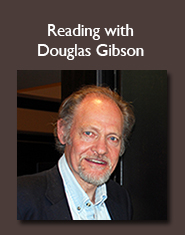
Update: The video of the Douglas Gibson presentation at Dalhousie is available to view here.
When: Tuesday, March 4 at 7:30 p.m.
Where: Special Collections & Archives Reading Room, fifth floor, Killam Library
Douglas Gibson is an editor, publisher, writer, and raconteur. His work as an editor and publisher in Canadian literature is unsurpassed, having edited and published many of Canada’s best-known and accomplished authors.

Elsevier ScienceDirect has been upgraded to make it easier to find relevant articles and books, read an article online, discover open access content and export to Mendeley.
The new release has four key upgrades:
• A simplified user experience, with less visual clutter and improved design
• Better visibility of open access content
• Quicker discovery of relevant ScienceDirect content from search engines
• Seamless export of citations and full-text articles to Mendeley
Dalhousie users can access ScienceDirect here: http://ezproxy.library.dal.ca/login?url=http://www.sciencedirect.com

This year, Food for Fines will run from February 17–March 9. That’s three full weeks to bring in food donations while reducing or clearing your library fines.
For every non-perishable food item donated, participating Novanet libraries* will reduce your library fine by $2, to a maximum of $50. All food donations will be given to the Dalhousie Student Union Food Bank, Feed Nova Scotia, and the Colchester Food Bank (for items collected at the MacRae Library on the Agricultural Campus).
Bring your donations of canned goods or other non-perishable foods to the front desk at any of the Dalhousie Libraries during open hours. We accept cash as well, and you can make contributions even if you don’t owe book fines. By donating to the Food for Fines campaign we will waive overdue fines, but not charges for lost items.
Wondering what to bring? Feed Nova Scotia has a list of recommended items.
Last year, the Dalhousie Libraries waived $528.36 in fines, collected 339 food items and $155.25 in cash donations. Across Novanet, which includes all university and college libraries in Nova Scotia, a total of 1,113 food items were collected, as well as $308.25 in cash donations.
We hope to increase the number of food items donated this year by extending the time of the campaign from 10 days to three weeks.
*Food for Fines is an initiative of the libraries at Dalhousie University, Mount St. Vincent University, University of King’s College, Cape Breton University, Atlantic School of Theology, St. Francis Xavier University, Saint Mary’s University, I’Université Sainte Anne, NSCAD University, and the Nova Scotia Community Colleges

Update, 7:30 p.m.: The MacRae Library on the Agricultural Campus will close at 8:30 p.m. tonight (Feb. 5).
With storm conditions expected, Dal’s Halifax campuses will be closed as of 4:30 p.m. this evening (Feb 5).
The Dal Agriculture Campus will remain open, however all evening classes are cancelled.
This means that all four Halifax Campus Dal Libraries (Kellogg Health Sciences, Killam, Sexton Design & Technology, and the Sir James Dunn Law) will close at 4:30 p.m. today. The MacRae Library on the Agricultural Campus will remain open for now, and we’ll reassess the situation later.
Library hours for Munro Day, Friday, February 7, will be as follows:
W. K. Kellogg Health Sciences Library
9 a.m.-6 p.m.
Killam Memorial Library
10 a.m.-6 p.m.
MacRae Library
8:30 a.m.-6 p.m.
Sexton Design & Technology Library
10 a.m.-6 p.m.
Sir James Dunn Law Library
9 a.m.-4 p.m.
Why do we celebrate Munro Day? Learn more about who George Munro was, and then read these top 5 facts about Munro Day.
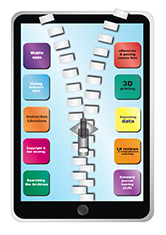
March 26 Update: Unzipped presentations are now available to view. Part I (presentations 1–5) and Part II (presentations 6-10) See the list of presentations below if you’re looking for a specific topic.
Libraries Unzipped, a series of presentations by Dal’s librarians and library staff for Dalhousie Faculty, is back. This year Libraries Unzipped will be on Thursday, February 20. RSVP to marlo.mackay@dal.ca to sign up for the day, or just to attend a couple of sessions. All sessions are 15 minutes long.
For those on the Agricultural Campus and Dalhousie Medicine New Brunswick, this event will be live-streamed. Please contact marlo.mackay@dal.ca for more information.
Lightning Information Sessions for Faculty & Researchers
Date: Thursday, February 20
Time: 8:30 a.m.—12:35 p.m.
Location: Kenneth Rowe Building, Room 1011
** RSVP by February 19 to: marlo.mackay@dal.ca **
8:30–9 a.m.: Welcome from Donna Bourne-Tyson, University Librarian of Dalhousie
Coffee and snacks, meet your subject specialist librarian.
1. 9–9:15 a.m.: Using Scholars @ Dal to Help People Discover Your Research
presented by Heather MacFadyen & Sarah Stevenson
Scholars @ Dal is a library initiative designed to discover and promote the work of Dalhousie researchers. Heather and Sarah will provide a short overview of how the profiles the Dal Libraries are building in DalSpace will increase scholars’ visibility in Google Scholar, make it easier to find people to collaborate with, and provide a safe and convenient place to store copies of completed work.
2. 9:20–9:35 a.m.: Research Data Repository Service
presented by Sarah Stevenson & Marc Comeau
Is your research data feeling neglected? Do you have old data that requires archiving? We can help. The Dalhousie University Libraries provide a safe place to store your data, in Canada, on the Dalhousie campus. Find out what the Dal Libraries are building in this new service.
3. 9:40–9:55 a.m.: 3D Printing
presented by Marc Comeau
This session will discuss the 3D printing service offered by the Dal Libraries. Marc will explain the submission process and provide a few examples of how it’s being incorporate into research and teaching at Dalhousie.
4. 10–10:15 a.m.: eReserves: Traditional, electronic, and by posting course lists on Bblearn
presented by Johnelle Sciocchetti
Making reading materials accessible has never been easier! Library staff collect electronic permalinks, scan selections from books, and upload everything to your course page on Blackboard. This session will detail what we need from you and walk you through submitting your eReserve form.
5. 10:20–10:35 a.m.: Host Your Scholarly Journal with the Dal Libraries & OJS
presented by Geoff Brown
The library can help you produce and host your scholarly journal online with Open Journal Systems (OJS). The success of many journals can be tied to a structured production system, quality indexing, and “plugging in” to the discovery tools used by academic libraries. We can help you establish an online presence for your journal that will stand up over the long term. We help prospective journals with both initial setup and ongoing support.
10:40–10:55 a.m.: Break
6. 11–11:15 a.m.: Here There Be Instruction Librarians: Supporting your students, teaching, and assignments
presented by Lindsay McNiff & Melissa Helwig
The Dal Libraries are study spaces and research hubs for students and faculty, but they are also support teaching and the development of student research skills and research independence. Lindsay and Melissa will discuss the range of research sessions the Dal Libraries can provide to complement your course outline and/or specific assignments, and how these sessions can contribute to more productive research habits and better evaluative skills from your students.
7. 11:20–11:35 a.m.: © and the new Fair Dealing: What you can do for your students and what the Dal Libraries can do for you
presented by Jason MacDonald
Jason MacDonald, the Intellectual Property Officer of Dalhousie, will address the university’s new fair dealing guidelines and how they affect the use of Blackboard, classroom activities, and the Dal Libraries’ eReserves. Services offered by the Copyright Office will also be highlighted.
8. 11:40–11:55 a.m.: The Library Is Oh So Appy
presented by Melissa Helwig
Did you know that you have access to a broad variety of scholarly resources from your laptop, tablet, and other mobile devices? Join Melissa to learn about mobile access to library and other scholarly resources at the Dalhousie Libraries. During this session we’ll look at some mobile apps you may want to add to your toolkit.
9. 12–12:15 p.m.: Literature Reviews & Comprehensive Search Strategies
presented by Robin Parker & Melissa Helwig
Working on a literature review and want to get all of the research on your topic? Comprehensive synthesis projects such as systematic reviews, scoping reviews, and clinical practice guidelines depend on thorough and reliable methods for searching the literature. Come for an enlightening overview of how to approach and design comprehensive search strategies that will improve the quality of your literature review in any discipline.
10. 12:20–12:35 p.m.: The New Archives Database
presented by Jennifer Lambert
The University Archives’ new database is up and running. It currently holds 150,000 file-level descriptions, representing approximately 45 per cent of our finding aids. We are actively exporting data into ICA-AtoM, a web-based, open-source application for standards-based archival description that is becoming the preferred platform across North America. Jennifer will demonstrate basic, advanced, and faceted searching tools and techniques to access archival materials related to all areas of teaching and learning across campus.