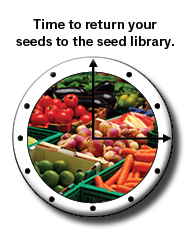
Did you borrow seeds from the seed library on the Agricultural Campus this spring? If so, return the seeds you’ve collected to the Truro Farmers Market on Saturday, October 25. Representatives from the seed library will be at the market all day to collect the seeds you’ve reaped from your fall harvest.
Seeding Ideas, the seed library at the MacRae Library, provides access to a collection of non-hybrid, non-genetically modified seeds that can be “borrowed” by members of the community. Those who borrow from the seed library will grow the seeds, enjoy their harvest, and leave a few plants unharvested so they will return to seed. Seed borrower then collect those seeds and return them to the seed library. If you have seeds you’d like to donate, we’re always looking to grow our collection.
The seed library’s collection currently contains more than 80 varieties of seeds for edible and ornamental plants. The original collection of seeds for the library was purchased from Annapolis Seeds in Middleton, Hope Seeds in Granville Ferry, and Incredible Seeds in Lawrencetown. There are more than 150 seed libraries across North America; however, Seeding Ideas is the first university-funded seed lending library in Canada.
For more information contact seed.library@dal.ca or ‘like’ Seeding Ideas on Facebook.
Mary Coogan says
Seed libraries are a good thing (provided you really get the same species and quality back than what you lent). However, there are new treaties in the making that will eventually allow only registered (BIG) corporations to deal in seeds and if signed by enough signatories, from one day to the next will even prohibit selling, donating or lending seed neighbor-to-neighbor, let alone across communal boundaries! If these were books, it’d be called censorship!
Marlo MacKay says
Seed regulations and quality control are very important points. Laws addressing seed quality, seed patent infringements, and invasive species are all important for consumers. Seed libraries are learning opportunities- supporting our patrons’ seed saving ventures with resources, workshops, and guidelines on how to ensure seed donated or returned to the collection is viable are large components of what we do. By organizing and labelling our inventory by seed saving difficulty we assist patrons in choosing seeds which match their experience level, helping ensure successes. We are working hard behind-the-scenes with the development of an open source lending tool that will help us, if the need arises, to track any seeds with reported issues so that they can be removed from the collection. We will continue working with our patrons to build a strong and knowledgeable seed saving community.
*Key points taken from Rebecca Newborn’s circulated talking points for seed libraries: http://seedlibraries.org/profiles/blogs/seed-library-crackdown