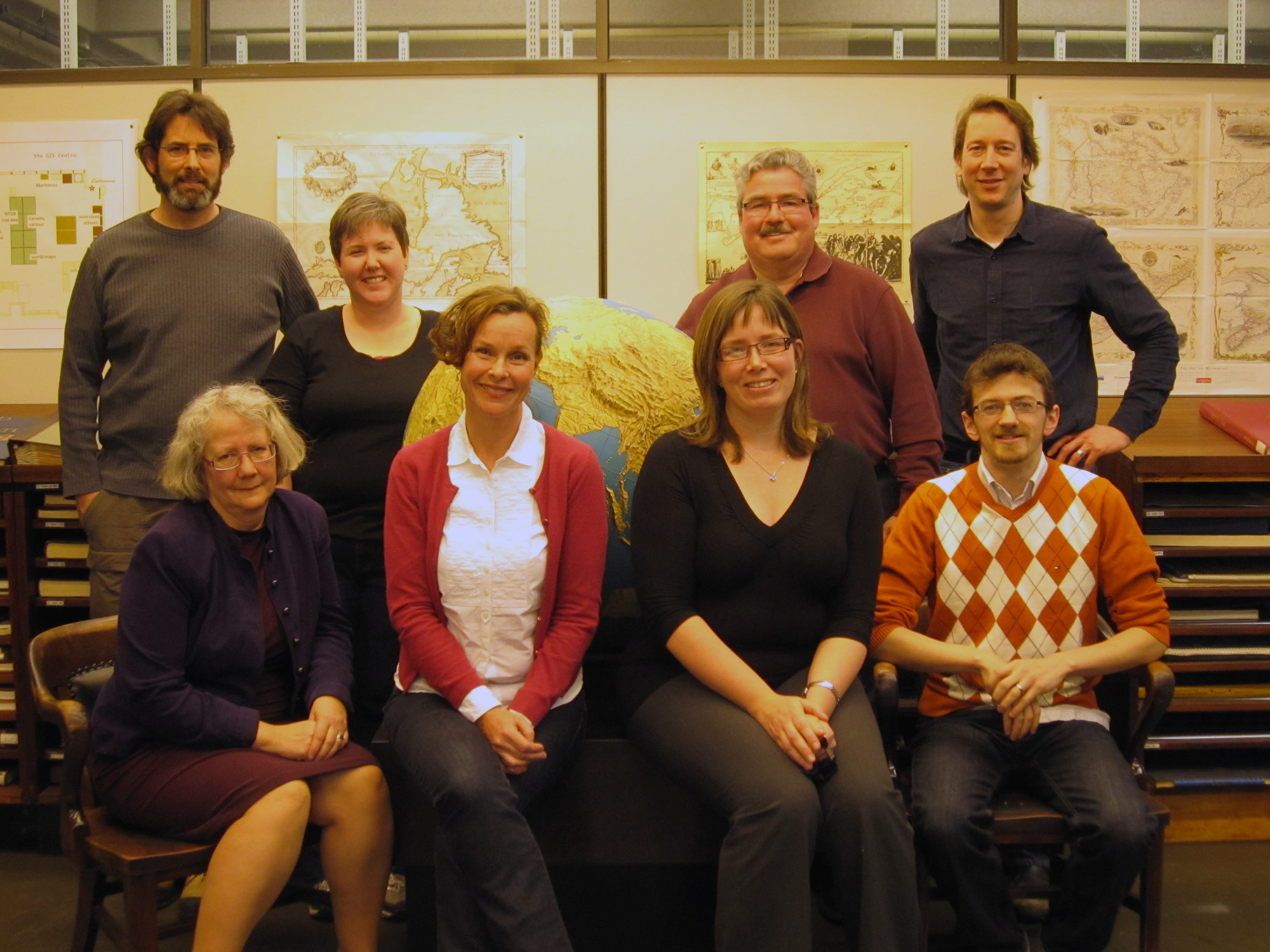
DUASC and GISciences staff in the Map Collection room
Two prominent Dal Libraries departments—Dalhousie University Archives & Special Collections (DUASC) and the GISciences Centre—have just formed a partnership which will streamline operations and enhance development opportunities for both units and their users.
 The move is part of a larger Digital Scholarship Initiative which Dalhousie Libraries is launching later this spring. University Librarian Donna Bourne-Tyson comments: “We are in the process of talking to faculty members and students about ways the Libraries can better support digital scholarship across campus. As part of the Digital Scholarship Initiative we will be supporting all aspects of digital scholarship including research data production, data management and curation, and enabling data discovery for primary and secondary analysis. Dal Libraries will be improving services and infrastructure for DalSpace, hosting more open-access journals on OJS, enhancing the presence and services of the GIS Centre and consolidating several digital collections-related services.”
The new affiliation will allow James Boxall, Director of the GISciences Centre, to focus on teaching, liaising with the GIS community, and project development and implementation. Michael Moosberger, University Archivist, will have budgetary and Human Resources oversight and will be responsible for establishing priorities and approving work plans and new initiatives.
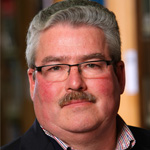 “I think the affiliation has the potential to foster a greater collaboration between DUASC and Maps and GIS,” says Moosberger. “We can explore a variety of initiatives including the rationalization of the DUASC and Map Collection holdings, working on Digital Scholarship initiatives and building a stronger team-based approach.”
Boxall notes that cartographic resources within both the Dal Libraries and other institutions, particularly local and regional maps, have not always been organized to the benefit of clients. 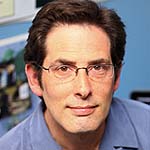 “Bringing together the Map Collection with Archives and Special Collections will result in a focused, specialized and larger collection of regional cartographic materials,” he states, “which will enhance access and use by researchers and students at all levels, and in all locations.“
The realignment of GIS services provides opportunities to explore the potential for digital initiatives beyond the GIS community at Dalhousie. It will also spark the creation of projects that can be funded for development and technology in emerging areas, as well as providing opportunities for students to gain skills in these areas. “For example,” says Boxall, “there’s a growing demand for mobile applications that bring together disparate sources of information and data within GIS applications. Our merged group will have a pool of talents to bring to such projects. And that will translate into better funding opportunities and certainly better deliverables for clients.”
Over the next month DUASC staff will be oriented to the workings of the Map Collection and GISciences Centre, and vice versa. “All of the staff are expressing a willingness to work together to facilitate the successful transition,” says Moosberger, while Boxall adds: “These plans are giving the GIS Centre and Maps staff and students a sense of excitement about creating new work programs and delivering new content to clients.”