SIM is hiring part-time academics to teach the following courses in the summer 2023 term:
Please apply through PeopleAdmin, via the link above.
Questions? Email sim@dal.ca
SIM is hiring part-time academics to teach the following courses in the summer 2023 term:
Please apply through PeopleAdmin, via the link above.
Questions? Email sim@dal.ca
For immediate release: Dalhousie SIM Appoints Two New Professors Emeriti
Thursday, February 9th, 2023 (Halifax, NS) – SIM is pleased to announce the appointment of Dr Fiona Black and Dr. Bertrum MacDonald as Professors Emeriti with the School.
 Dr. Fiona Black joined Dalhousie in 2001 as an Assistant Professor in what was then called the School of Library and Information Studies. She was Director of the School from 2003 until 2010. During her tenure, Dr. Black championed the development of a mid-career blended learning graduate degree, the Master of Information Management (MIM), which has been a significant factor in SIM’s increased national profile. Dr. Black also served as Associate Dean (External Programs) as well as Associate Dean (Research) in the Faculty of Management before joining the Office of the Provost in 2012 and being appointed Associate Vice-President Academic in 2013. Dr. Black was awarded the Faculty of Management’s (FOM) Senior Administrator Exceptional Service Award, in 2010, and the Dean’s Award for Academic Leadership, in 2007. In 2018, she received the School of Information Management Alumni Association (SIMAA) Outstanding Alumni Award. Many of her nominators and supporters spoke of Dr. Black’s “generosity with time and advice, even when busy with her administrative duties for the university,” and remembered how she inspired them with her trademark statement, “information managers are going to take over the world.” Dr. Black is recognized as a leading innovator in research methods relating to digital humanities. She was awarded an Honorary Fellowship in the United Kingdom’s Chartered Institute of Library and Information Professionals and is one of only a few Canadians to win this award since it was established in 1896. She also received, along with Dr MacDonald and others, the Bibliographical Society of Canada’s Institutional Award in 2010, for the major SSHRC-funded, bilingual project for a History of the Book in Canada/L’histoire du livre et de l’imprimé au Canada.
 Dr. Bertrum MacDonald joined SIM in 1987. He served as SIM Director from 1995 to 2002, Associate Dean (Research) within the Faculty of Management from 2002-2007, and Interim Dean, for the Faculty of Management in 2015-2016. Dr. MacDonald has also continuously held research funding from SSHRC since the mid-1990s and Ocean Frontier Institute funding since 2017. He is the recipient of the 2021 Faculty of Management Research Impact Award, the Marie Tremaine Medal (the highest honour awarded by the Canadian Bibliographical Society), a Dibner Resident Scholar Fellowship at the Smithsonian Institute, and SSHRC and CFREF research grants totaling nearly $1 million. His leadership of the interdisciplinary EIUI: Environmental Information: Use and Influence research group (EIUI – www.eiui.ca) over the past two decades is one of the most significant accomplishments. Along with teaching the timely course, “Information in Public Policy and Decision Making,” Bertrum is known for his analytical rigor and attention to detail, and also for his incredible curiosity and joy in the research process. Dr. MacDonald served three terms on Dalhousie Senate, chaired the Senate Review Committee for the Faculty of Agriculture in 2018, chaired the Research Development Fund Committee in the Faculty of Graduate Studies, and chaired the Dalhousie Research Ethics Board and the Research Ethics Appeal Board. He served on several accreditation reviews of programs in Canada and the United States, as the Canadian member of the ALA accrediting unit from 2000 to 2004, as Executive Member at Large and Program Officer of the international Society for the History of Authorship, Reading and Publishing, from 2009 to 2015; President of the Royal NS Historical Society from 2011 to 2014, President of the Canadian Science and Technology Historical Association from 2008 to 2011, a member of the Board of Trustees of the Public Archives of NS in 2010 and Chair of the Board from 2014 to 2017, as well as a member of the Board of Governors at Crandall University from 2008 to 2015. He has been a member of the award-winning chamber choir, the Halifax Camerata Singers, since 1991.
From Dr. Sandra Toze (Director, School of Information Management): “Drs. Black and MacDonald have both made significant contributions to the School, the Faculty, the University, and the profession as a whole. Through her many leadership positions, Dr. Black was responsible for creating change, and for supporting the University’s initiatives related to equity, diversity, inclusion, and decolonization. Dr. MacDonald has been instrumental in creating and sustaining an enriching, supportive, and productive research culture in SIM. I can’t think of any two people more deserving of this honour.”
When asked about their new appointments, Drs. Black and MacDonald said the following:
Dr. Fiona Black: “I am humbled by this wonderful honour and thank Dr Toze and Dean Brooks for their work to submit my name. I am thankful for all of the opportunities afforded me by faculty and staff of SLIS/SIM, and Dalhousie more generally, from 1991 onward. I would note especially the early impact of Dr Bertrum MacDonald’s counsel and persistent encouragement regarding research and doctoral study. Coaching from wonderful colleagues and students at the University of South Florida, Dalhousie, Edinburgh and elsewhere informed many aspects of my career and my memories are heart-warming, hilarious and humbling! Years of reference service at Regina Public Library lit the spark that first led me to study at Dalhousie and filled me with a joy that served me well throughout my academic career. I am a professor emeritus only because of other people, and I thank them all!”
Dr. Bertrum MacDonald: “It is definitely a privilege to be appointed as Professor Emeritus and I am very grateful to the School for this recognition. For a person who receives inspiration from the successes of students, graduates, and faculty colleagues, the School of Information Management has been a wonderful location for an academic career. For a person who often sees and facilitates connections between people and who benefits from interdisciplinary approaches to research and real-world problems, the School, the Faculty of Management, and wider Dalhousie University have provided an immensely productive setting for research initiatives and for encouraging advancements of professional fields. As Professor Emeritus, I hope to continue to contribute to successes of students, faculty, and graduates, and to seek solutions to professional and societal issues. Maybe, too, I will find increasing opportunities to spend time at my family farm, growing trees, and, yes, even picking stones!”
Media contact:
Dr. Sandra Toze
Director, School of Information Management
Dalhousie University
Sandra.toze@dal.ca
By: Toni Beaton (First-year MI Student)
 Dr. Colin Conrad is an Assistant Professor with the School of Information Management (SIM). He is currently serving a 6-month interim directorship for the Master of Digital Innovation (MDI) program here at Dalhousie University. I had the pleasure of interviewing Dr. Conrad to learn more about his new role:
Please tell us your new title and briefly explain your key responsibilities.
I am the Interim Director of the Master of Digital Innovation, and am filling in for Dr. Vlado Keselj for 6 months. The program is interdisciplinary between Computer Science and Management. The biggest things I do within this position are being responsible for cultivating both the program and the student experience, being able to regularly liaison with students on how they achieve their goals, deal with admissions, and guide the strategic vision for the program as it goes through a review.
How would you describe the MDI program to someone who is not familiar with it?
This is Dalhousie’s premier program for dealing with the intersection of technology and different applications of business. For instance, the MDI is designed to equip students to go into different areas of the economy and identify the ways in which digital technologies are transforming those areas. It’s about advancing digital technology and improving those areas of discipline. It is also a program for other professional disciplines, such as health informatics, and non-profit organizations, such as DeepSense. We have three certificates; one of them is in digital business for people primarily interested in business, there is one in health information for those who want to work in health industries, and one in data science for those interested in data science applications to other areas of society and the economy.
What courses will you be teaching in the MDI program?
I’ve been teaching a core course called “Digital Transformation;” it is the first of two core courses in the MDI program. It is a super cool course, because it involves business, management, communications, and technology. In this case, students learn about identifying problems that organizations face, how to prototype solutions using technology, and then guiding an innovation process from beginning to end. It is a very hands-on course and is taught by two instructors (one from Management and one from Computer Science). One of the features of our program is that it is very interdisciplinary; we want to offer an immersive experience where students receive mentorship. It’s been a great course, and I’m optimistic that it will once again be well received by students (this is my third year teaching it).
What connections do you see between the MDI and SIM programs?
There’s a lot! People come into MDI primarily to find a job in digital transformation; SIM students often have a broader interest. Whether that means they are working in non-profits, they really care about things like the social good. In SIM, students often come from interdisciplinary backgrounds, but especially from the Arts and Social Sciences. In MDI, students are mostly coming from Computer Science backgrounds. There’s also a different balance between international and domestic students; in SIM, there are mostly domestic, whereas in MDI, there are mostly international students.
Other than those differences, they have more similarities than anything else! They are both interested in the intersection of information in society (in the case of SIM), and digital technology in society (in the case of MDI). Those two things overlap a lot. There are opportunities for shared courses, collaboration, and social opportunities. A lot of MDI students take our “INFO 6540 Data Management” course, for example. There are students within SIM who have gotten involved and really been transformed by this community. Some of our SIM students who are more technical in their interests have taken a course called “Data Mining and Data Warehousing” offered through MDI.
Do you have any special goals you are hoping to accomplish during your time with the MDI?
I want to have a really good understanding of what motivates students to go out and meet other people. One of the things we saw during the pandemic was that it was very difficult to do that; I want to know how we can go about creating a greater sense of community within the MDI cohort. I also want to find the right way to structure the program in making everything more flexible. Right now, we don’t have a lot of flexibility within our rigid certificate programs; I want to have students use the MDI in a way that they are best able to achieve their goals. For example, if a student is passionate about user experience in health, how can we take our current structure and empower that student? Those are the two things I am looking at.
Do you have any other comments you’d like to add?
SIM is a stakeholder in a new initiative called the College of Digital Transformation, and this is going to be an initiative related to the program. It’s a new partnership between Computer Science and Management. There will be lots of opportunities to collaborate and enrich each other’s communities. That’ll be something to watch over the next year!
If you’d like to learn more about the MDI program, please visit their website at: https://www.dal.ca/academics/programs/graduate/digital-innovation.html.
SIM invites applications for the following faculty positions:
Please share!
Inquiries may be directed to Philippe Mongeon, Chair of the Search committee (care of sim@dal.ca). Applications must be submitted through PeopleAdmin.
SIM is hiring a part-time academic to teach the following course in the winter 2023 term:
Please apply through PeopleAdmin, via the link above.
Questions? Email sim@dal.ca
By: Toni Beaton (MI Student)
We are happy to share the following recent research accomplishments by SIM faculty:
As previously announced, Mike Smit started a new role as Deputy Scientific Director for the Ocean Frontier Institute earlier this year. In that role, he helped lead a large, multi-institution proposal to the Canada First Research Excellence Fund, which aims to understand and transform the role of the ocean in assessing, mitigating, and adapting to climate change, and which includes a significant role for ocean data and information. Hopefully there’s good news on that proposal in our next newsletter! Mike has also participated in the Digital Twins of the Ocean Summit, a WMO initiative to better collect and share data on Greenhouse Gas emissions, the Polar Data Workshop, the joint Canada-EU ocean data partnership forum, and many other national and international conferences.
Louise Spiteri is a co-applicant, together with other members of DefaultDal (https://defaultdal.ca/) on a SSHRC Partnership Development Grant for the project Fostering plant-based defaults in Canadian universities and colleges. Louise is continuing to work on another SSHRC-funded project that examines Scaling up trauma and violence: Informed outreach with women affected by violence.
Journal Publications
Conference Proceedings
Datasets
Research Grants
For immediate release: Dalhousie SIM Welcomes New Tenure Track Professors
Tuesday, October 18th, 2022 (Halifax, NS) – SIM is excited to announce two new tenure track hires: Dr. Stacy Allison-Cassin and Dr. Jamila Ghaddar.
 Dr. Allison-Cassin began her appointment as Assistant Professor on July 1st, 2022. She holds a BMus Honours from Wilfrid Laurier University, MMus from Duquesne University, MMISt from University of Toronto, and a PhD in Humanities from York University. Before coming to SIM, she held a limited-term appointment of Assistant Professor, Teaching Stream in the Faculty of Information at the University of Toronto; and as an Associate Librarian at York University Libraries, as Teaching and Learning Librarian, Digital Humanities Librarian, W.P. Scott Chair in E-Librarianship, and Music Cataloguer at York University Libraries; and the National Librarian at the Canadian Music Centre. She is a Citizen of the Métis Nation of Ontario and Chair of the Indigenous Matters Standing Committee of IFLA. She sits on an a number of advisory roles including Library and Archives Canada’s National Union Catalogue Advisory Committee, the Researcher Council of CKRN, and recently was an advisor on OCLC’s Reimagine Descriptive Workflows project. Her research concerns the ways knowledge structures shape meaning and how we come to know and understand the world, especially as it concerns intangible culture, media, and marginalized communities.
 Dr. Ghaddar will begin her appointment as Assistant Professor on January 1st, 2023, after completing a limited-term appointment. She holds a BA Honours in Anthropology with a Minor in Linguistics from McMaster University, and an MI and PhD (Information Studies) from the University of Toronto. She is currently a SSHRC-funded Postdoctoral Fellow at the University of Manitoba (UofM), where she works with Raymond Frogner at the National Centre for Truth & Reconciliation and Dr. Greg Bak at the History Department. She is also an instructor in the Archival Studies stream of the University of Manitoba and University of Winnipeg Join Master’s Program in History, and a Visiting Fellow at the University’s St. John’s College. Previously she was Project Coordinator of the Diversity of Design Project (PI: Dr. Nadia Caidi) at the University of Toronto; a Library Archival Fellow at the American University of Beirut; and a Senior Doctoral Fellow at the Equity Department at the University of Toronto’s New College. Dr. Ghaddar’s research explores the complex dynamics between race, class, gender, sexuality, and citizenship in archival, library, media, and digital domains.
As highlighted in their bios, Drs. Allison-Cassin and Ghaddar bring valuable experience in decolonizing curricula and collaborative research and will contribute significantly to D (equity, diversity, inclusion, and accessibility, decolonization) initiatives in SIM and in the Faculty of Management. With these new positions, SIM and FOM can continue to build a strong foundation in all programs Faculty-wide that reflects social justice concerns within society.
From Dr. Sandra Toze (Director, School of Information Management): “As the information professions continue to respond and change, it is very exciting to be able to build capacity in the areas of social justice and decolonization. We welcome both Drs. Allison-Cassin and Ghaddar and are looking forward to supporting their important work, and collaborating with them on strengthening our programs, and providing excellent opportunities for our students to learn.”
From Dr. Kim Brooks (Dean, Faculty of Management): “It is exciting to have a new colleague with Stacy’s depth of experience joining us at the Faculty of Management. I’m particularly fascinated by her engagement with ‘wiki’ publications and am confident that her research and teaching will help us expand our Faculty’s footprint in important ways. Jamila has already brought so much to our Faculty. Her work with the National Centre for Truth and Reconciliation has enhanced the experience she brings to her research and teaching. I know that her course on Antiracism and Diversity in the Information Professions was a real inspiration and change-maker and look forward to having her talents within our community.”
When asked about their new appointments, Drs. Ghaddar and Allison-Cassin said the following:
Dr. Stacy Allison-Cassin: “I’m thrilled to join the School of Information Management and excited to build capacity in relation to research on knowledge justice and Indigenous matters in information studies. I’m also excited to have the opportunity to work with students, faculty at SIM and beyond on issues related to social justice. There’s such a need in librarianship, other information professions, and in related domains for substantive change to practice, culture, and technology.”
Dr. Jamila Ghaddar: “SIM is an incubator for new ideas, fresh thinking and critical perspectives on information, its institutions, and infrastructures. It is as exciting and dynamic as it is warm and welcoming. Here, you can aim high and find the support you need to succeed. I look forward to continuing to work with the amazing SIM team as I further expand and deepen my work for equity, decolonization and antiracism through curriculum development, partnership building, research, community engagement, and knowledge mobilization. My work begins from a strongly held belief that within our increasingly information driven and technologically mediated world, information scholars and professionals can play a crucial role in addressing the social justice issues of our time.”
Media contact:
Dr. Sandra Toze
Director, School of Information Management
Dalhousie University
Sandra.toze@dal.ca
SIM is hiring part-time academics to teach the following courses in the winter 2023 term:
Please apply through PeopleAdmin, via the links above.
Questions? Email sim@dal.ca
Re-posted from Dal News. Click here to read the full article:
The Digital Research Alliance of Canada has announced Mike Smit, Colin Conrad and Darren Abramson as winners of their Data Champions competiton. Dalhousie’s Data Champions will receive up to $50,000 each to develop activities at the local, regional and national levels that advance awareness, understanding, development and adoption of research management tools, best practices and resources in Canada.
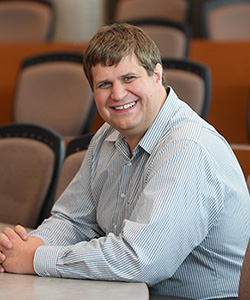 Mike Smit, Faculty of Management
Accelerating Research Data Management in Ocean Observing & Research
Understanding the ocean is essential for coastal communities, access to food, and moderating climate. Challenged but undaunted by its vast expanse and depth, researchers from across disciplines rely on observations of the ocean. This project will advance research data management from ocean observations in support of ocean research, beyond what would otherwise be possible. The Canadian Integrated Ocean Observing System (CIOOS) will accelerate research data management by:
The research team includes Dalhousie data experts like Louise Gillis (Research Data Management Librarian, Dalhousie Libraries) and Shayla Fitzsimmons (Executive Director, CIOOS Atlantic) along with expertise from some of Canada’s leading ocean data management centers, including Ocean Networks Canada, Observatoire global du Saint-Laurent, and Memorial University. During the pilot phase, the team will work with academic institutions and organizations on the Pacific coast, the Atlantic coast, and the Gulf of St Lawrence.
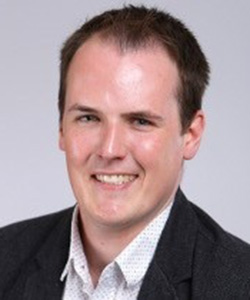 Colin Conrad, Faculty of Management and Darren Abramson, Faculty of Arts and Social Science
Beyond the Black Box: Unlocking the Potential of Digital Humanities
Digital technologies and data now play a pivotal role in our world, yet many university researchers are poorly equipped to create knowledge with them. This issue is particularly pertinent to researchers in the social sciences and humanities who are limited by funding and resources tailored to pre-digital methodologies. There is also a growing interest among digital researchers in the insights from the social sciences and humanities related to the intersection of digital technologies and society.
Drs. Conrad (pictured) and Abramson aim to address disciplinary divides through a series of events aimed at equipping humanities researchers with digital and data skills. Their immediate goal is to foster interest and cultivate expertise. Their long-term goal is to create a hub for equipping social researchers with ever-changing research tools for the digital era with a vision to position Canada as a leader in data-driven social sciences and digital humanities.
 SIM Professor, Dr. Mike Smit, has been appointed Deputy Scientific Director of the Ocean Frontier Institute. OFI is a partnership led by Dalhousie University, Memorial University of Newfoundland, and University of Prince Edward Island. This will be a part-time role while Dr. Smit continues to fulfill his duties as Associate Dean, Academic (Faculty of Management).
From Dr. Smit: “I work with the leadership team to develop and implement strategy (pertaining to research themes); represent OFI within Dalhousie, regionally and nationally; work with colleagues to synthesize and share ocean research across Dalhousie. In the short term, I have been working with colleagues on a large research proposal involving Dalhousie, UQAR, Laval, and Memorial called Transforming Climate Action: Addressing the Missing Ocean. We were recently approved as as candidate for funding from the Canada First Research Excellence Fund. To understand why someone from SIM is in this role, it’s helpful to know that I’ve been an OFI researcher, leading one of the large research projects focused on how we manage the vast amounts of data from ocean observing. This is building on the ocean data work I started with MEOPAR, and then continued with my role advancing the Canadian Integrated Ocean Observing System. Data and information are critical to understanding the changing ocean, and I’ve had the pleasure of working with incredible ocean researchers who helped me become comfortable in this area.”
Congrats Dr. Smit!