“In organizations, especially in crisis situations, decisions are contingent on much more than one person saying, ‘do this.’ All decisions, all actions are collective, with a collective exchange of ideas, collective sharing of information, reactions to various information, reactions to statements by leaders, by their constituents. It is a community. A collective communicated phenomenon that is going on in real time. Navigating that phenomenon positively and usefully requires good judgment”…
-Dr. James R. Barker, Professor; Herbert S. Lamb Chair in Business Education; Research Lead Dalhousie Safe Assured; Founding Fellow, MacEachen Institute for Public Policy & Governance –

Dr. James Barker
Founding Fellow, MacEachen Institute for Public Policy and Governance
Read Dr. Barker’s full article here
 Where are you from? What did you do before coming to Dalhousie?
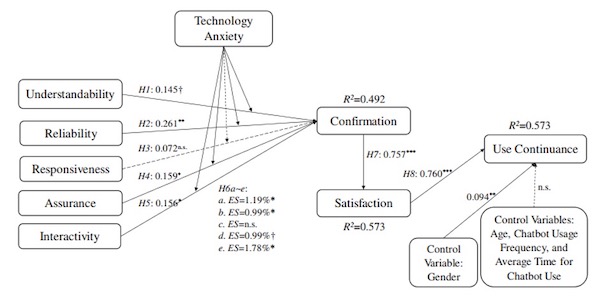
 Thanks to artificial intelligence, chatbots have been applied to many consumer-facing applications, especially to online travel agencies (OTAs). This study aims to identify five quality dimensions of chatbot services and investigate their effect on a chatbot user’s confirmation (measuring the degree to which a user’s initial expectation from using the chatbot services is met or confirmed), which in turn leads to use continuance. In addition, the moderating role of technology anxiety (measuring a user’s perception that s/he feels intimidation, unfamiliarity and difficulty with using chatbot services) in the relations between chatbot quality dimensions and post-use confirmation is examined. Survey data were gathered from 295 users of Chinese OTAs. Partial least squares regression was used to analyze measurement and structural models. Understandability, reliability, assurance and interactivity are positively associated with post-use confirmation and technology anxiety moderates the relations between four chatbot quality dimensions and confirmation. Confirmation is positively associated with satisfaction, which in turn influences use continuance intention. This study examines how chatbot services in OTAs are considered by users (human-like agents vs. technology-enabled services) by investigating the moderating role of technology anxiety.