Republished from Faculty of Management, Research, Research Profile
FoM Research Profile
RESEARCH PROFILE: JAMES BARKER
Community pharmacy safety and policy

James R. Barker is an organizational complexity, safety and leadership researcher who specializes in how humans navigate complex organizations via safe and sustainable practices. Prof. Barker leads the Safe Assured research consortium and directs a number of initiatives in community pharmacy safety research, resilience and reliability building, risk mitigation and practical knowledge transfer. The Safe Assured team collaborates with academic and industry partners to track, address and learn from medication dispensing errors in pharmacies across Canada and in other countries and to translate that knowledge into safer and more practical workplace policies. The team has research partnerships with Shoppers Drug Mart and Pharmapod, an international pharmacy safety service and safety data aggregator. It also has working relationships with professional pharmacists’ associations, industry regulators and patient safety advocates.
The team’s present work unfolds across three trajectories: (1) data analytics for community pharmacy error reporting and safety enhancement practices; (2) safety culture implementation in pharmacy operations; and (3) regulatory and public policy governing community pharmacy practices. By helping pharmacists make their business and medication practices safer, more reliable and more resilient, Safe Assured’s research and outreach enhances public and professional safety in the larger healthcare system. Prof. Barker also continues long-standing research programs on organizational complexity theory and leading change practices in complex organizations, including practice-focused research on identifying and teaching core complexity navigation skills for senior managers and executives.

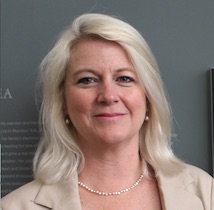



 Given her commitment to public service, choosing a master’s program that was familiar to those in her field was important. “I chose Dalhousie because it was a good fit for working full time, and because it was a program recognized as being very suitable for federal government employees.” Daradics began her program in 2017, and says she’s liked the flexibility of blended learning to balance her busy work life, along with her family (she has a one-year-old and two step-children aged 9 and 13) and her responsibilities as an active naval reservist serving in middle management.
 Now that she has graduated, Daradics is already recommending the program to others. “I’ve had a few colleagues investigate whether this program was suitable for them. I tell them I felt like it was worth my time and brought me benefit. This program provides you with a really in-depth understanding, from an academic perspective, of the way the federal government in Canada works,” says Daradics. “Especially if you’re at the management level, you don’t always have the time to understand the way the government is supposed to run. In an academic setting, you get the opportunity to really understand from a theoretical perspective the way it’s supposed to work.