“See the world. It’s more fantastic than any dream made or paid for in factories. Ask for no guarantees, ask for no security.”
Ray Bradbury, Fahrenheit 451

Vancouver Seawall
Share.Learn.Inspire.Transform
“See the world. It’s more fantastic than any dream made or paid for in factories. Ask for no guarantees, ask for no security.”
Ray Bradbury, Fahrenheit 451
Vancouver Seawall
“It appears Canadians are starting to realize who’s behind the heartless stance against Tim Horton’s employees here in Canada. But RBI’s future plans may have nothing to do with Canada, and even less so with low-wage Canadian employees.”
Dr. Sylvain Charlebois

Dr. Sylvain Charlebois
Dean, Faculty of Management
Destroying Canadian icons seems to be a trend these days. In 2017, it was Sears. While employees were losing their pensions because of poor management, lawyers and consultants were receiving millions. Now, as minimum wage policies are slowly shifting across the nation, and not just in Ontario, Alberta and B.C., Tim Horton’s, or perhaps Restaurant Brands International (RBI), is displaying what many would consider unwise resistance.
Several Canadian retail icons have crumbled, due to weak managerial strategies. This was the case with Eaton’s and most recently, Sears. Most closures, though, have historically been self-inflicted. With Tim Horton’s and RBI, the act seems almost deliberate, even tactical, and implicitly calculated. Most executives and members of the board at RBI have unquestionable business and financial acumen. RBI’s shares have almost doubled in value since its inception in 2014 when Burger King merged with Tim Horton’s and landed its Head Office in Oakville, where Tim Horton’s used to be.
But RBI’s share price is starting to weaken. After hitting a record high price of about $84 in October 2017, it is now down to approximately $77. It appears that markets may be starting to connect franchise-based challenges with the parent company, which also owns Burger King.
RBI is all about cost management, and has served several food outlets so far beyond reproach. But Burger King and Tim Horton’s are two very different franchising worlds. A typical Tim Horton’s franchise owner has about 3 stores on average. Most are regionally located, family-owned operations looking to support communities and create jobs for the next generation. With the Burger King division, on the other hand, RBI deals with franchise owners who typically own about 150 restaurants, sometimes even more. RBI’s role with Burger King is inherently different. Burger King franchise owners are massive companies, dealing with an outer-agent in RBI, and act more like an association of buyers. In addition, Burger King is no iconic brand but more of a me-too project which came out of the McDonald’s expansion years ago. Similar observations can be made about Popeye’s, another fast food chain recently purchased by RBI.
RBI is run by competent leadership who know a thing or two about how to operate franchises in the food industry. But its style, fueled by the ever increasing number-focused obsession of Brazilian group 3G Capital, does not offer the stewardship the iconic Canadian brand needs.
On the other hand, RBI’s aims may be deliberate. RBI’s intends to expand beyond Canada, and make Tim Horton’s a global brand, something Tim Horton’s has failed to do over the last few decades. So far, results in the U.K. are promising but more investments will be required. RBI is essentially using its established iconic status in Canada to support its international ambitions. In the process though, lies several victims, including franchise owners, and most important, low-wage employees being asked to pay for uniforms and limit paid breaks. When numbers matter too much, as it is the case for RBI, human capital is treated, heartlessly, as unimportant. And now, an increasing number of Canadians are noticing.
But there is more to this. Relocating RBI’s Head Office is a strong possibility. The company has never shied away from the idea, giving itself five years to do so, after its expansion in 2014. With the U.S.’s new tax reform, the fiscal climate is more attractive for a potential move south of the border. Burger King’s move north was considered a corporate tax inversion ploy in 2014. With a new tax regime in the U.S., we should not be shocked to see Tim Horton’s become a true American-owned brand. Canada will matter less and less, as the company expands internationally.
Nonetheless, the brand is suffering and will continue to suffer for a while, to the dismay of many Canadians. Many of us gather at Tim’s for regular chats, to celebrate birthdays — there have even been a few weddings at Tim Horton’s. None of this seem to matter to RBI. Regrettably, Tim Horton’s faith, the brand that is, could end up looking like the life of the legendary hockey player, Tim Horton, himself. They both started as Canadian, moved to the U.S. for a while before, well, we all know the rest of the melancholic story.
Dr. Sylvain Charlebois
Dean, Faculty of Management
Dalhousie University
January 2018
“In our family, books were more than a path to knowledge! They were period pieces that spoke to the culture and human spirit at a point in time. They were windows to the soul of the author.”
John A. Luchetti

John Luchetti MBA(FS) 2015
Books have always been an integral part of my family history. My grandfather had a library in his house in Italy with over 10,000 books. The oldest book I perused was printed in 1550. It was called Ciceronis Orationum. Unfortunately, this book, like most of the books in this collection, were lost to family politics. The only remaining books finding their way to Canada was a 1775 version of the same titled book, and a series of Jules Verne classics printed in the mid-to-late 1800s.
In our family, books were more than a path to knowledge! They were period pieces that spoke to the culture and human spirit at a point in time. They were windows to the soul of the author. They were springboards to new ideas, innovations, and inspirations. They made us think, laugh, cry, escape, and even ponder alternate realities through fantasy and science fiction. Books took us places, and led us through journeys not possible anywhere else.
In short, books stirred feeling in us that expanded our realm of possibilities, what could be more human than that?


On a trip to Rome in 2008, I fondly remember performing several very clumsy pirouettes in the center of the Roman Coliseum. It wasn’t the first time I was there, however, it was the first time I was on a trip where I felt absolutely insignificant. I marveled at the history of this place, the people that lived, worked, taught, learned, created, and died here throughout the ages.

John (white t-shirt) and his brother visiting their Grandfather’s library in Italy.
My mind was bombarded by the historical possibilities, the realities of lives lived, and lives lost in this time-weathered place. What stories are known? Which are unknown? What key learning has been brought forward through time? Have we missed more than what we know? And what will we never know? Forever lost to history.
The rush of information which permeated my senses as I stood in this place trying to recall what I knew about Ancient Rome was overwhelming. What experiences, hardships, heartaches, successes, failures have this place seen? I shivered with delight and shuddered with insignificance of my own mortality. I thought, how could I live multiple lives in one lifetime?
I remembered, decades earlier, when picking up Ciceronis Orationum. It was illegible, written wholly in Latin. Reading the book was not an option, however, I do remember saying: “Dad, I’m holding history. How many hands do you think touched this book? What kind of person would have read this book? What would they say of its content?”
My father was an intellect. He was very cerebral – logical and precise, I guess as a chemist, you need to be. He thought deeply about many things and one example he had hanging in his study which now hangs in mine, its origin is unknown to me.

English translation:
Here live men who have outlived themselves
Here they speak silently
Here they listen and remain quiet
Here they are interrogated and mute is there response
The feelings and the questions inspired by this old book so many years ago where similar to the feelings and thoughts I had standing in the Roman Coliseum.
This book inspired me to love books as did standing in the center of the coliseum in Rome inspired me to love a life of life-long learning. This was the impetus that led me to Dalhousie’s MBA(FS) program. A thirst for knowledge and experiences.
Having completed my MBA(FS) in 2015, and with some serious time on my hands, I have started to collect books, all kinds of books. I tend to shy away from digital books because there is no better feeling then immersing oneself in a book, flipping the pages, using a bookmark, and reading it cover-to-cover.
John A. Luchetti MBA(FS) 2015 is PMO Lead at TransUnion, specializing in project/program/portfolio management. His areas of expertise cover a broad spectrum from relationship management and cross functional team management, to negotiation, conflict resolution, and mediation. John has graciously agreed to be a repeat contributor on CFAME Connection.
Photography Credit: John A. Luchetti

Joe Gladwin, Prof. Joan Conrod, and Hillary Beck Photo Credit: Michelle Hunter
Congratulations go to Prof. Joan Davison Conrod, for receiving the Dalhousie Faculty of Management 2017 Management Teaching Excellence Award.
The Management Teaching Excellence Awards are presented annually to faculty members from the Faculty of Management’s Rowe School of Business and Schools of Information Management, Public Administration, and Resource and Environmental Studies who, in the opinion of their students and peers, display the qualities of superior teaching, excellent understanding of the subject area and interest in the needs of the students.
Inspiring, compassionate, enthusiastic, and visionary, Joan’s dedication to providing a rich and productive learning environment is legendary. She has mastered the art of teaching and dispensing knowledge. Students fortunate to have been in her classroom, recall her charismatic approach to the study of accounting, years after they crossed the stage to receive their degree. Everyone has a “Joan” story. My story dates to December 2001 when Joan answered my call for help while she was shopping with her family at Home Depot.
In a recent virtual interview, Joan said that it was a great honour to be chosen to represent teaching excellence.
Prof. Conrod:
I decided in high school that I wanted to be a teacher – a high school teacher! I was passionate about English and History. My decision was final – I was going to be a teacher and a writer.
My father, a chemist, took a dim view of that career choice. He wanted me to take Science at university. Better jobs in Science. It was a classic teenage standoff: My father wanted Science, I wanted Arts. I took Commerce! Ha!
Fortunately, I discovered accounting, a language all its own. I loved it. After I finished my degree, I earned a professional designation, and was given an opportunity at Dalhousie to teach as a very junior instructor. I worked very hard at it. The outcome of those efforts was finding my calling. Teaching at Dalhousie turned into the career I always wanted – the “teacher and writer” of my dreams.

Hillary Beck, Joe Gladwin, Prof. Joan Conrod, Benoit A. Aubert, Director of the Rowe School of Business Photo Credit: Michelle Hunter
“For books are more than books, they are the life, the very heart and core of ages past, the reason why men worked and died, the essence and quintessence of their lives.”
Marcus Tullius Cicero

Halifax Boardwalk, Halifax Nova Scotia
Photo Credit: John Luchetti, MBA(FS) 2015

Sylvain Charlebois, Dalhousie University
Bill Morneau is perhaps an influential figure in Canadian Prime Minister Justin Trudeau’s cabinet, but he’s not conducting himself like most finance ministers. Given the budget he presented recently, he may be more of a social justice warrior.
Supporting more diversity, equality and inclusiveness is obviously critical to the betterment of our society, but I believe most Canadians expect more from a finance minister. His recent budget was sorely lacking.
There were no plans to balance the books and, most importantly, there were no mitigating strategies presented in relation to a floundering global trade environment.
Few details were given on the government’s plan to deal with NAFTA’s possible demise on Washington’s “America First” policy, and there were no attempts to circumvent trading challenges.
The ugly face of protectionism is slowly making its way across the globe. U.S. President Donald Trump announced last week he’s considering new trade restrictions, including a 25 per cent tariff on imported steel and a 10 per cent duty on aluminum, though the White House has suggested Canada and Mexico may be exempt from the measures.
Nonetheless, trade wars are something Trump appears to relish.
Despite recent trade deals signed by Canada, the world seems at odds with open trade, and instead everyone wants to protect their own domestic markets.
This is a seemingly dangerous path given that agriculture and food are often considered the most vulnerable and sensitive sectors when it comes to trade barriers.
They’re easy targets. Tariff or even non-tariff barriers can make a significant dent in a country’s economy almost instantly, and consumers are often affected the most.
Most economists see freer trade among nations as an absolute good until politics come along. But not all trade is created equal. Some win while others lose, and given the economics of our country, Canada cannot win many trade wars, especially not with the United States.
In fact, we are already witnessing how a trade war could affect the Canadian agrifood sector as Canadian pulse farmers are now bracing for some major trading headwinds from India.
Some political opponents are linking our prime minister’s recent globally mocked visit to India with the country’s decision to increase tariffs on chickpeas from 44 per cent to 60 per cent, overnight.
The decision comes after India introduced a variety of tariffs on pulse crops, including lentils, peas and chickpeas, in the past few months.
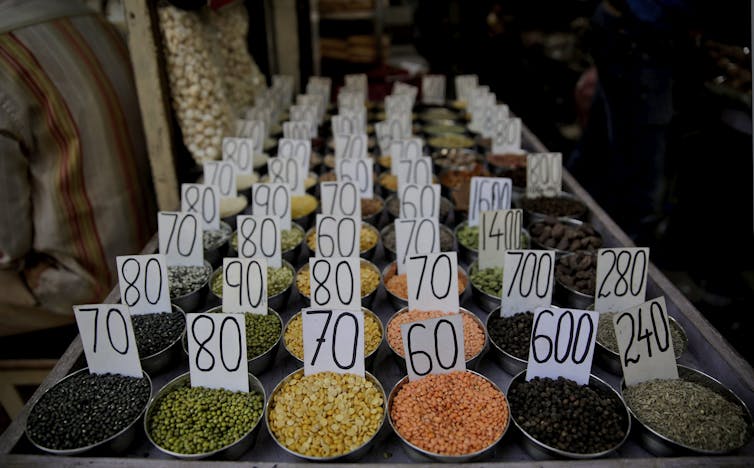
These are growth sectors for our economy. Canadian pulse exports to India alone are worth well over CDN$1 billion. This could easily escalate further and affect other sectors of our agrifood economy.
In Europe, South America — everywhere — we are seeing more governments reducing their exposure to international markets. It cuts risks and simplifies business for many producers.
But there is also considerable consensus around the world that trade wars can backfire and ultimately hurt consumers.
Trade barriers, which are often scientifically unjustifiable but politically motivated, make economies weaker and less competitive over time. Duties may look like an attractive, simple mechanism to protect domestic interests, but they are an extremely expensive way to retain jobs in an economy.
But Canada doesn’t exactly have an immaculate record either on trade barriers.
Canada itself applies heavy duties on many imports, including dairy products, poultry and eggs. These duties are embedded into our supply management regime, considered by many as one of the most protectionist policies in the world.
In some cases, duties exceed 300 per cent.
Most countries do enact duties on a variety of food products, but Canada goes even further by enabling and controlling domestic production with quotas. We are the only western economy still doing it. That makes it extremely awkward to ask trading partners for exemptions to their own trade barriers.
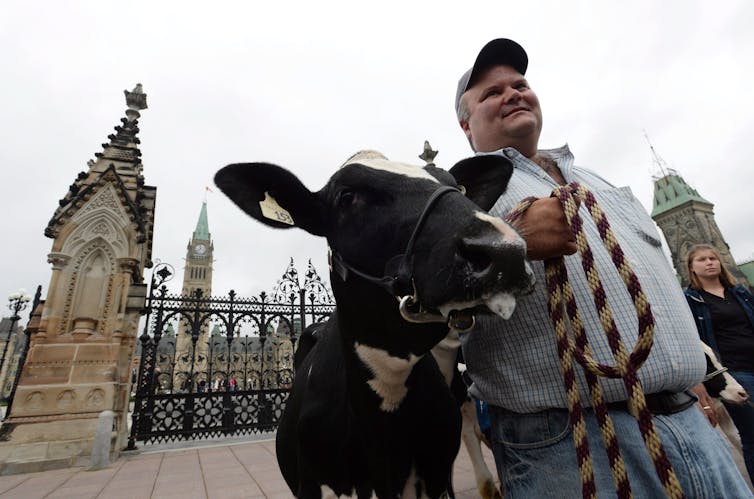
What remains under-appreciated is how intertwined all economies are, not just those of the U.S. and Canada. Duties in one sector will affect the ability of other sectors to trade. It is difficult, if not impossible, to link steel and aluminum with dairy, poultry and/or eggs, but the connection exists.
Trade wars easily escalate, spelling trouble for an open economy like Canada’s. Given our abundance of resources and knowledge, we have plenty to share. Almost 60 per cent of our economy is trade-driven.
Morneau essentially short-changed Canadian taxpayers last week with his so-called budget. I believe the government’s focus on equality would have been better served at another time.
We should not be shocked to see Ottawa utterly unprepared for Washington’s wrath towards its trading partners. Upholding equity values for our country is undoubtedly noble, but the government could fall short on its social promises if it runs out of cash.
Sylvain Charlebois, Professor in Food Distribution and Policy, Dalhousie University
This article was originally published on The Conversation. Read the original article.

Richard (Rick) Atherton MBA(FS) 2016
We have entered a pivotal time in the evolution of financial services. The advent of myriad technologies, the unprecedented pace of change, non-traditional and traditional competition, the regulatory environment, increasing consumer expectations of value, ease, and simplification, global and localized economic influencers – the list goes on. All represent a plethora of headwinds that afford a heightened urgency to think deeply about our business, move quickly, and pivot readily, while necessitating agility in our approach. The financial services industry is navigating these headwinds concurrent to striving to win for our clients today, digitizing and leveraging technologies to enhance our client experience and deliver cost efficiencies in the near term, while also fundamentally rethinking financial services for the future. As a realistic optimist – a very exciting as well as a somewhat unnerving time!
I highly value my experiences within the Dal MBA program and consider my investment central to enabling me to actively and positively engage in the industry transformation currently taking place. The program effectively strengthened my perspective, tuned my business acumen, and set the tone for the magnitude of change that I would ultimately be leading through.
How did the MBA influence my choices and decisions?
Building from my undergrad, the MBA enabled me to think more broadly, to take a wide lens to issues, while also strengthening my perspective and resourcefulness to engage in ongoing issues and opportunities present in today’s business environment. The opportunity to study, while working full time, (and parenting full time!) stretched me personally and professionally as I worked to manage the demands of my three parallel, competing realities.
Managing this complexity provided the impetus to broaden my capacity and demonstrated the value of adaptability as a core capability in my long-term development. Fundamental to today’s business environment is the ability to readily adapt to rapidly changing work. An essential capability as we look at the heightened importance of systematic horizontal integration and collaborative, fast paced, functional work environments.
The Dal MBA program also instilled a confidence that has fueled my curiosity and enabled me to more readily expose my vulnerabilities; never easy, but essential to long term personal and professional growth. Trusting the Dal MBA as my foundation, I have more easily stepped out of my areas of specialization into other parts of the business to broaden my experiences – trusting that I have the tools and foundation to enable me to positively impact the role and business in which I have transitioned.
How would you encourage others to seek more education?
Formal education is one lever for development – a lever that has always been extremely important to me personally. Peers, new work, mentors, classes, courses, experiences – there are many development tactics to consider. I suggest the first development step for anyone is to take the time to understand yourself. How well do you know yourself? Your interests? Strengths? Opportunities? Blind spots? Motivations? Take the time to reflect, ask for feedback, understand where you want to develop, and then be strategic about honing in on the areas that will support your overall development plan and journey. I have always focused on capabilities for my development, not roles, as the speed of change is reshaping everything we know. It is highly likely that your 2 or 3 out role target may not exist when you are looking for it.
Ultimately, education comes through many places. I am currently 15 years into my career and 12 years into a family life with 3 children – you quickly realize that the learning journey never ends! With the pace of change of today’s world, I find I am constantly learning both formally and informally. I am currently completing my CSC (why not!), taking a Data Science course, and completing a Lean project for a LSS designation. I am also working on many cross-functional projects that, in their own, foster unique development opportunities. Personally, my spouse and children are endlessly integrating the ‘internet of things’ into our home and routines, sharing apps and technologies fascinating in which to participate. In the end, simply being curious and engaging in the ongoing changes around me.
It is rewarding to embrace opportunities to continuously develop and grow. The world is an amazing place and, to think I am just scratching the surface of fully understanding my family, my work, my environment, and my passion, is an exhilarating feeling. Dal helped instill this in me.
I just love this quote from Stephen Hawking always reminding me to engage, embrace, and be curious:
“Remember to look up at the stars and not down at your feet. Try to make sense of what you see and wonder about what makes the universe exist. Be curious. And however difficult life may seem, there is always something you can do and succeed at. It matters that you don’t just give up.”
Richard (Rick) Atherton MBA(FS) 2016 is Senior Director, Senior Director, Operations Enablement and Integration, CB Operation, RBC. He is dedicated to the development, communication and integration of change leadership strategies supporting transformational initiatives across RBC Canadian Banking Operations. His mission is to enable effective and sustainable change to improve productivity, drive engagement, and deliver operational efficiencies. Rick has graciously agreed to be a repeat contributor on CFAME Connection.
The Story of Dalhousie; Or, The University as Insurgency
“Named for a Scottish castle at two streams where trout and salmon flicker and gleam and splash, and named for George Ramsay, whose prowess at Waterloo— cannonading and negating Napoleon, got him dubbed Lord, “Dalhousie” originates as a trophy—a profit—of War, as actual booty—“

George Elliott Clarke, Canada’s Seventh Parliamentary Poet Laureate
George Elliott Clarke, Canada’s Seventh Parliamentary Poet Laureate
With a resonate, powerful voice, George Elliott Clarke, Canada’s Seventh Parliamentary Poet Laureate, imbued life into long-forgotten years, marked significant milestones, and inspired a new generation to give voice to their time.

George Elliott Clarke, MA’89, LLD’99
The Story of Dalhousie; Or, The University as Insurgency, written by George Elliott Clarke was commissioned for Dalhousie’s 200th anniversary. A maestro of words, phrases and themes, Mr. Clarke presents Dalhousie’s history with a generous honesty that encourages readers and listeners to reflect on the realities, triumphs, and progress made over the 200 years of Dalhousie’s existence.

The Story of Dalhousie, epic in nature, is our story. We invite you to listen to George Elliott Clarke’s performance of “The Story of Dalhousie” accompanied by pianist, Tim Crofts
Photos of George Elliott Clarke were taken from the livestream of Dalhousie’s Bicentennial Launch

“When we are no longer able to change a situation – we are challenged to change ourselves.”
Viktor E. Frankl

Wales Coastline

Walter Wallace MBA(FS) 2013
I love what Tennis has taught me!
Exactly two years ago, I picked up a tennis racket, never anticipating that the journey of learning a new skill would be so challenging and enjoyable. I believe that new skills and habits can be successfully acquired or changed, no matter what we tell ourselves to the contrary. In the process, we gain insight into who we are as individuals.
While on the tennis court, I gleaned three key insights on the importance of embracing life-long learning.
First, love what you do!
Find something that is of great interest to you to develop, something that has personal meaning and will gain your total commitment. Angela Duckworth, in her insightful book “Grit” argues that if you care deeply about what you do, you are more likely to keep at it. And if you keep doing something you love, you are likely to love it more and more. If you don’t love it, then you are unlikely to improve. This is what separates a “job” from a “lifelong calling”.
My lovely wife, who took up tennis a year before me, introduced me to the sport. Her enthusiasm inspired me to join her in an activity we could enjoy together. Before long, I was absorbed in a game that tested my abilities and inner self. I truly love the game; I can’t get enough of it! Which was a reminder to me that I feel the same excitement and joy for other parts of my life – my volunteer efforts with Scouts and my career at RBC. The fulfillment that I find in my life-choices influences my progress, whether as a tennis player, volunteer or professional.
Second, let go of internal judgement!
When I first started playing tennis, my serve was the weakest part of my game. I was so embarrassed with my motion and the lack of pace and accuracy that I would commonly apologize to my opponent. What I did not fully appreciate was that the serve is considered one of the hardest skills of tennis to master. Of course, I was going to be horrible at the beginning! The trap I fell into was my inner voice. This voice, what I call the saboteur voice, would constantly reinforce negative thoughts about how bad I was at serving.
“The Inner Game of Tennis” by W. Timothy Gallwey, is a fantastic read about how to develop the inner skills required to attain high performance. Although taught through the metaphor of tennis, this book is applicable to all aspects of life. In everything we do, we must be aware of our two selves. Self One is your conscious ego-mind, Self Two is you and your potential. Self One is telling Self Two how to perform and act, and in some cases acting as that saboteur voice. When our internal mind (Self One) is talking to Self Two, it causes us to overthink and over-analyze the situation. Recognize the roles of Self One and Self Two, for they both play a vital role in achieving peak performance and full enjoyment of the experience.
Third, appreciate the value of deliberate practice.
Enjoy the journey and remain less fixated on the outcome. Do you ever wonder why you don’t get better at a skill, even though you may exercise it repeatedly over a long period of time? This is the difference between practice and deliberate practice. For example, children who grow up playing competitive hockey, are exposed to deliberate practice plans put into motion by coaches to develop specific skills. Children who regularly play pickup hockey games, have little exposure to specific skill development offered by organized practice sessions. Children in the former category develop their skills at a much higher rate than the latter.
In tennis, I took the deliberate practice approach. Over the course of a year, I spent intentional time each week practicing my serve. I watched YouTube instructional videos, video-recorded myself and tested out new techniques in games. After a year, the results of my deliberate practice approach were impressive. My efforts were confirmed when a pro coach commented on the high quality of my serve, especially since I developed it on my own. You recall my serve was my weakest point. Now, my serve is the greatest strength of my game, giving me much confidence to improve other parts of the game. The same approach can apply to changes made at work and in my personal life. Taking the initiative and time to practice deliberately and follow a practice plan, produces outcomes that generally exceed our expectations.
Tennis is an inner game that prompted me to compete individually and to develop a new set of skills and revisit my ingrained habits. My challenge to you is to identify your “game of tennis” and commit to a learning journey. Find your passion, manage that saboteur voice and embrace the opportunities that await your explorations.
Walter Wallace MBA(FS) 2013, Senior Director, Transformation Management office, Group Risk Management at RBC, leads high performing teams that focus on delivering transformational change. He facilitated the establishment of a new Global Shared Services Centre in Halifax, Nova Scotia and was the founding head of a global data centre engineering and operations group and the lead in a multi-hundred-million-dollar strategic data centre build program. Walter has graciously agreed to be a repeat contributor on CFAME Connection.