CEGE Connection stands with all Nova Scotians
Stronger Together


Share.Learn.Inspire.Transform

The World Economic Forum proclaimed recently we are in the “decade of action”––that we can no longer wait to act on facing the challenges of climate change and other related ‘wicked problems’ of modernity. The consensus by 11,000 global scientists is that we are facing a climate catastrophe if our world society does not act collectively and quickly. The United Nations framework has provided seventeen sustainable development goals (SDG) and the 2030 Agenda as a blueprint for embracing these challenges. The message is loud and clear, the long-term future of not the planet, but of humanity and other life is at risk.
For too long economics has been the dominate force, preempting all other interests and sacrificing humankind’s long-term future. As David Orr suggests, “There is a tendency to sidestep the possibility that we are a flawed, cantankerous, willful, perhaps fallen, but certainly not entirely planet-broken, race.” Perhaps it is the human condition to only focus on short-term egocentric interests––this might be our fatal flaw. However, we are sentient beings that have the capacity for empathy and caring for others. Also, we have shown great imagination in taking on past challenges, perhaps we have it in us to shift our behavior and create the world anew. In this quest, the question we need to ask is how do we keep economic scale within the ecological carrying capacity[1] or what science is referring to the planetary boundaries that will enable life to continue to thrive on Earth? Engaging citizens in this inquiry and conversation might provide action for a sustainable future.
In today’s world we tend to wait by the window with hope for our leaders to save us. We hold onto the great leader syndrome, where our culture has built up the myth that leaders are that loud and charismatic (usually male and white) person riding the white horse to the rescue with all the answers and solutions––to save us from all our problems and bring us out of crisis. This belief will only lead to continued deepening despair and inaction. Sustainability and the 2030 Agenda cannot be a ‘top-down’ approach if we are going to overcome deep and wicked challenges for humankind. The leadership for large scale change is in each one of us. We all need to lead at times, and collaborate at times in an interexchange of dialogue––where leadership is more a process and space between us, where together we create meaningful conversations that matter. Through this process we can develop active ecologically competent citizenry engaged in an effort to create large scale change. This requires a rejuvenation of a civic virtue and a rise of a social-ecological responsiveness from competent citizens who understand the global issues at hand and are committed to living for desired future that imbue a life of well-being that reconnects to the sacredness of land and sea-scapes. This needs to be catalyzed through education for sustainable development and threaded into every faculty curriculum at the University.
Students today might need to change their expectations for the future. Emerging leaders have been taught and have espoused instrumental and deterministic mindsets of wanting more––to consume more, to travel more, to earn more. It is recognized that young generations today might have a lower quality of life than their parents and grandparents. Wendall Berry writes, “We must achieve the character and acquire the skills to live much poorer than we do. We must waste less, we must do more for ourselves and each other.” Sustainable development needs to be focused on a qualitative character, on a model of improvement in society. Unfettered capitalism that we embrace today, with its focus on economic growth, has lost its moral element that Adam Smith once advocated for. Capitalism has always held democracy as its marquee, but the insistence on profit maximization for the elite shareholder and chasing the all mighty dollar is undermining and dissolving the very democracy it proclaims. There are some that suggest we need a new kind of capitalism or a totally different model or system that features equality and collective citizenry. Regardless, we need to question today’s economic worldview––as the stakes are too high not to. Critically we need to ask questions that challenges our present way of living and steady march towards a culture of materialism and over-consumption. We cannot be afraid to step out of patterned norms of society to seek a new kind of prosperity that considers ending growing inequality and hopelessness?
There are leaders that downplay individual regional and national action. One Canadian politician recently commented, “We’re not the problem, we can throw all our car keys in Halifax harbour, turn down the heat, turn off the lights, walk around naked in the dark eating organic beets and it won’t make a difference.” In other words, old leadership paradigms are saying people’s actions at the local, regional, and national do not make a difference to large scale change, like climate change. This claim supports a self-fulfilling prophecy of non-action by citizens. It’s a time of awakening. It is recognized that global challenges that face us today are an aggregation of local and national problems and crises––and that they are almost always remedied at the same levels where they occur. Therefore, constituents for change needs to occur with citizens and communities at the local and national levels. The social scientist, Margaret Mead recognized this many years ago when she stated, “Never doubt that a small group of thoughtful, committed citizens can change the world; indeed, it’s the only thing that ever has.” For proof of this we only have to look to Greta Thunberg, who only months ago sat alone in front of the Swedish parliament, to now co-inspiring citizens for change on a global scale. In our institutions and organizations, we need to co-inspire, co-create, and enable a citizen virtue that embraces a belief and need for action at all levels.
At Dalhousie we are sensing these conversations and seeds of emergence happening in the various faculties throughout campus. Moreover, we are seeing Universities committing and make a formal declaration to the sustainable development goals and the 2030 Agenda to spur on these dialogues (UBC and all Quebec universities have signed this UN declaration). The declaration commits us to global action and enables a collective citizenry to imagine and drive towards desired futures. So, if any of this makes sense to you, start a conversation that matters. You can change the world! Believe it. We know it. We are seeing it.
Kent A. Williams (DSocSci) is an Assistant Professor with the Faculty of Management and facilitates leadership studies for undergraduate and graduate students that focuses on the 2030 Agenda and enabling citizenry ethics and virtue that builds leadership capacity and capacity for action to create desired futures for humanity.
[1] Ecological carrying capacity = total population X resource use level that ecosystem can maintain

Kent A. Williams, DSocSci (pronouns: he/him)
Assistant Professor, Leadership Studies
Rowe School of Business
Dalhousie University
Kent A. Williams (DSocSci) is an Assistant Professor with the Faculty of Management and facilitates leadership studies for undergraduate and graduate students that focuses on the 2030 Agenda and enabling citizenry ethics and virtue that builds leadership capacity and capability for action to create desired futures for humanity.
“You cannot get through a single day without having an impact on the world around you. What you do makes a difference and you have to decide what kind of a difference you want to make.”
Jane Goodall

Wales
“This research, though still ongoing, has shed some light on the need for conversation in the context of systems thinking. Health care providers, administrators, support services, patients and many other stakeholders are all factors who play an important role in our system. Fostering an understanding is the first step for us to appreciate the interconnections and roles that exist when identifying problems and coming up with solutions, especially as we work to navigate COVID-19 and map out sustainable health care systems for the future.”
Keira Lum, MBA

Keira Lum, MBA
I would have never expected that the current reality of a global pandemic would so closely reflect the nuances of a research project for school. COVID-19 and the world’s response to the virus, highlights the complexities of the healthcare system and exemplifies complexity science in systems theory, which became my research topic of choice for a school credit.
While in the final year of my Master in Business Administration degree at Dalhousie University, I choose to complete a directed reading to fulfill one of my required course credits because it was a chance to learn something that I was highly interested in and because the winter course offerings did not align with my future focus. A directed reading is a course that a student is able to customize and structure under the guidance of a professor in a topic of their choosing. My professor of choice happened to be an eccentric finance prof who spent most of my first year preaching about this strange topic called complexity while trying to ensure students understood the time value of money and the importance of reading the news. I was intrigued, and after finishing his book, thought complexity would be an interesting topic to explore further. However, in wanting to explore this topic, I also sought to understand and leverage my recent 8-month co-op experience completed at a Toronto Health Network on the Operational Excellence team as part of my degree. As such, I chose to research and try to understand the role of complexity science in healthcare.
The health care system and its challenges have been a well discussed topic over recent years, such as ending hallway medicine; how to build a continuum of care between acute care centers and communities; how to navigate funding restraints at a federal and provincial level; what to do with the influx of patients entering long term care as people live longer with various qualities of life; etc. The list is long, and sobering when you try to comprehend where to and how to begin addressing such issues. When this conversation begins, it shines a light on the complexity of the system but requires an understanding of systems thinking in order to propel an appreciation for such interconnections and unpredictable results that exist. The understanding of these systems becomes necessary before we begin thinking of solutions to such problems.
In systems thinking, there are several types of systems, however for the purpose of my research and directed reading, the focus compares complicated versus complex systems. The terms complicated and complex are often used interchangeably and without knowledge of systems theory, many incorrectly apply or categorize problems in the wrong system.
A complicated system is governed by rules and laws (ie. the rules of physics) which leads to predictable outcomes. An example of this is observed in administering the flu shot to a patient. Conversely, complexity occurs when there are interconnections (relationships) between several agents or factors within a system, such as a patient’s relationship with their healthcare professional, or the general public and government healthcare agents. Unlike complicated systems, agents within complex systems may adapt their behaviour based upon the nature of their connections. This leads to resulting behaviours or outcomes which are completely unpredictable such as a population’s response to the spreading of a virus. This also results in properties such as emergence, feedback loops, the butterfly effect and/or paradigm shifts.
Understanding the differences between complicated versus complex systems is important because it underscores how we operate within and address these systems. When addressing complicated problems, we often end up with reductionist thinking, where one focuses on static properties of elementary parts. In looking at complex problems, we need to use holistic thinking which assess a situation as a whole compared to a collection of parts. This is important because, it requires that we understand the environment and context in order to understand the system or problem as a whole.
My directed reading and research aimed to highlight the importance of acknowledging and understanding healthcare complexity when identifying problems and developing solutions through the research questions: Are we aware of and do we appreciate complexity in healthcare? As well as, what may prevent us from understanding complexity in healthcare? As healthcare has elements of complexity, my goal was to understand whether various stakeholders in the system understood complexity in healthcare and what factors exist which prevent us from understanding complexity in healthcare.
My research methods included interviewing several stakeholders from within the system consisting of health care professionals such as nurses, physicians, surgeons, allied health professionals (physiotherapists, occupational therapists, pharmacists, social workers, speech pathologists, kinesiologists, etc.), health care professionals in training, health care administrators and most importantly, patients. These stakeholders helped shine a light on whether we are aware of and appreciate complexity in healthcare and what factors prevent us from understanding it.
When I began my interviews in February of 2020, COVID-19 was spreading throughout China into other neighbouring countries. The realities of what the next month would bring were not as apparent at the time my first few interviewees gave their responses. However, as my interview process continued, access to the stakeholders I sought to engage with, became more challenging as the Canadian healthcare system transitioned into risk management and crisis mode. Interviewee responses, though still highlighting pre-existing challenges, factors and definitions related to complexity, were grossly intertwined with the very real state of the COVID pandemic.
When interviewing stakeholders in the health care system, responses regarding what complexity in health care meant given their role varied. What became apparent as the individual definitions were analyzed was that all definitions were based on the person’s experience and grossly framed by their position within the system, their bias, training, specialization and experience. Many health care providers (HCP) primarily thought of complexity in the context of patient complexity and patient care, which incorrectly led some to believe that they may have fostered a strong and complete understanding of complexity at a systems level. Some (40%) interviewees identified specific domains that exist surrounding patient care, such as their individual medical knowledge, social complexities and interactions with other health care providers and patients, and lastly the system’s complexity. Health care administrators, and individuals with significant experience in the system (working as an HCP or through exposure as a patient and approximately 30% of the respondent pool) had a greater understanding and appreciation of the interconnections that exist within the health care system from acute level systems to community healthcare systems.
What these initial research findings revealed was that many, if not all, stakeholders who were interviewed have some understanding of complexity science within healthcare given their role. This research also highlighted that many interviewees were quick to identify complexities that directly related to their role and immediate challenges that they faced on a daily basis. This meant that it was more likely for an administrator or director who is frequently exposed to the budget within an organization, to identify budgetary constraints and its relatedness to their operations as a challenge and layer requiring navigation in a system. In contrast, a health care provider such as a social worker, would be more likely to highlight challenges surrounding the structure of the system. For example, the accessibility to resources within the systems they work within (ie. an acute care center), or in a neighbouring system that they may need to access (ie. community outreach programs or long-term care). This does not mean that each individual stakeholder is unaware of these other layers, factors and connections, but rather that they may not be a priority.
When trying to recognize factors that prevent stakeholders from understanding complexity, respondents identified a wide range of factors from experience within the system and exposure, to individual bias, upbringing, specialization and training. Factors that stood out include: an identification of lack of interest due to time and capacity. Many felt that though complexity exists in the work they do, appreciating it and truly aiming to understand it within their position requires time. Time that respondents don’t have as they are already operating at capacity with a full patient case load, efficiency and budgetary initiatives or are strained by a global pandemic. As such, observing complexity, appreciating it and using it to build solutions is often de-prioritized, which sometimes leads to a poor understanding of how to identify, classify and solve problems.
Additionally, many people fail to think of healthcare unless they need it, or currently, unless it is broadcasted at large by the media due to a pandemic. The reality however, is that many people who engage with the healthcare system do so through their position as health care workers or administrators, support services, or because they have to as patients or patient families. Limitations in knowledge of the healthcare system and how it operates at a macro and micro level is something that prevents us from understanding and appreciating healthcare complexity. This includes anything from political incentives, funding models, operational decisions, risk management, patient care, transition of patient care between acute care centers and the community, accessing care at home, aligning services, accessing health related information, etc.
This lack of knowledge and information was identified as a gap among most boards of directors who govern health care centers. It was observed by some of the senior health care administrators that directors who often came from out of industry to govern a health care centre, struggled to understand the interconnections and processes that exist within healthcare. This is often the same for first time patients who are exposed to the system when ill or injured, or even to seasoned patients who are entering a new part of the healthcare system because their care needs have changed. Knowledge and access to information, especially accurate information is an important factor identified that may prevent one from understanding healthcare complexity.
As an extension to our knowledge, too much knowledge as a result of specialization was also deemed a factor that prevents one from understanding complexity. When one is specialized in a specific area of patient care or administrative operations, it is not uncommon to wear blinders and fail to see other aspects of the system. This is because our roles are sometimes structured so that understanding other variables or factors in the system are not necessary. This is incredibly common with sub-specializations where one is incredibly knowledgeable in a very specific area but may not always engage at a holistic level.
In contrast, some respondents indicated that too much information resulted in paralysis by analysis and an inability to understand the complexity that exists. An example of this was commonly identified with new electronic medical records, where health care providers are inundated with patient information in one digital location. Despite the benefit of having access to most if not all of the patient charts, for many providers, this adds a layer of complexity. It becomes more challenging and time consuming for providers to navigate more information which is an overwhelming process and has been identified as a disruptor in how they would like to provide patient care.
Overall, many factors exist beyond the ones identified in this research and in this article, which prevent one from understanding complexity. However, despite these factors we still have a responsibility to be open-minded and understand these interactions. This means acknowledging how our roles and decisions interact with other areas of the healthcare system while deciding on what is best for patient care or operational efficiencies.
This research, though still ongoing, has shed some light on the need for conversation in the context of systems thinking. Health care providers, administrators, support services, patients and many other stakeholders are all factors who play an important role in our system. Fostering an understanding is the first step for us to appreciate the interconnections and roles that exist when identifying problems and coming up with solutions, especially as we work to navigate COVID-19 and map out sustainable health care systems for the future.
COVID-19 became a perfect example of a complex system and the nuances of interconnections within and beyond the healthcare system. These interconnections are influenced by thousands of factors which vary drastically as the virus continues to spread. Two examples that stand out are the social and economic responses as a result of COVID-19. In trying to tackle COVID-19 we need to keep a few things in mind. Identifying the problem or problems as either complicated or complex are crucial. Different systems require different approaches when building out solutions, and to get to this point we need to begin with an understanding and appreciation for systems theory, factors involved and their interconnections. In approaching complex problems, we need to use holistic thinking and be cognisant of the fact that our decisions will have unforeseeable impacts down the road.
Keira Lum, MBA
April 2020
Editor’s Note: Special thanks to Dr. Rick Nason for introducing Keira Lum to CEGE Connection. We are thrilled to publish Keira’s research and insights. We wish her the very best as she pursues her research on complex systems within our healthcare system.
“The Earth is what we all have in common.”
Wendell Berry

Newfoundland
“Failure is one of the greatest experiences you can have. As leaders in any organization, you need to accept that all your decisions will have some kind of risk. There is a balance in finding the potential corporate risk and opportunity risk to garner success. Failure with acceptable risk should not be feared or punished and should be encouraged to promote growth.”
M.E. “Ozzy” Osborne MBA(FS) Class of 2019

M.E. “Ozzy” Osborne CD, MBA(FS) Class of 2019
Captain, Deputy Comptroller
Formation Europe
Canadian Forces
I did not have the opportunity to attend the convocation in October 2019, however, I did get to watch it streamed (though not with the best resolution) in the early hours of the morning. As I watched people with whom I spent years within classes and intensives, I kept thinking; What was the most interesting memory of a class or intensive? Of all the course intensives attended and with several amazing memories, I think Business 5103 – Management Skills Development (Leadership) with Dr. James Barker kept coming to mind. During the intensive, there were several scenarios that were presented for discussion on how, as a supervisor, you would conduct yourself. It was then I realized that with over two decades in the Canadian Military, I had a somewhat “unique” leadership style (which I may have vocalized).
Attending the various classes in the MBA(FS) program, I was able to see the different styles from different professors. They ranged from academic to professional to cordial to sarcastic and a myriad in-between. I was also able to see the methods in which others in the class viewed leadership and, in many cases, how it was applied though our group work. I am fortunate in that the Canadian Military teaches leadership to all of its personnel prior to being permitted to lead at any level, which is defined as “the process of influencing others to accomplish the mission by providing purpose, direction, and motivation”. I have noticed some constants (with anecdotes) in the best supervisors and leaders I have worked with:
Consistency (Get up and make your bed): Seems a relatively simple idea starting first thing in the morning. Everyday, get up at about same time and make your bed. In order to lead, you must have a routine and methodology to apply to your day. Secondly, to start the day you need to accomplish something, even if it is small and achievable. Even with the worst day, you have still accomplished making your bed. A leader will have realistic achievable goals.
Lead by Example (If you are not up before the sun it is a wasted day): Always lead from the front. To do that, it takes a longer day and commitment to succeed. Always getting up before sunrise is not easy for people. I enjoy waking up at 3:00am and walking my dogs, getting to the gym by 4:00am for a few hours and then to the office at 6:00am or 6:30am to start the day (defiantly not a schedule for everyone). Many of my supervisors are in the office working when I arrive in the morning despite my personal morning routine. I asked one of my supervisors why they were in so early and the answer was “If you work this early, I work this early.” What was shocking was they did not need to be there at that hour and when my day ended, they would still be at their desk reviewing the day’s submissions, making corrections, etc. Always lead by example.
Small Success (do not fight the river): Most of us work in large banks, organizations and companies. That means we will not change the world or change how our organizations will do business. Trying to make major changes will be difficult, if not near impossible, to cut through “red tape.” So, concentrate on the small things to help. Whether that is changing a small procedure to make life easier for your subordinates or helping a client/customer with something. A leader’s ultimate goal should be to leave an organization better than when they arrive.
Time Management (1/3 to 2/3 rule): One of the most interesting theories the military uses is the one-third / two-thirds planning rule. This means that for any given planning or work-related project, a maximum of one-third of the total time is for you as the manager/reviewer/approver and the remainder of the time is for the team to work. The more time that can be provided to your team, the better. If there is a time crunch, as the manager, it should be yours to absorb. This way, the quality of the product is not compromised. A leader provides time for the team to do the work well.
Ethics and Values are not easy (Shave with your eyes open): This is the hardest thing for any leader to do. Everyone knows the difference between right and wrong. Can you make the decision when you are going to lose something with either decision? The best supervisors I have known worry about doing what is right and not what is easy. A leader can make hard decisions.
Adaptability (Plans do not survive first contact): We all pride ourselves in planning out a method to achieve team goals. The reality is that any plans you make rarely last. In essence. you only have a short time before you need to be able to assess, decide, and adapt to the new situations that will follow. When this occurs, it is important to remain calm, think, adjust, and carry-on. The ability to analyze and adjust for fluid situations is essential. Leaders can adapt.
Accept Appropriate Risk – Failure is not Always Bad (Do not be 10 Ply): Failure is one of the greatest experiences you can have. As leaders in any organization, you need to accept that all your decisions will have some kind of risk. There is a balance in finding the potential corporate risk and opportunity risk to garner success. Failure with acceptable risk should not be feared or punished and should be encouraged to promote growth. When you fail, do not collapse or give up. It is time to learn and improve. A leader accepts risk.
I recommend watching Admiral McRaven and Staff Sergeant Bellavia’s speeches on YouTube for some introspective thoughts on leadership and ethics.
M.E. “Ozzy” Osborne CD, MBA(FS) Class of 2019
Captain, Deputy Comptroller
Formation Europe
Canadian Forces
“Courage is the most important of all the virtues because without courage, you can’t practice any other virtue consistently.”
Maya Angelou

Quebec City

Daffodil Month, held every April, gives Canadians the opportunity to make a difference. Join the Canadian Cancer Society in raising awareness and funds to help change – and save – lives.
Why the daffodil?
The daffodil is resilient. It survives our harsh winters and is the first flower to bloom in the spring – a time of renewal and hope. The daffodil is a symbol of strength, courage and life. During our annual Daffodil Campaign, Canadians rally around this symbol and take action to support groundbreaking research and support programs that make life better for those affected by cancer. Canadian Cancer Society
Join the Fight – Get Involved! Visit the Canadian Cancer Society
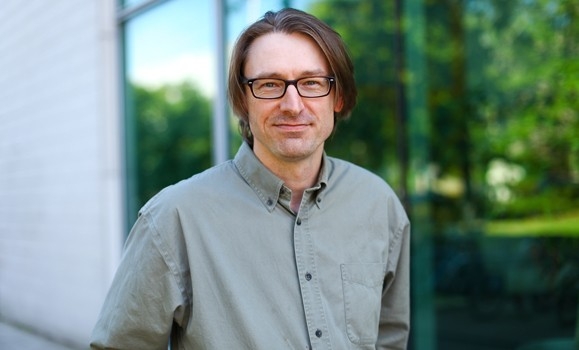 Derek Tay’s name comes with many titles – online curriculum designer, course manager and online content specialist, all of which confirm he is the technology wizard behind CEGE’s on-line delivery system. His ability to introduce and explain complex high-tech systems to others is recognised and appreciated by students and professors.
Technology has transformed CEGE’s delivery system. Many will recall sending in assignments via fax, courier and email. Now MBA students have the advantage of virtual classrooms, discussions, course dropboxes and progress reports via Brightspace. The latest innovations: profile enhancements and ePortfolio.
Derek explains how students use Brightspace to customize and share their information.
Like most online “communities” these days, Brightspace has a profile section where each community member (students in the case of Brightspace) are able to customize their personal information that is displayed to the other community members. This can easily be done by simply clicking their name in the right corner of the site and choosing profile. There are several items that can be changed and edited at the discretion of the learner.
There is also a location on Brightspace called ePortfolio. This is a bit more complicated than the Learner Profile. Here students can add details from specific classes to save for other classes. Additionally, they can share items from their ePortfolio with other members of the community not unlike one would share items from their Facebook page. The goal of this portion of Brightspace is to help foster Communities of Learners.
Based on current research, one of the main ways to improve student learning is to ensure that students feel that they are part of a community. ePortfolio strives to make that happen by providing another way for students to connect that is not entirely course related. The other advantage of ePortfolio is that it is cumulative over the student’s life at the university, which means items that are placed in it at the beginning of a program remain until they finish the program. This allows students to go back to critical items from previous classes and easily access them.
On a personal note, I enjoy helping students learn and explore new technology. I genuinely hope that my efforts make the student experience better and technology easy.
Derek Tay
Learning Coordinator MBA (FS/L) Program
Editors Note: From CEGE Connection Archives, this post was originally published on November 28, 2016.
“There is a pleasure in the pathless woods,
There is a rapture on the lonely shore,
There is society, where none intrudes,
By the deep sea, and music in its roar:
I love not man the less, but Nature more”
Lord Byron

Nova Scotia