
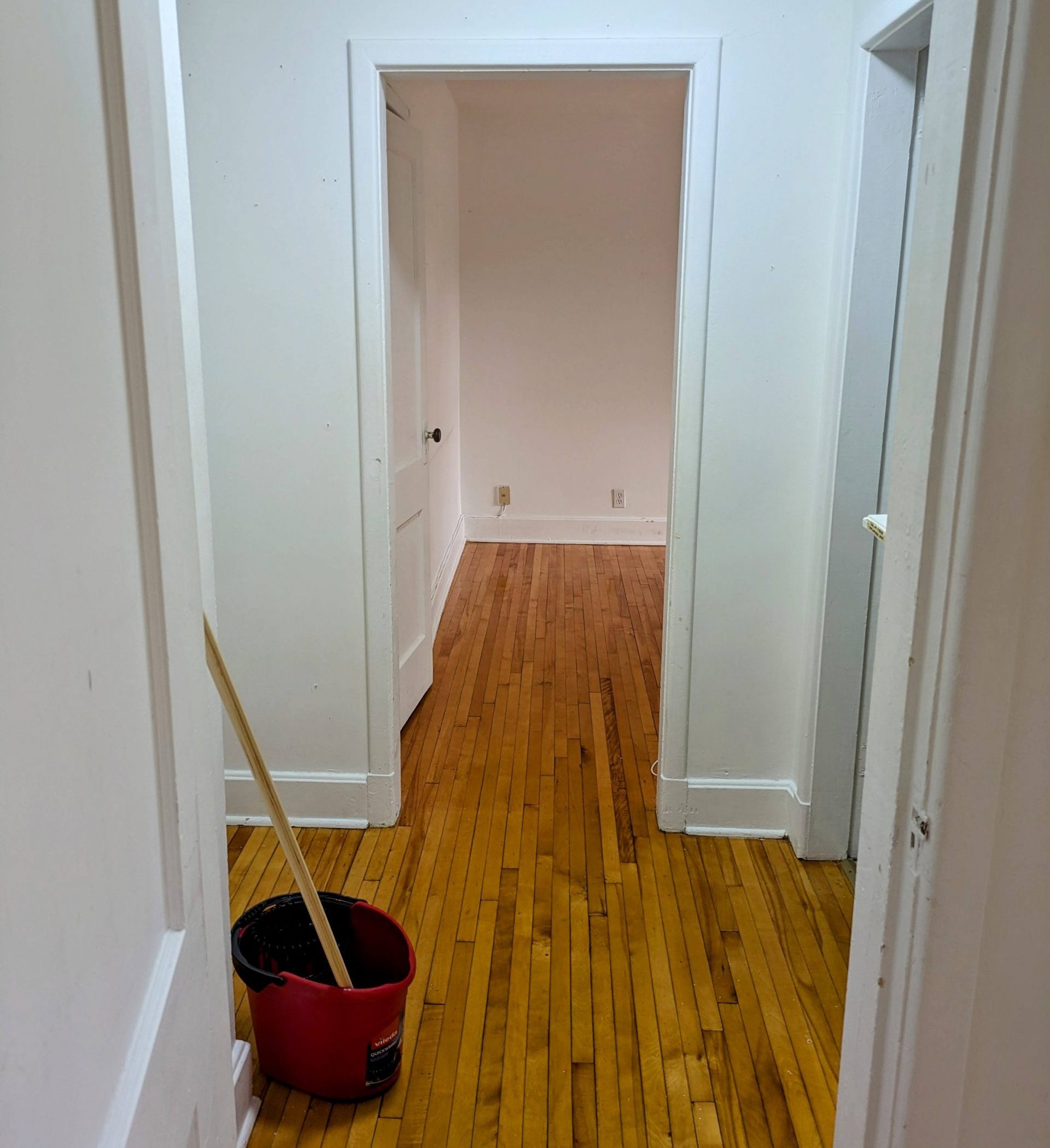
Over the past few weeks, I have been consumed by packing and preparing for a move. We’re not moving far—it’s almost comically close, just around the block—but that doesn’t diminish the amount of work required.
I’m no stranger to this work, having moved three times in the past two years. Every time I start making and filling boxes, though, I am caught off guard by a mixture of feelings: dread, stress, excitement, curiosity, sadness, sometimes relief.
Oh, and a huge dose of shame about the amount of Stuff In My Life. My Stuff.
This all-consuming wave of shame is the lead-in to the inevitable soul searching that arrives about halfway through the packing process, which then surfaces again about four days into the unpacking process.
As I am now around that milestone, my soul searching has been at an all-time high, but thankfully, this time, it’s led me to think about what I’m going through in relation to what I’m studying. I have realized that the process of moving offers insights into the utility of the rite of passage framework, discussed in my previous blog posts. I’d like to explore that a bit more throughout the month of September.
A few of the realizations that have struck me as I’ve put books, clothes and dishes into boxes, and then taken them back out again a few days later:
1. You need to just buy the good tape. Yes, dollar stores have rolls of so-called tape, but after one too many instances of splitting the tape into shards rather than gaining purchase on a full piece and then going through maybe three times as much to feel confident that I actually secured the bottom of a box, I realized that tape strength matters.
The tape of a rite of passage can be the things that keep the bottom from falling out beneath you. Invest heavily in these things: a meal plan for the postpartum period that includes nourishing, soul-warming foods, a designated time in the evenings when you step away from caretaking work during the death process to do your favourite activity, keeping a journal during the transition to university to remind you of the things you love, a jar of your preferred coffee to reach for in the morning when planning your wedding. While you could persevere without the plans, alone time, journaling or favourite snack, these little things will make a huge difference in your comfort as you experience the separation, liminality and reincorporation of large life transitions.
2. Probably also get the good boxes, too. Left to our own devices, my partner and I would move by putting everything in reusable grocery bags and milk crates. While this can make things easier to move loads by hand, it is decidedly not what a moving company wants to see stacked in your living room. We knew it was going to be necessary to use boxes, and even though I was tempted to load up on freebies from Costco, we ended up buying boxes from a big box store. Yes, I was annoyed at the idea of buying cardboard. But it made a huge difference for both organization and stacking.
Having a way to compartmentalize Your Stuff in ways that are familiar (read: consistent sizes and shapes) can give a sense of order to the process. It also allows you to let others (like the blessed moving company!) help you. What is the “stuff” of a rite of passage? The emotions, task lists and thoughts that come up during a huge life change. Naming these things to ourselves—and to others—is like packing things into boxes. You take a jumble of Stuff and give it a place, even if temporary, and that can help you move through the change with ease. When it’s time, you can open those boxes, knowing they’ve safely and reliably held your Stuff, and work your way through the memories, associations and emotions.
This may be easier said than done. It’s an easy-to-describe, hard-to-do process that takes giving yourself room and time.
3. This’ll require you to use muscles you didn’t know (or forgot) you had. You’ve got your Stuff in boxes—now what? Let’s move them. Uh oh, one wrong move and all those diagrams showing how to properly lift a box (with your legs, not your back) come flooding back in. Oh, how you should have really studied up for manual labour. It’s brutal work, yes, but over time, you’ll begin to realize—hold on, I’ve got this. This is doable. My arms and legs are moving the things I want to move and we’re making progress of revealing the floor! Even if movers come to actually move it away to the next place for you, you’ll need to be able to navigate your packed-up house for a little while and you’ll need to physically interact with your Stuff.
When you’re undergoing massive change, sometimes it feels like it’ll never end, that you’ll never be settled again. But over time, as you work your way through that transition and use the muscles of “picking yourself up again and again” and “ensuring your life doesn’t completely fall apart even though it threatens to do so,” you realize that you are making it through. You have always had these muscles—you might just rarely have the opportunity to use them.
4. Reassess the old, and with it, yourself. When you get to the new place and start opening up those boxes, you’ll be confronted with your Stuff. Familiar objects and items, but in the new light of your new place. How does it feel when you see them? Dread? Maybe it’s time to donate. Joy? Put it somewhere easy to get to or visible. Shame? You’re just a few days into this, don’t worry. That too shall pass. It’s just the feeling of really seeing yourself for what you are: someone who exists in the world, thus someone who has Stuff.
Moments of transition can be opportunities to take stock of things, whether that be your literal things (re: your Stuff), where you’re at in life, maybe any internal dialogues that have been going on for a while. Is everything still working for you? In the modern parlance: does it serve you? Major life transitions put us in a place where we rethink what we’ve known. When we cross over to the other side—of parenthood, of a birthday, of a wedding—we have the power of hindsight to consider our previous life from a new vantage point. What do we want to change? What do we want to remain the same? Has this transition been beneficial? This last question may need more time to truly assess—maybe another transition altogether—but given the fact that we can begin to consider it means that we are on the right track of making it through the reintegration of our Stuff into our new life.
Change can be difficult, but change is constant. Major moments of transition that are memorialized as such—which I’ve been referring to as rites of passage—give us the opportunity to assess things from “before” and “after.” During the rite, we may be distracted by the way we feel, the scattered nature of our lives or feeling out of our depth. But the landing back into our lives — Van Gennep’s “reincorporation”—places us back in
amongst our Stuff, our lives reform around us and we find new ways to live in this new place and in this new role.
I’ve been thinking about the nature of change a lot as I’ve been dealing with my own Stuff, and it’s led me to appreciate the utility of the rite of passage framework when it comes to understanding the stages of what I’m going through. It is, of course, not perfect. But it’s allowed me to let go of being fearful that nothing will ever be the same, because it’s proof that yes, nothing is ever the same again, and that happens over and over and over again. It also allows me to digest some of the shame that comes with having Stuff. It’s shown me that it’s simply a part of living in the world. That Stuff is what helps me transition into the new space and new role. By having referents to my previous life (like my finding my favourite mug, my favourite books, my lamps), I can integrate my old self with my new self, and even, maybe, grow a little.
What a privilege it is to see that the nature of the universe—separation, liminality, reincorporation—is present and active in our simple lives of packing and unpacking boxes.
Join me next month as I explore examples of how birth and death professionals are supporting rites of passage in modern-day medical settings and what this can mean for the future of the Canadian health care system.


