
In my previous blog post, I introduced the concept of “rites of passage,” first popularized by anthropologist Arnold van Gennep in 1909. “Rites of passage” can be used as a framework to explain the social importance of major life events, such as coming-of-age ceremonies, marriages, retirement parties and funerals. Childbirth is a potent example of a rite of passage; the birth of a child marks the beginning of a new period of life and the end of another. But rites of passage are as much about social relationships as they are about personal experiences. Even the rite of passage of death, as much as it is personal, is about social relationships.
What do I mean by social relationships? Returning to the three steps of van Gennep’s rite of passage covered in my previous blog post can help us reveal the social nature of death.
The first stage of a rite of passage is separation from the group. If we have prior knowledge of our imminent death, especially from a terminal diagnosis, we may have time to process it. This can be a very isolating experience, where we may turn inwards to do some soul-searching—did we do everything we had hoped to do? Do we have any loose ends we want to tie up? Is there time to change things before it’s too late? How do we want to spend our remaining time? The weight of these questions and the realization that our time is much more limited separates us from others. Separation from others—in this example, those without knowledge of their imminent death—begins the rite of passage.
The liminal or in-between stage occurs after becoming aware of impending death. Reactions throughout this stage are likely to be deeply personal and depend on many things, including access to support systems and personal beliefs about death. Feelings of grief may arise, sometimes reflecting the five stages named by Kübler-Ross. Some may feel the desire to plan and prepare for how they will use their remaining time: for example, what type of care they’d like to receive, or what their burial and funeral will look like. Life may begin to look very different, with each day “taken one at a time.” Waiting is a common theme of not just dying but of the liminal stage: waiting for care, waiting for appointments, waiting for signs to access more care, waiting for loved ones to arrive. Sometimes, waiting to see if things turn around.
Regardless of an individual’s response to their impending death, their society’s view of death often shapes their experience of it. Societies that have the capacity and interest in supporting people through the uncertain, liminal stage of death may develop robust palliative care options. Death doulas, or laypeople with training to support people as they contend with impending death, may be sought out, and death may be talked about more freely. In stark contrast to this openness, societies with long-standing cultural norms of avoiding talking about death and dying may offer few—sometimes hidden—supports. Insufficient funding to support existing staff and to grow palliative programs hamper the public’s access to death care, as has been the case in Nova Scotia. How the dying person views their own death may shape their experience of the liminal stage. In my research, I argue that it is the way they are held by their society that shapes their overall experience of dying.
Finally, death brings the final stage: reincorporation. In a rite of passage framework, reincorporation comes when we complete the transition into the new role and become a part of a new group. Often, when we recognize that we have made such a transition, we are able to accept that we are no longer who we used to be. For the dead, however, it is less clear if they are able to reflect on their new role. “What happens when we die” is one of the biggest questions of life, asked by curious two-year-olds and the young-at-heart alike. Near-death experiences may tell us more about the person experiencing them than the true nature of death, given the huge diversity in experiences, but only the dying person can experience death for themselves.
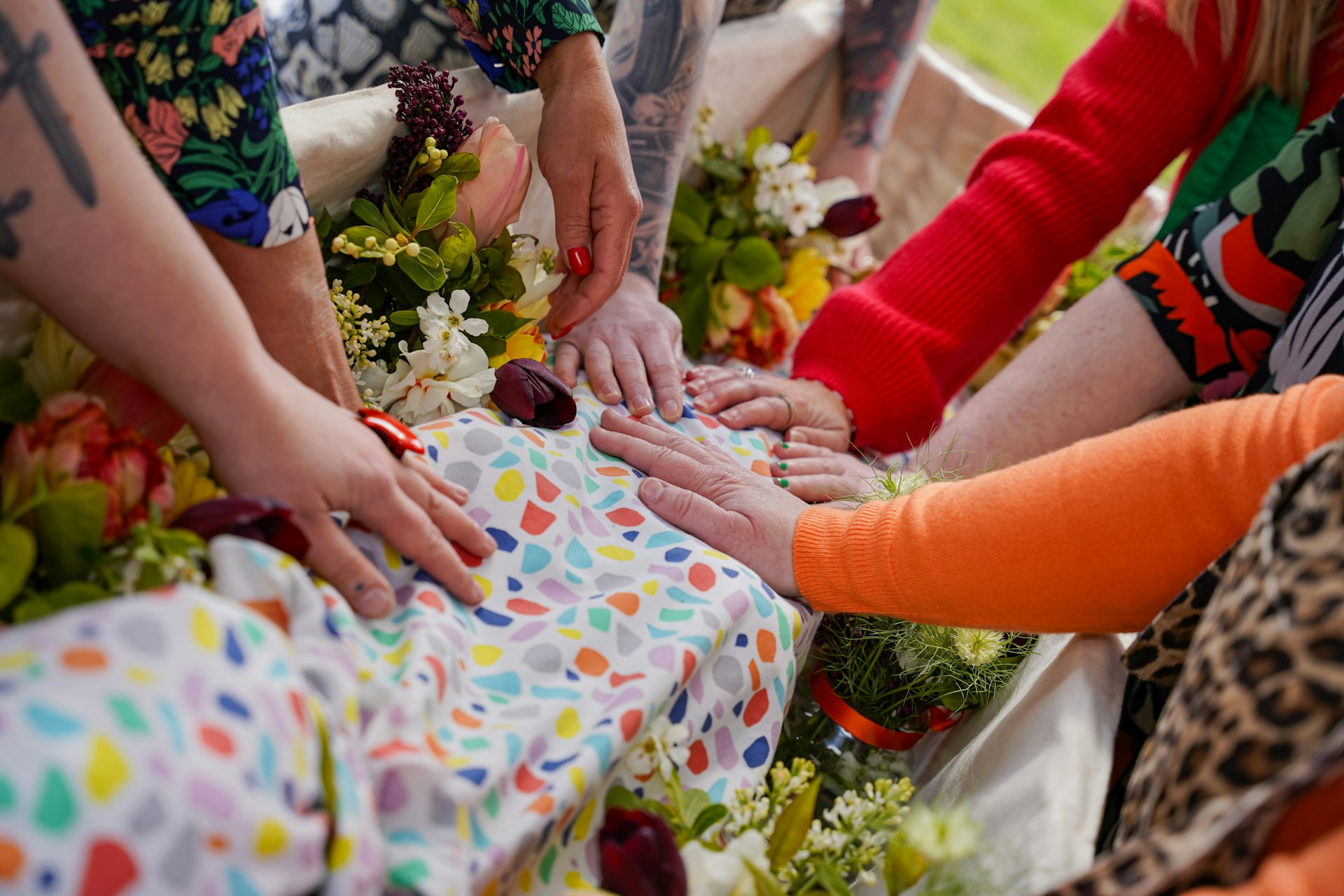
What the rites of passage framework highlights is that death becomes a socially-reflective event. A person’s death leads to their reincorporation, by their society, into a new group: those who have died before them. The deceased person is no longer able to reflect on their role. However conscious they may have been during the dying process, it was not until they crossed the “threshold” of death and died that they joined the next group. In this way, we transition into “being deceased” through being witnessed and considered by others. Through societal recognition of our passing, we make a full transition out of this life and into death.
What the rites of passage framework can help us understand is that even in death, we are social beings. A sociological view of death and dying shows that as much as death is a physical event, social aspects shape our lives—and even our afterlives.
Over the next month, I’ll be dealing with moving to a new apartment. My monthly blog post will consider how the process of moving reveals the utility of a rite of passage framework for thinking through major life transitions. Follow along here to catch that post when it is released.
Photo by DEAD GOOD LEGACIES on Unsplash


