Welcome to the last post of this series! It feels a little strange to type that, because when I started writing for OpenThink, I had actually just started my PhD. I wasn’t sure how it would go, what I would even talk about beyond the basic ideas I already knew, and if I could even manage the time with my demanding courses. I told myself I’d just write whatever came naturally every month and see where it would take me. Somehow the year went by fast, and it has been such a great and rewarding experience, because writing these blog posts forced me to slow down and think about what I’m doing in a way I don’t always do when I’m buried in analyses and coding for hours. So, before I get into today’s topic, I just want to say thank you to everyone who took the time to read even one of these posts! If you’re a graduate student just starting out, don’t be afraid to apply, even if your semester is a little hectic. It’s usually the opportunities you think you don’t have time for that end up helping you grow the most, and I’m glad I went for it!
For this final piece, I wanted to talk a little about what’s been at the center of my first data chapter: nitrogen fixation. I remember when I first learned about it in school years ago, and most of the examples back then were focused on legumes and plant symbioses, which was interesting, but I didn’t think much beyond that at the time. It wasn’t until my PhD, especially while working with marine microbial genomes, that I started appreciating how diverse and ecologically important this process is in the oceans, and how ancient and complicated its evolutionary history can be.
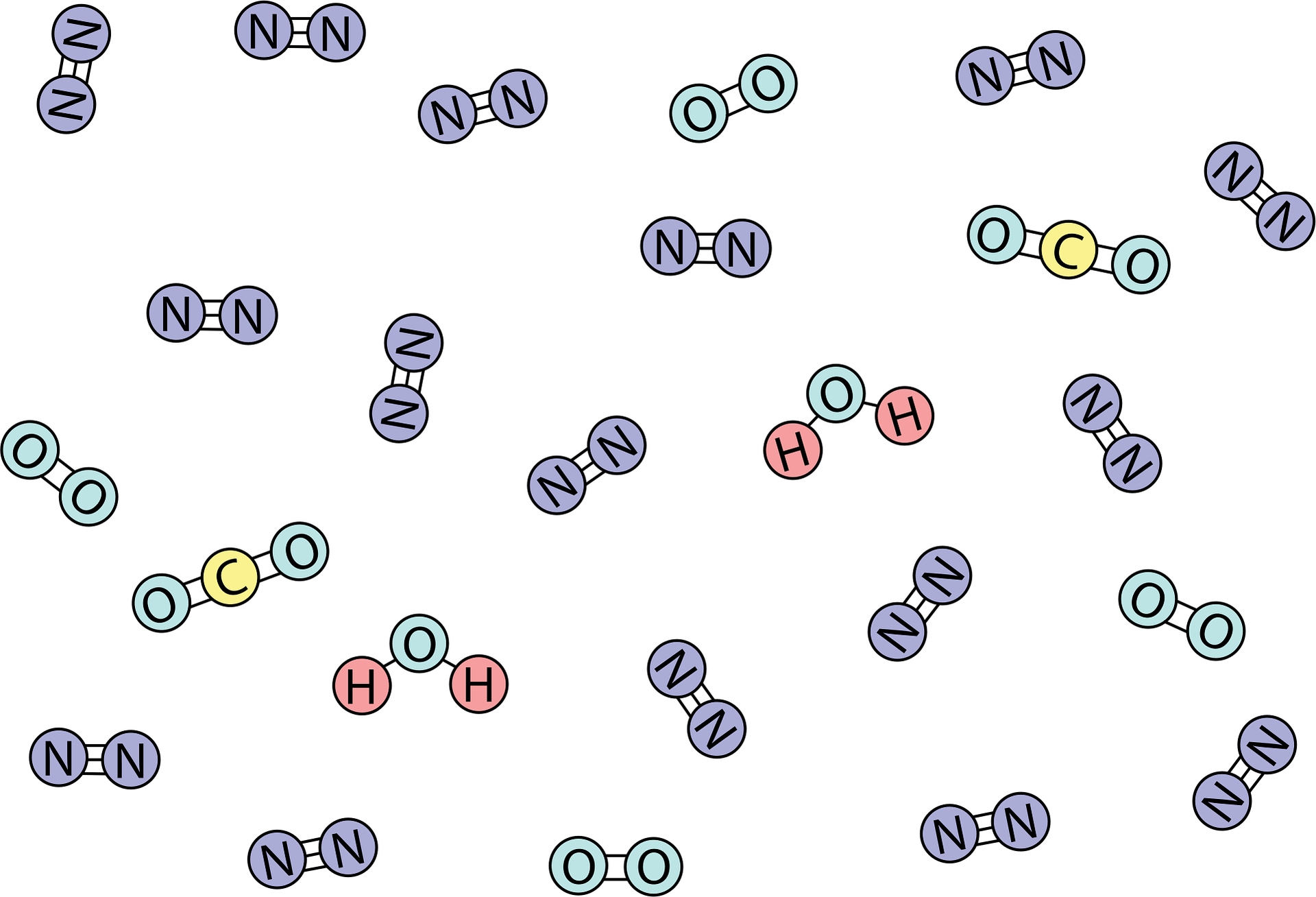
To give some context, nitrogen is everywhere around us, but despite being almost 80% in the atmosphere, most organisms can’t use it because the triple bond in the nitrogen molecule is extremely stable and basically inaccessible without a lot of energy. We have specialized microbes that can break this bond via nitrogen fixation, and they’re called diazotrophs. They convert atmospheric nitrogen into ammonia, a usable form of nitrogen that supports phytoplankton growth at the surface and eventually fuels the entire marine food web, all the way down into deeper waters.
One of the main aims in this field is to understand the diversity of diazotrophs, and a lot of that comes from studying the genes responsible for nitrogen fixation. The nif genes, especially nifH, are one of the most widely used phylogenetic markers for surveying diazotroph diversity, as it’s conserved enough to be recognizable but variable enough to distinguish between groups. It’s essentially like a barcode, a short and standardized stretch of DNA that we can reliably scan across diazotrophs, yet with just enough variation in its pattern to tell different diazotroph groups apart. These methods have revealed diazotrophs in almost every environment you can think of, soils, freshwater lakes, hydrothermal vents, polar regions, and across all ocean basins.
For a long time, some groups of cyanobacteria, which are photosynthetic microbes, were thought to be the main nitrogen fixers in the ocean, mostly because they’re relatively easy to grow in the lab and tend to be abundant in surface waters. But with advances in sequencing technologies, we now know that a surprisingly wide range of non-cyanobacterial groups also fix nitrogen, even living in places we didn’t even associate with nitrogen fixation before.
And when we think about how old nitrogen fixation is, it helps to consider early Earth since this is a process that originated billions of years ago, which is kind of hard to imagine. But before microbes evolved this ability, the only usable nitrogen came from abiotic processes, like lightning breaking atmospheric nitrogen into more reactive forms. As microbial life expanded though, that naturally produced fixed nitrogen likely ran out and created some sort of nitrogen crisis. This would have put strong pressure on early microbes to develop a biological solution, and gaining the ability to fix nitrogen would have been a huge advantage in nitrogen limited environments.
What’s even more fascinating is that nitrogen fixation has a long evolutionary history shaped by lateral gene transfer! So now the title probably makes a bit more sense. Even the origin of biological nitrogen fixation is still debated, with some hypotheses pointing to an archaeal origin, especially within methanogens, which are microbes that produce methane as part of their metabolism, while more recent papers propose a bacterial origin with later transfers into archaea. Regardless of which direction it began, the fact that these genes have moved across different microbial groups across billions of years of evolution makes the story just so cool and much more complex than I had ever realized. I’m currently trying to trace how these nitrogen fixing genes have moved across specific microbial lineages over evolutionary time, and while there’s still so much to learn, I’m excited to be exploring these questions in my PhD.
I feel grateful that this series has given me the space to explore these ideas more openly and to share what I’ve been learning so far. Thank you again for following along, and I hope it leaves you curious about microbial evolution and lateral gene transfer as it has left me.