
In hospitals, time is often the difference between an effective treatment and a worsening infection. When a patient presents with a bacterial infection, clinicians need to answer a simple but critical question: which antibiotic will actually work?
Yet today’s standard diagnostic tests for antibiotic susceptibility can take 24 to 48 hours to deliver results. During that time, patients may receive ineffective treatments, infections may progress and broad-spectrum antibiotics are often used as a precaution. This practice, while sometimes necessary, contributes to the growing global crisis of antimicrobial resistance.
The challenge is not simply detecting bacteria. It is understanding their response early enough to guide treatment decisions.
The hidden phase of infection
We often think of antibiotics in binary terms: bacteria are either sensitive or resistant, alive or dead. But this view misses a crucial intermediate stage.
When bacteria are exposed to antibiotics, their first response is not immediate death. Instead, they undergo subtle internal changes. Their metabolism slows, their ability to synthesize proteins and DNA shifts and their overall biological activity begins to decrease long before any visible change in growth occurs.
This early phase contains the most important information—but it is also the hardest to measure.
A problem of time, not detection
Antibiotics have transformed modern medicine, turning once-lethal infections into treatable conditions. However, their success depends on how quickly the right drug is chosen.
The limitation today is not the ability to detect bacteria. It is the delay in determining whether they are responding to treatment.
Standard antibiotic susceptibility testing relies on growth-based measurements. In practice, this means observing whether bacteria continue to multiply in the presence of an antibiotic. If they grow, they are classified as resistant; if they do not, they are considered sensitive.
While reliable, this method is inherently slow. It depends on bacterial growth-level changes that only become visible after many hours. By the time results are available, treatment decisions have often already been made.
What is missing is the earliest stage of the bacterial response: metabolic activity. Before growth changes become visible, bacteria rapidly adjust their internal chemistry to stress. These molecular shifts contain the most informative signal of whether a treatment is working—but they are not captured by conventional tests.
Resistance as a dynamic response
Antimicrobial resistance is often framed as a clinical classification, but at the microbial level, it is a dynamic process.
When bacteria encounter antibiotics, they do not simply survive or die. They adapt. Some reduce their metabolic activity to conserve energy. Others activate defense pathways or alter how they synthesize essential biomolecules.
In resistant bacterial populations, these responses allow survival under conditions that would otherwise be lethal. According to the World Health Organization, antimicrobial resistance is already among the top global public health threats, contributing to millions of deaths annually worldwide and undermining decades of progress in infectious disease treatment. Without improved diagnostics and intervention strategies, this burden is expected to increase significantly in the coming decades.
From this perspective, resistance is not a single event but a continuous adjustment process. Importantly, these adjustments begin long before conventional growth-based methods can detect any change.
Listening to bacteria through light
Antimicrobial resistance is often discussed as a long-term evolutionary problem, the decades-long emergence of resistant bacteria. But at the bedside of an infected patient, it is a crisis of immediate information delay. The biological response to a drug happens in minutes, but our conventional tools take days to read it.The biological response happens early, but our ability to measure it does not. Closing this gap is not simple. These signals are subtle, fast and often hidden at a scale we do not normally have access to. But it is not impossible.
In fact, this is the problem I am working on. My research focuses on finding ways to access these early biological changes more directly or by looking at how bacteria behave at their most fundamental level. The goal is to move beyond waiting for visible outcomes and instead capture what is happening much earlier in the process.
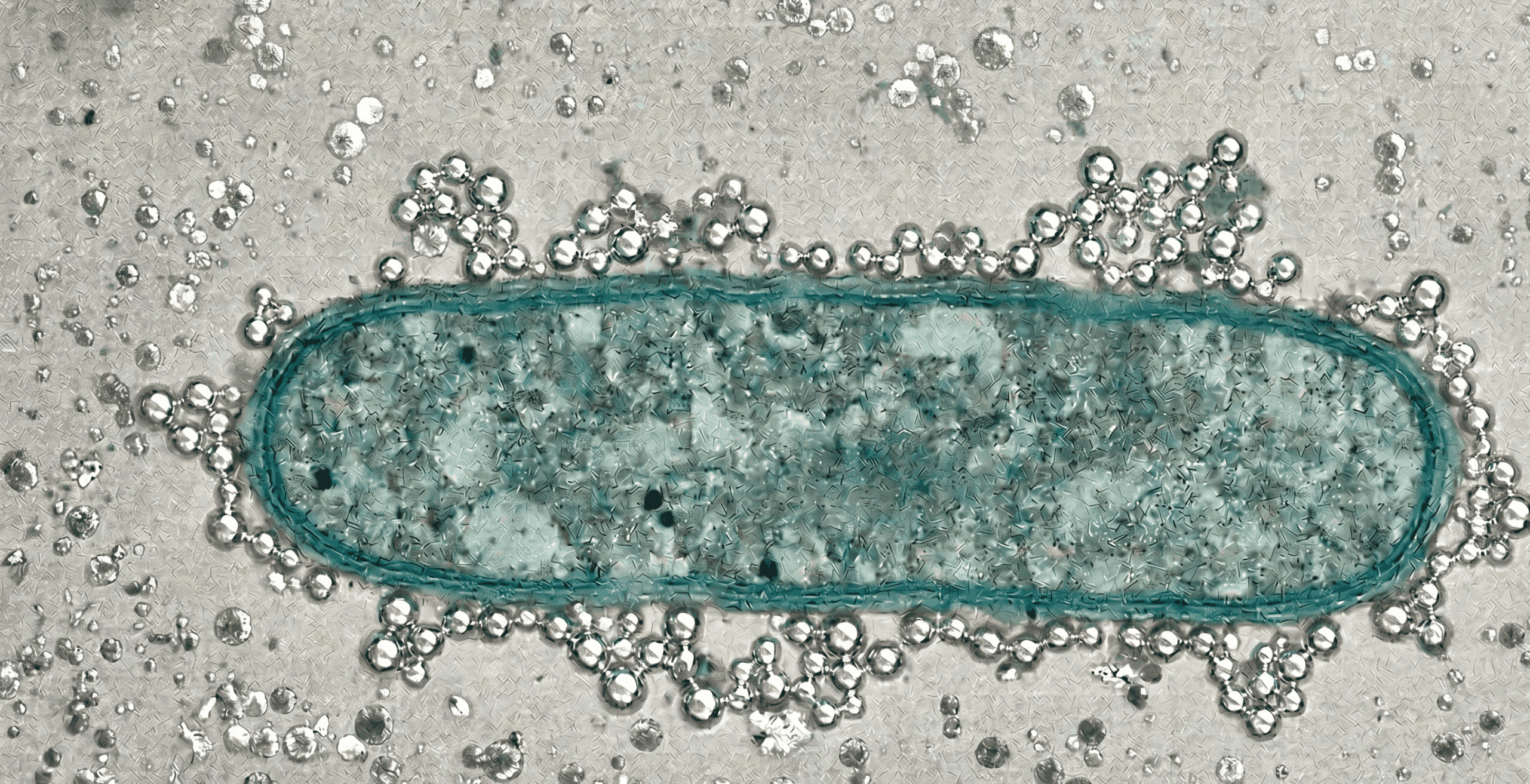
A promising direction I’m working on involves using light in combination with gold nanostructures, which are engineered tiny gold spheres. They allow us to sense bacteria and their metabolites (the chemical footprints or “leftovers” they release when reacting to stress). By measuring these tiny chemical shifts, we can uncover critical biological details that would otherwise remain completely out of reach.
There is still a long way to go. But for the first time, we are beginning to have tools that make this kind of measurement thinkable. And that changes the question entirely; from whether we can see these early signals, to how quickly they can be used in practice.
You can also follow my progress on Instagram (@plasmonic_chemist) as I continue to shine a light on these hidden processes!


