
If you’ve ever wondered how a new battery can come with a 10-year warranty, even if the product has not existed that long, your thoughts are valid. Imagine buying an electric vehicle today and the manufacturer guarantees that the battery pack will still hold most of its capacity after eight years. It is a remarkable thing to guarantee, especially when you think about the fact that these cell designs are sometimes only a year or two old. How can anyone confidently promise a decade of use on such a young product? Yet this promise is not a bluff. To make it happen, scientists and engineers do something ingenious: they cheat time.
Recall from my recent post on battery longevity that a cell or battery pack does not fail in one dramatic moment; it goes through a phase of slow, unwanted chemical reactions – known as parasitic reactions – which quietly consume its active ingredients cycle after cycle, year after year. Taking cue from this rather unfortunate event, by simply making those unwanted reactions go faster, a battery’s whole life could play out in a fraction of the time. It turns out this is possible, because chemistry has a well-known accelerator: heat.
As a general rule – with a few exceptions – most chemical reactions speed up as things warm up. In fact, for many everyday reactions around room temperature, a 10 oC bump in temperature can roughly double the reaction speed. While the exact math depends on a concept known as Arrhenius equation, this predictable spike in temperature is incredibly useful to battery science and is the heartbeat of accelerated testing. For instance, if you test identical cells in 30, 55 and 70 oC temperature-controlled boxes, the warmest will age fastest. A few months at 55 or 70 oC can equate to years of gentle charging and discharging at room temperature. This allows researchers to draw insights from the cell’s high temperature behaviour to predict its ending.
A second and even subtler way to cheat time is precision testing. This is a point of Canadian pride in the battery sector. Rather than aging cells by ramping up the temperature, one can measure aging far more precisely. The principle behind it is simply compounding: a seemingly insignificant change repeated consistently can result in a dramatic change. Battery degradation occurs in a similar manner. Every time a lithium-ion battery is cycled, a tiny fraction of its active lithium is lost to side reactions, meaning slightly less charge comes out than went in. This ratio is known as coulombic efficiency, and for a cell to last for decades, it must exceed a whopping 99.99%. A loss of less than 0.01% per cycle may appear insignificant, but over thousands of cycles, these microscopic losses accumulate and can substantially shorten the battery life. These ultra-high-precision chargers, capable of measuring extremely small differences in charge with remarkable precision, were developed at Dalhousie University in Dr. Jeff Dahn’s laboratory. By detecting this miniscule shortfall in charge movement, a few weeks of careful measurement can reveal whether a cell is on track to last ten years – conclusions that once took years to determine.
But hang in there, if heat is a time machine, why not crank up the oven to 100 oC and learn about the battery’s fate in a weekend? Here is the catch: heat accelerates aging only to a certain point. Pushing temperatures too high will not just speed up the reactions that matter, it will also awaken entirely new failure modes that would never occur in a garage or a pocket. The battery starts dying of causes it would never have in practice, and the tests inadvertently stop predicting anything intended. This is why scientists are careful to use moderate temperatures at once, rather than brute heat to accelerate a cell’s lifetime behaviour.
The honest answer is that we never truly test a battery for ten years. We compress years into months and trust the compression only as far as the chemistry allows. While much of battery technology rests on careful prediction, rather than certainty, the real test is playing out right now. It’s happening in real time, in the millions of cars, phones and backup power systems that we use every day.
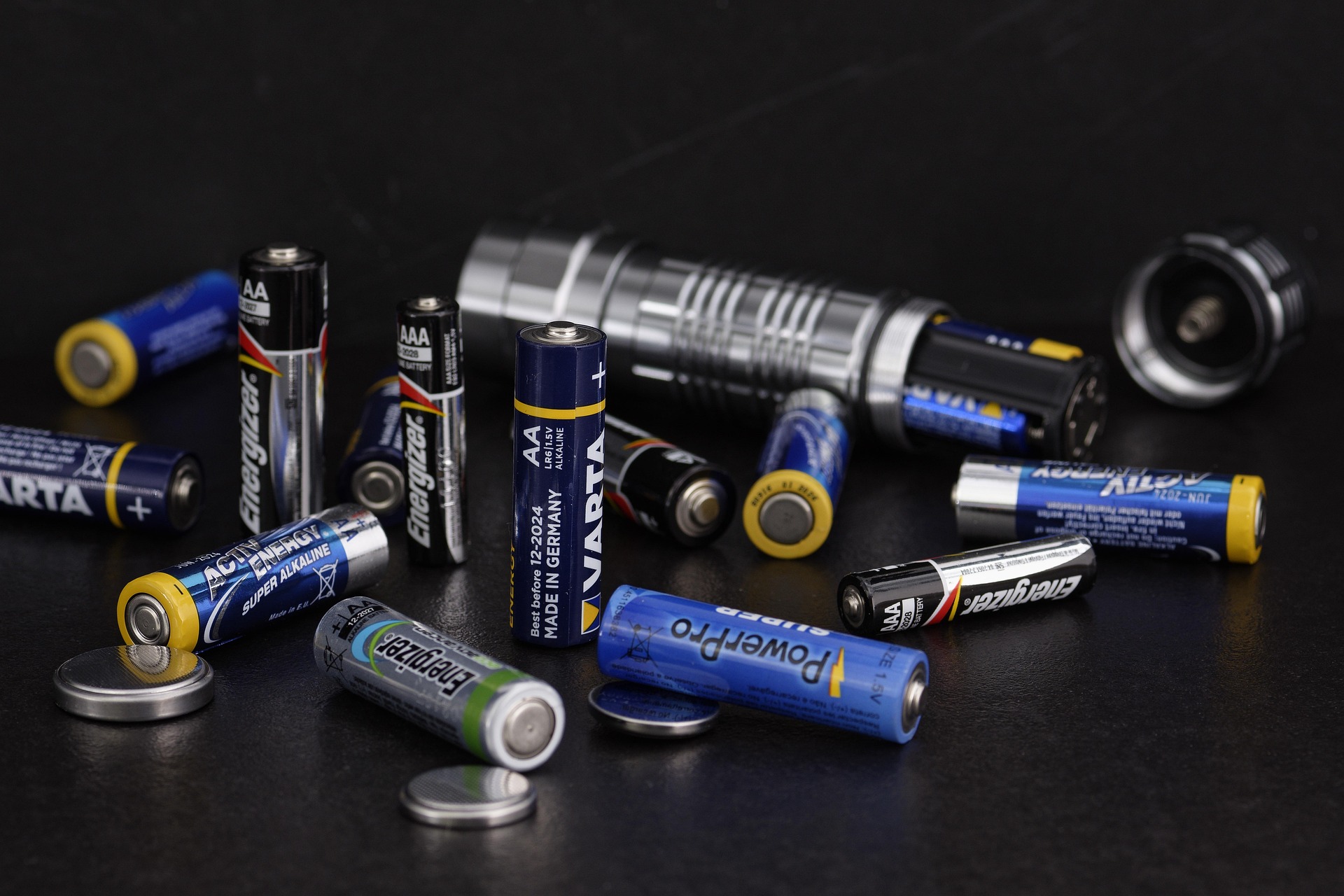
Image by Willfried Wende from Pixabay


