
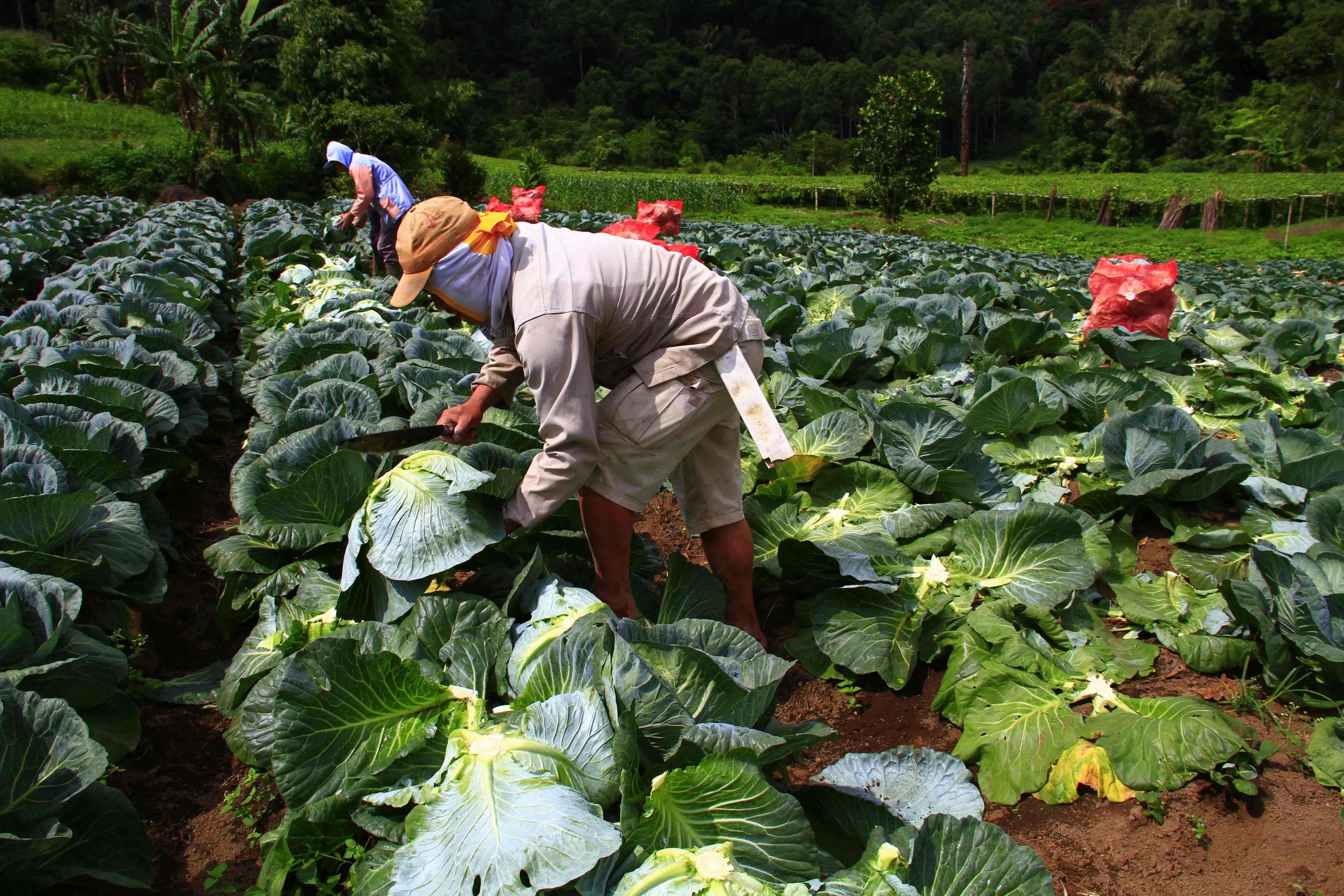
Photo by Ronny buol
There is a quiet assumption we often make about change: that once a good decision is made, it will continue. If something works — if it is efficient, beneficial, and well-supported — then surely it will be sustained, but experience tells us otherwise. Across many areas of life, from personal habits to large-scale systems, the challenge is rarely starting something new, the real challenge is continuing under changing conditions. This tension between intention and persistence is not unique to individuals. It is deeply embedded in how systems function, and it is particularly visible in how we think about agriculture and sustainability.
We often hear that farmers are adopting more “climate-smart” practices, which is true. Across Canada, many farms report using practices like conservation tillage, cover cropping or improved manure management. These practices are widely promoted as ways to reduce environmental impact while maintaining productivity. From the outside, the adoption of these practices looks like progress: adoption goes up, targets are met, reports are written. But we often forget to ask what happens after adoption because initiating a change and maintaining it over time are not equivalent processes. This curiosity led me to examine the underlying science of how climate-smart practices are adopted, sustained and sometimes discontinued in agricultural systems.
Using national farm-level data, I study not just who adopts climate-smart practices, but who continues using them over time and who stops. What emerges is not a simple success story — it is something more complex and more revealing. Some practices continue and others do not, and the difference often has less to do with awareness or intention, and more to do with the realities in which those decisions are made. Consider, for example, conservation tillage. It is often framed as a clear improvement for reducing soil disturbance while supporting long-term soil health. For many farms, this holds true, but agricultural systems are not static. A farmer may adopt conservation tillage under one set of conditions, only to face a different set the following year, such as unexpected rainfall, shifts in crop rotation or rising input costs. Under those conditions, maintaining the practice of conservation tillage may no longer be straightforward.
In livestock systems, the pattern is similar. Practices such as improved manure application methods are promoted for their environmental benefits, yet they often require specific infrastructure, timing and coordination. Without these conditions, they become difficult to sustain. What we see, then, is not simply adoption but variation in persistence, and this distinction matters.
Many policies and programs are designed to increase adoption. Incentives are introduced, participation is tracked and success is often measured by uptake. But if practices are adopted and later discontinued, the long-term environmental benefits are reduced. In this sense, adoption alone does not guarantee impact.
What is often missing from the conversation is that farms operate as systems. Decisions are shaped by land size, financial capacity, infrastructure, climate variability and market pressures. A practice that works well in one context may not translate easily to another. Even within the same farm, what works one year may not hold the next. So, the question is not only whether a practice is effective in principle, but whether it is viable in practice.
This gap is where my research seeks to contribute. By shifting the focus from adoption alone to persistence, my study asks a more grounded question: under what conditions do climate-smart practices actually last? Because if sustainability is the goal, then the measure of success cannot stop at uptake; it must extend to whether change can be maintained, adapted and integrated into real-world systems over time. Perhaps that brings us back to the assumption we began with: that good decisions naturally endure. In reality, endurance is not guaranteed. It is shaped by context, by constraint and by the ability of a system to support what it begins. So, when we hear that adoption is increasing, it is worth asking one more question: who is able to sustain it and why? That is where the real story lies.


