
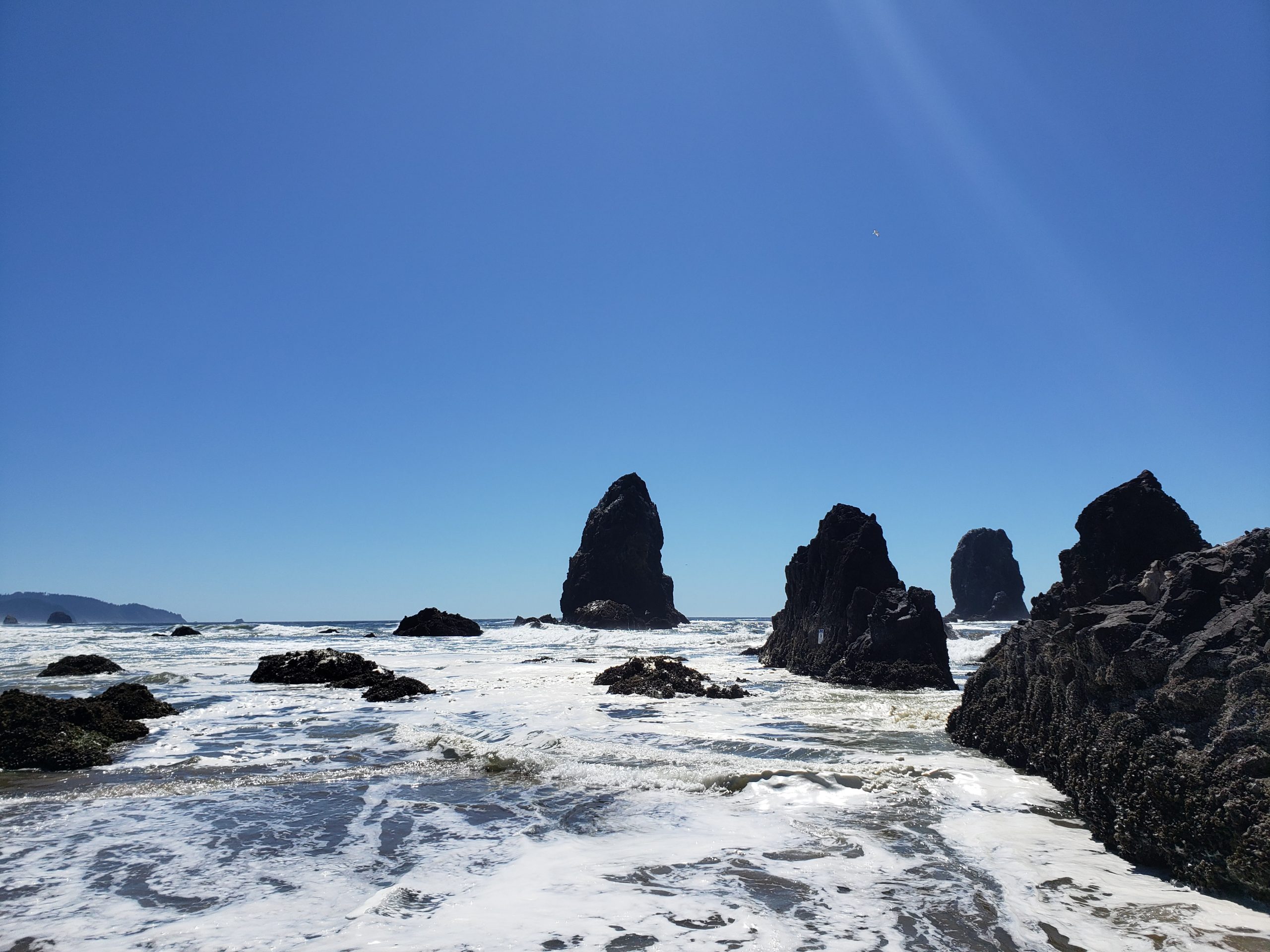
I, perhaps stereotypically, had the childhood dream of becoming a marine biologist. So, when I graduated high school, I pursued a bachelor’s degree in biology, then a master’s in marine ecology to train for this dream. However, along this journey, the further into the field I got, the more I found myself pulled in another direction, towards the human dimension of marine and aquatic systems.
A vast number of the changes that occur in marine and aquatic systems today are caused by humans. Pollution, climate change, conservation efforts and species introductions are caused by human behaviour. As important as it is to understand the ecology behind how ecosystems shift and change as a response to these impacts, it is similarly important to understand the human social and economic systems behind them. These systems are not only responsible for the impactful activities in the first place but also experience their own consequences from the boomerang effects of these environmental changes. It is, therefore, the combination of the three — ecological, social and economic knowledge — that allows for a big-picture understanding of changing environments. Appreciating this connection inspired me to pivot my focus towards an interdisciplinary approach that addresses problems that are part ecology and part people.
This combination of ecological and social systems is not a new concept. In the literature, it is referred to as social-ecological systems (SES). The study of SES explains the multidimensional, interactive relationship of different variables that explore the way people alter the environment and, in return, the way the altered environment impacts people. Sustainable resource management strategies can utilize the SES framework to positively impact the environment so that people can access benefits like clean water for drinking, plentiful fish for eating and healthy plants to clean the air that a healthy ecosystem provides. However, despite the inherent applicability and holistic nature of addressing environmental questions through SES, they have not become the norm in much of ecological literature. Moreover, unless you are lucky enough to find an interdisciplinary program, it is not common for natural science students to be exposed to the social sciences components that are so important to these human-induced environmental changes.
I now find myself a bit of a fish out of water. I am in the first year of the interdisciplinary PhD program, studying a SES, with a strong background on the latter (the ecological) but building the expertise for the former (the social). In my research, I am looking at the way humans change the environment through the introduction of a new fish species and how that new species, in return, changes the human systems that interact with the environment the introduced species impacts. As a member of this year’s OpenThink cohort, I will be laying the groundwork to provide the context and background information for my research. My content will explore case studies, stories and various perspectives of the social side of introduced species to contribute to the interdisciplinarity in the field and set the stage for my research to come. So, learn with me while my childhood dreams evolve to explore this new (to me) landscape of environmental science.


